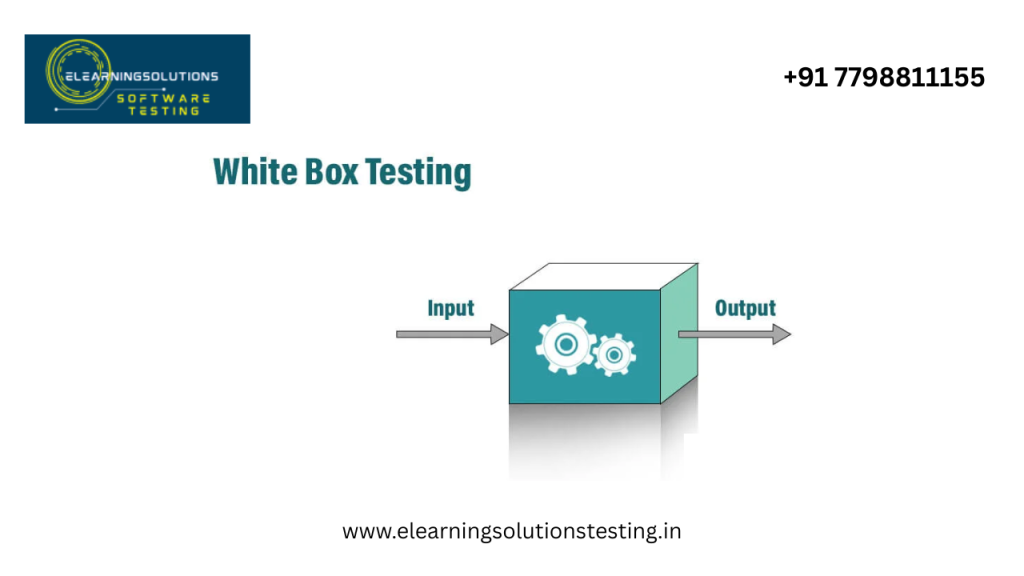
In the world of software testing, understanding the internal mechanics of an application can provide deeper insights and greater control over quality. This is where White Box Testing comes into play.
While black box testing evaluates what a system does, white box testing focuses on how it does it. This article walks you through what white box testing is, its techniques, and real-world examples to make the concept crystal clear.
What is White Box Testing?
White Box Testing (also known as Clear Box, Glass Box, or Structural Testing) is a software testing technique that involves testing an application’s internal code, logic, and structure. Unlike black box testing, it requires knowledge of the code and programming skills.
The tester reviews code logic, paths, loops, conditions, and data flow to ensure every segment functions as intended.
Why is it Called White Box?
Think of the software as a box. In white box testing, the tester can see everything inside the box — the logic, the flow, the structure. This visibility makes it easier to pinpoint hidden errors that external testing might miss.
Key Objectives of White Box Testing
- Verify the flow of inputs through code
- Ensure all internal operations work as expected
- Test different code paths, conditions, and branches
- Optimize code for better performance and security
- Detect and eliminate hidden logical errors or bugs
Types of White Box Testing
- Unit Testing
Testing individual components or functions in isolation. Typically done by developers. - Integration Testing
Verifying that different components or modules work together as expected, using their internal structure. - Security Testing
Inspecting the code to identify vulnerabilities like SQL injection, buffer overflows, and other security risks.
Popular White Box Testing Techniques
- Statement Coverage
Ensures every statement in the code is executed at least once. - Branch Coverage
Checks that all possible branches (if/else conditions) are tested. - Path Coverage
Tests all possible execution paths in the code. - Loop Testing
Focuses on validating loops (for, while) with zero, one, and many iterations. - Data Flow Testing
Analyzes the flow of variables in the program, identifying any incorrect usage or data handling.
Real-Life Examples of White Box Testing
Example 1: ATM Transaction Validation
A developer writes code to process withdrawal requests. White box testing is used to:
- Test all conditions like balance check, pin validation, withdrawal limits
- Review edge cases such as zero balance or multiple incorrect PIN attempts
- Optimize loop performance and check conditional branches
Example 2: Login Authentication System
During unit testing, the tester verifies:
- Code paths for correct and incorrect credentials
- Conditional checks for account lock after failed attempts
- Logic to send OTP and handle session timeout
Example 3: E-commerce Checkout Process
White box testing validates:
- Discount calculations based on promo codes
- Tax calculations depending on location
- Payment gateway logic for different modes
Advantages of White Box Testing
- High level of code coverage
- Detects hidden bugs early in the development cycle
- Helps in code optimization and security enhancement
- Facilitates clear documentation of code flow
Limitations of White Box Testing
- Requires in-depth programming knowledge
- Time-consuming for large and complex applications
- May not identify missing features or interface issues
- Limited in simulating real-world user behavior
When to Use White Box Testing
- During unit testing by developers
- When security and performance are priorities
- While refactoring or optimizing existing code
- To verify critical logic paths in the application
Conclusion
White box testing dives deep into the core of software development. It is not just about finding bugs, but about understanding how the code works and ensuring it works efficiently, securely, and reliably. When combined with black box testing, it provides a comprehensive approach to delivering high-quality software.
YOU MAY BE INTERESTED IN
The Art of Software Testing: Beyond the Basics
Automation testing course in Pune