Mastering Playwright JavaScript for Web Automation and Testing
Understanding Playwright JavaScript
Modern web applications need to work reliably across browsers, devices, and user scenarios. As development cycles become faster, manual testing alone is no longer enough to maintain software quality. This is where Playwright JavaScript has become a valuable technology for web automation and end-to-end testing.
Playwright is an open-source browser automation framework developed by Microsoft. It enables developers and QA professionals to automate browsers and test modern web applications using JavaScript and other supported programming languages.
With support for Chromium, Firefox, and WebKit, Playwright helps teams validate applications across multiple browser environments. It can automate actions such as opening web pages, clicking buttons, filling forms, validating content, taking screenshots, handling pop-ups, and monitoring network activity.
For aspiring testers, developers, and automation professionals, learning Playwright can be an effective way to build modern test automation skills.
Who Can Learn Playwright JavaScript?
Playwright is suitable for a wide range of learners and professionals, including:
-
Freshers starting a career in software testing
-
Manual testers moving toward automation testing
-
QA engineers looking to upgrade their automation skills
-
JavaScript and Node.js developers
-
Professionals familiar with Selenium or Puppeteer
-
Career switchers interested in software testing and automation
-
Developers who want to improve application quality through automated testing
A basic understanding of JavaScript, HTML, CSS, and web application concepts can make the learning process easier.
Why Is Playwright Important in Modern Software Testing?
Software teams are expected to release applications quickly while maintaining a high level of quality. Automated testing helps organizations verify application functionality repeatedly without depending entirely on manual testing.
Playwright supports this process by allowing teams to create automated tests that simulate realistic user interactions.
For example, an automated Playwright test can:
-
Launch a browser
-
Navigate to a website
-
Log in with test credentials
-
Fill out forms
-
Click buttons and links
-
Verify page content
-
Test different browsers
-
Capture screenshots
-
Monitor network requests
-
Generate test reports
This makes Playwright particularly useful for continuous testing and modern development workflows.
Key Features of Playwright JavaScript
Cross-Browser Testing
One of Playwright’s major advantages is its ability to automate Chromium, Firefox, and WebKit. This allows QA teams to test whether applications behave consistently across major browser engines.
Cross-browser testing is particularly important for applications used by customers across different operating systems and devices.
Automated End-to-End Testing
Playwright can simulate complete user journeys. Instead of testing individual components separately, teams can verify entire workflows such as registration, login, checkout, search, and account management.
This helps identify problems that may not be visible through isolated functional tests.
Fast and Reliable Automation
Playwright is designed for modern web applications and provides features that help reduce common automation problems. Its automatic waiting capabilities can help tests interact with elements when they are ready instead of relying heavily on fixed delays.
This can make test scripts more reliable and easier to maintain.
Network Interception
Playwright allows testers to monitor, modify, and mock network requests. This is useful when testing APIs, simulating specific server responses, or debugging application behavior.
For example, testers can mock an API response to verify how an application behaves when a service returns an error.
Parallel Test Execution
Large test suites can take significant time when executed sequentially. Playwright supports parallel test execution, allowing teams to reduce overall execution time when their infrastructure and test design support parallelization.
Screenshots and Traces
Playwright provides useful debugging capabilities, including screenshots, videos, traces, and detailed test information depending on the configuration.
These capabilities can help testers understand why an automated test failed.
Real-World Applications of Playwright
Playwright can be used across several areas of software development and quality assurance.
End-to-End Testing
End-to-end testing verifies complete application workflows from the user’s perspective.
For example, an e-commerce application can be tested by automating the following journey:
-
Open the website.
-
Search for a product.
-
Open the product page.
-
Add the product to the cart.
-
Enter customer information.
-
Proceed through checkout.
-
Verify the final result.
Automating these workflows allows teams to repeatedly validate important business functions.
Regression Testing
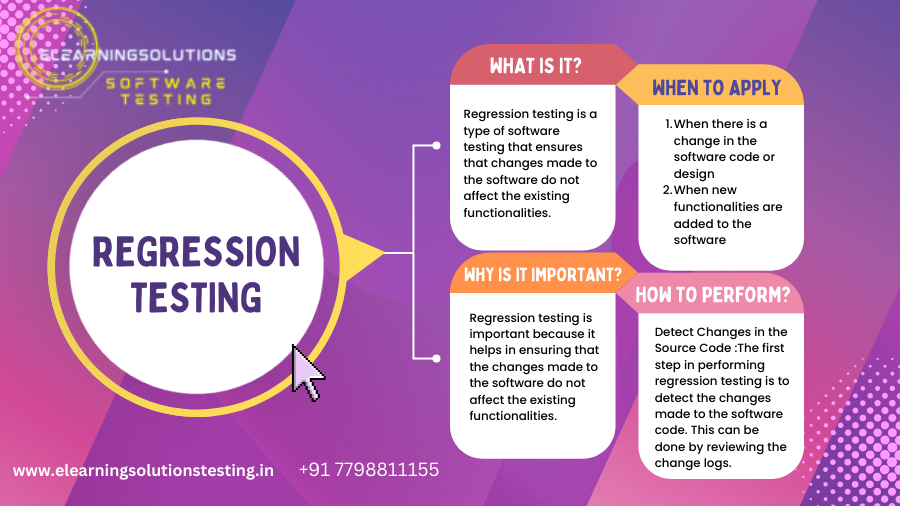
Every software update has the potential to introduce unexpected problems. Automated regression tests can be executed after new features or code changes to verify that existing functionality continues to work.
Cross-Browser Compatibility Testing
A website may behave differently depending on the browser engine. Playwright helps organizations automate tests across Chromium, Firefox, and WebKit to identify browser-specific issues.
Functional Testing
Playwright can verify whether individual features perform according to business requirements. Testers can validate forms, navigation, authentication, search functionality, filters, and other interactive components.
Web Automation and Data Extraction
Playwright can also automate browser-based workflows and, where permitted, extract information from web pages. When performing web scraping, users should respect website terms, access restrictions, applicable laws, and server resources.
Playwright JavaScript vs Selenium and Puppeteer
Playwright is often compared with established browser automation tools such as Selenium and Puppeteer.
Selenium has been widely used for browser automation and supports a broad ecosystem of languages and browser technologies. Puppeteer is closely associated with Chrome and Chromium automation.
Playwright differentiates itself through its multi-browser support, modern automation capabilities, built-in testing features, network controls, and debugging tools.
The right tool depends on the organization’s technology stack, existing automation framework, browser requirements, team expertise, and project objectives.
Skills Required to Learn Playwright
Learning Playwright is easier when you build a strong foundation in several areas.
JavaScript and ES6+
Because this guide focuses on Playwright JavaScript, learners should understand JavaScript fundamentals and modern concepts such as:
-
Variables and functions
-
Arrays and objects
-
Promises
-
Async/await
-
Classes
-
Modules
-
Error handling
Node.js and npm
Playwright JavaScript projects commonly use Node.js and npm. Understanding package installation, project configuration, scripts, and dependencies is therefore useful.
HTML and CSS
Test automation frequently involves identifying and interacting with elements on web pages. Knowledge of HTML structure and CSS selectors can help testers create more reliable automation scripts.
Software Testing Fundamentals
A Playwright professional should also understand testing concepts such as:
-
Test cases
-
Test scenarios
-
Regression testing
-
Functional testing
-
Smoke testing
-
Defect reporting
-
Test data
-
Test environments
Technical knowledge combined with testing fundamentals can lead to better automation strategies.
Career Opportunities After Learning Playwright
Playwright can complement broader software testing and development skills. Professionals who develop strong automation expertise may explore roles such as:
-
QA Automation Engineer
-
Software Test Engineer
-
Automation Test Engineer
-
Quality Engineer
-
SDET
-
JavaScript Automation Tester
-
QA Analyst
-
Software Developer in Test
Career opportunities and compensation vary according to experience, location, technical skills, organization, and overall testing expertise. Playwright should therefore be viewed as one component of a broader automation skillset rather than a standalone career qualification.
How to Learn Playwright JavaScript Effectively
A structured learning approach can make it easier to move from basic concepts to real-world automation.
Start with JavaScript Fundamentals
Before working extensively with Playwright, develop a strong understanding of JavaScript, particularly asynchronous programming and async/await.
Learn Basic Browser Automation
Begin with simple activities such as opening a page, locating elements, clicking buttons, entering text, and validating page content.
Build End-to-End Test Cases
Once the basics are clear, create complete workflows such as login, registration, search, shopping cart, and checkout scenarios.
Practice Cross-Browser Testing
Run the same tests against different browser engines and learn how to identify browser-specific issues.
Learn Debugging and Reporting
Explore screenshots, traces, test reports, browser logs, and network information to understand test failures efficiently.
Work on Real Projects
Practical projects can help transform theoretical knowledge into usable automation skills. Building a portfolio of well-structured test suites can also demonstrate your capabilities to potential employers.
Playwright Training at eLearning Solutions
For learners who prefer instructor-led or structured training, eLearning Solutions offers technology-focused training designed to help professionals develop practical skills.
A Playwright JavaScript training program can cover topics such as:
-
Introduction to Playwright
-
Playwright installation and project setup
-
JavaScript fundamentals for automation
-
Locators and selectors
-
Browser and page automation
-
Assertions and validations
-
End-to-end testing
-
Cross-browser testing
-
Fixtures and test organization
-
Network interception
-
Debugging and troubleshooting
-
Screenshots and trace-based debugging
-
Test reporting
-
Automation best practices
-
Real-world testing projects
A structured course can help learners progress from basic browser automation to developing maintainable automated test suites.
Playwright Certification and Course Completion
Completing a Playwright training program can demonstrate your commitment to learning modern test automation. However, the value of a certificate depends on the training provider and how well your practical skills align with employer requirements.
For career growth, combine course completion with hands-on projects, a strong understanding of software testing, JavaScript knowledge, and experience with automation frameworks.
Future Scope of Playwright JavaScript
The increasing adoption of web applications, continuous delivery practices, and automated quality engineering is creating a greater need for efficient browser automation.
Playwright is well positioned for modern web testing because it supports multiple browser engines and provides capabilities for automation, debugging, network control, and end-to-end testing.
Professionals who combine Playwright with JavaScript, API testing, CI/CD, Git, test design, and broader quality engineering practices can develop a more comprehensive automation profile.
Frequently Asked Questions
What is Playwright JavaScript?
Playwright JavaScript is a browser automation and testing solution that allows developers and testers to automate web applications using JavaScript and Node.js.
Is Playwright better than Selenium?
Neither tool is universally better. Selenium has a mature ecosystem and broad adoption, while Playwright provides modern browser automation features and strong multi-browser capabilities. The best choice depends on project requirements and the team’s technology stack.
Is Playwright suitable for beginners?
Yes. Beginners can learn Playwright, especially if they first develop a foundation in JavaScript, HTML, CSS, and software testing concepts.
Can Playwright test multiple browsers?
Yes. Playwright supports automation and testing for Chromium, Firefox, and WebKit.
Can Playwright be used for mobile testing?
Playwright supports browser-based mobile device emulation, allowing teams to test responsive web applications under different device configurations. It should not be confused with full native mobile application testing.
Can Playwright be used for API testing?
Yes. Playwright’s tooling includes capabilities for making and validating API requests, which can complement browser-based end-to-end testing.
What skills should I learn along with Playwright?
JavaScript, Node.js, HTML, CSS, Git, API testing, CI/CD concepts, software testing fundamentals, and test automation principles can complement Playwright skills.
Is Playwright useful for a QA career?
Yes. Playwright can be a valuable automation skill for QA professionals, particularly when combined with strong testing fundamentals and experience with modern development practices.
Conclusion
Playwright JavaScript has become an important option for modern web automation and end-to-end testing. Its support for multiple browser engines, automated waiting, network interception, debugging capabilities, and test automation features makes it a powerful addition to a QA or development toolkit.
Whether you are a fresher, manual tester, developer, or experienced QA professional, learning Playwright can help you build practical browser automation skills.
The most effective way to master Playwright is to combine structured learning with hands-on practice. Start with JavaScript fundamentals, learn Playwright’s core APIs, create real-world test scenarios, practice cross-browser testing, and gradually move toward advanced automation strategies.
With the right combination of technical knowledge, testing expertise, and practical experience, Playwright can become a valuable skill for building a career in modern software testing and quality engineering.