Mastering Playwright with TypeScript: A Complete Guide to Web Automation and Testing
Introduction to Playwright and TypeScript
Modern web applications are becoming more complex, and development teams need reliable ways to test functionality across browsers and devices. Automated testing helps teams identify defects earlier, improve test coverage, and deliver software with greater confidence.
Playwright with TypeScript is a powerful combination for modern web automation and end-to-end testing. Playwright provides browser automation capabilities, while TypeScript adds static typing and strong development tooling to JavaScript-based projects.
Playwright is an open-source framework maintained by Microsoft that supports browser automation across Chromium, Firefox, and WebKit. TypeScript, meanwhile, extends JavaScript with features such as static types, interfaces, and improved editor support.
Together, they provide a practical foundation for building scalable and maintainable automated test suites.
What Is Playwright?
Playwright is a browser automation framework designed for testing and automating modern web applications.
It enables developers and QA professionals to automate activities such as:
-
Opening web pages
-
Clicking buttons and links
-
Filling forms
-
Selecting options
-
Uploading files
-
Handling pop-ups
-
Taking screenshots
-
Recording test evidence
-
Interacting with browser storage
-
Monitoring network requests
-
Validating application behavior
Playwright supports Chromium, Firefox, and WebKit, making it useful for cross-browser testing.
What Is TypeScript?
TypeScript is an open-source programming language developed by Microsoft. It is a superset of JavaScript that adds static typing and other development features.
TypeScript code is compiled into JavaScript, allowing it to run in JavaScript environments while providing developers with additional tooling and type-checking capabilities.
Some important TypeScript features include:
-
Static typing
-
Interfaces
-
Type aliases
-
Classes
-
Generics
-
Modern JavaScript support
-
Improved editor and IDE support
-
Better code navigation
-
Compile-time error detection
These features become especially useful when working with larger automation projects.
Why Use Playwright with TypeScript?
Combining Playwright and TypeScript can make automation projects easier to structure and maintain.
Improved Type Safety
TypeScript can identify many coding errors during development before the tests are executed. This can be particularly useful when working with large test suites and shared automation utilities.
Better Code Organization
As automation projects grow, developers may create reusable page objects, fixtures, helper functions, and test utilities. TypeScript’s type system can help keep these components organized.
Enhanced Developer Experience
Modern code editors provide features such as autocomplete, type information, navigation, and error highlighting when working with TypeScript.
This can make writing and maintaining Playwright tests more efficient.
Scalable Test Automation
A small test project can eventually grow into hundreds or thousands of automated tests. Using TypeScript can help teams structure larger codebases and make reusable components easier to manage.
Who Should Learn Playwright with TypeScript?
Playwright with TypeScript can benefit several types of learners and professionals.
QA and Automation Testers
Manual testers who want to move into automation can learn Playwright to create browser-based test suites.
Software Developers
Developers can use Playwright to validate application workflows and prevent regressions during development.
SDETs
Software Development Engineers in Test can combine programming skills with automation expertise to create advanced testing frameworks.
Freshers
Students and fresh graduates with basic programming and web development knowledge can learn Playwright as part of their software testing skillset.
Career Switchers
Professionals moving into software testing or web development can add Playwright and TypeScript to their technical portfolio.
Importance of Playwright with TypeScript in Modern Testing
Today’s software teams are expected to release applications quickly without compromising quality.
Traditional manual testing remains valuable, but repeating large numbers of test cases manually can consume significant time. Automation helps teams execute important scenarios consistently and repeatedly.
Playwright with TypeScript can support:
-
Faster regression testing
-
Cross-browser validation
-
Automated user journeys
-
Better test coverage
-
Repeatable test execution
-
Maintainable automation code
-
Continuous integration workflows
-
Faster identification of defects
The combination is particularly useful for teams following Agile and DevOps practices.
Key Features of Playwright with TypeScript
| Feature | Benefit |
|---|---|
| Cross-Browser Testing | Test applications across Chromium, Firefox, and WebKit |
| TypeScript Support | Improve type safety and code maintainability |
| Auto-Waiting | Reduce common timing-related automation problems |
| Network Control | Monitor, mock, and modify network requests |
| Parallel Testing | Execute independent tests concurrently |
| Screenshots and Traces | Improve debugging and test analysis |
| Device Emulation | Test responsive web experiences under different device configurations |
| Test Fixtures | Create reusable test setup and utilities |
| Assertions | Validate application behavior and expected results |
Getting Started with Playwright and TypeScript
Before learning Playwright, it is useful to understand basic JavaScript, TypeScript, HTML, CSS, and software testing concepts.
A typical Playwright project can be created using the official Playwright tooling, which can configure a project and install the required browser dependencies.
A common starting workflow includes:
-
Install Node.js.
-
Create a project directory.
-
Initialize the project.
-
Install Playwright.
-
Configure TypeScript.
-
Create test files.
-
Write test scenarios.
-
Run the test suite.
-
Review test reports.
-
Debug and improve failed tests.
Using the Playwright test runner is generally preferable for dedicated test automation projects because it provides features such as fixtures, assertions, parallel execution, configuration, and reporting.
Creating Your First Playwright Test
A simple Playwright test written in TypeScript can follow a structure similar to this:
import { test, expect } from '@playwright/test';

test('homepage title should be correct', async ({ page }) => {
  await page.goto('https://example.com');

  await expect(page).toHaveTitle(/Example/);
});
This example demonstrates the basic pattern:
-
Import Playwright’s testing functionality.
-
Create a test.
-
Open a web page.
-
Verify the page title.
Real projects can build on this foundation by adding authentication, reusable page objects, test data, API interactions, fixtures, and reporting.
Important Playwright Features
Cross-Browser Testing
Playwright supports Chromium, Firefox, and WebKit. This allows teams to test web applications against different browser engines.
Cross-browser testing is important because a website may behave differently depending on the browser and environment.
Automatic Waiting
Web applications frequently load content dynamically. Playwright provides automatic waiting mechanisms that can help tests interact with elements when they are ready.
This can reduce dependence on arbitrary fixed delays and improve test reliability.
Network Interception
Playwright allows automation scripts to inspect and control network requests.
This can be useful for:
-
API testing
-
Mocking responses
-
Simulating server errors
-
Testing offline scenarios
-
Debugging application behavior
Screenshots, Videos, and Traces
When a test fails, visual and diagnostic information can make troubleshooting easier.
Depending on project configuration, Playwright can capture screenshots, videos, and traces that help developers understand what happened during a test.
Parallel Test Execution
Large test suites can take considerable time to run sequentially. Playwright supports parallel execution of suitable tests, helping teams reduce total execution time.
Parallelization should be designed carefully so that tests do not depend on shared state or interfere with one another.
Real-World Use Cases
End-to-End Testing
End-to-end testing validates complete user journeys.
For example, an e-commerce workflow could test:
-
User opens the website.
-
User searches for a product.
-
User opens the product page.
-
User adds the product to the cart.
-
User enters required information.
-
User proceeds through checkout.
-
Application displays the expected result.
Automating such workflows helps teams repeatedly verify important business functionality.
UI Test Automation
Playwright can automate interactions with buttons, forms, menus, dialogs, tables, and other web components.
When combined with TypeScript, teams can create structured and reusable automation components.
Regression Testing
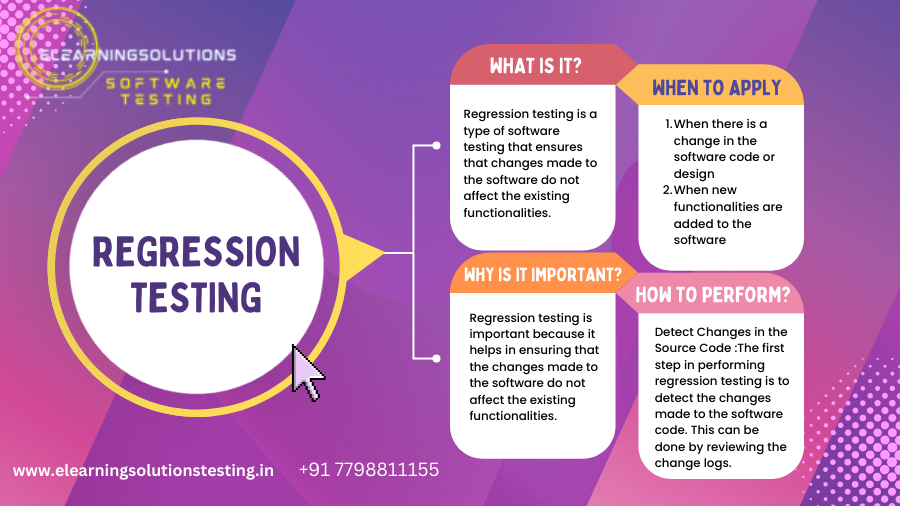
Automated regression suites can be executed after application changes to identify whether previously working functionality has been affected.
API and Network Testing
Playwright can also support API-related testing and network-level scenarios, making it possible to validate application behavior beyond the visible user interface.
Responsive Web Testing
Playwright provides device emulation capabilities that can help teams test responsive websites under different viewport sizes, user-agent configurations, and device profiles.
Playwright with TypeScript vs Selenium
Selenium is one of the most established browser automation solutions and has a large ecosystem with support for multiple programming languages.
Playwright offers a more integrated modern browser automation experience, particularly for applications requiring Chromium, Firefox, and WebKit testing.
The choice between Selenium and Playwright should depend on factors such as:
-
Existing automation infrastructure
-
Programming language preferences
-
Browser requirements
-
Team expertise
-
Project architecture
-
Reporting requirements
-
CI/CD integration
Neither tool is automatically the right choice for every organization.
Playwright vs Puppeteer
Puppeteer is another popular browser automation framework. It has traditionally focused strongly on Chrome and Chromium automation, while Playwright was designed with broader cross-browser support.
Playwright may be preferable when a project requires testing across Chromium, Firefox, and WebKit.
Puppeteer can still be a suitable choice for projects primarily focused on Chromium-based automation.
The best framework depends on the project’s technical requirements.
Skills Required to Master Playwright with TypeScript
Learning the framework itself is only one part of becoming a strong automation professional.
JavaScript and TypeScript
Develop a solid understanding of:
-
Variables
-
Functions
-
Objects
-
Arrays
-
Promises
-
Async/await
-
Classes
-
Modules
-
Interfaces
-
Types
-
Generics
Web Technologies
Understanding HTML, CSS, DOM structure, selectors, browser behavior, and HTTP concepts can make browser automation much easier.
Software Testing
Learn important testing concepts such as:
-
Test cases
-
Test scenarios
-
Regression testing
-
Smoke testing
-
Functional testing
-
Integration testing
-
End-to-end testing
-
Defect management
API Testing
Knowledge of REST APIs and HTTP methods can help automation engineers create more comprehensive test strategies.
Git and CI/CD
Modern automation engineers should understand version control and continuous integration concepts.
Tools such as GitHub Actions, GitLab CI, Jenkins, or other CI platforms can be used to execute automated test suites as part of development workflows.
Career Opportunities
Playwright with TypeScript can complement several technology careers.
Potential roles include:
-
QA Automation Engineer
-
Test Automation Engineer
-
Software Test Engineer
-
SDET
-
Quality Engineer
-
Automation Developer
-
QA Analyst
-
Full Stack Developer
Playwright should be considered one component of a broader technical skillset. Employers may also expect knowledge of testing principles, programming, APIs, databases, CI/CD, version control, and software development practices.
Building a Playwright Portfolio
Practical experience can strengthen your profile when applying for automation roles.
Consider developing projects such as:
-
E-commerce test automation
-
Banking application test suite
-
Login and authentication testing
-
API and UI integration testing
-
Cross-browser test framework
-
Responsive web testing project
-
Regression testing framework
A good portfolio should explain the project objective, technology stack, test scenarios, framework structure, and results.
Remote Work and Freelancing Opportunities
Automation skills can also support remote and freelance work.
Businesses may require professionals to:
-
Build automated test suites
-
Maintain existing automation frameworks
-
Create regression tests
-
Test websites across browsers
-
Integrate testing into CI/CD pipelines
-
Investigate automation failures
-
Improve test coverage
Freelancers should focus on demonstrating practical results and building a portfolio rather than relying solely on a course certificate.
Is There a Playwright TypeScript Certification?
There is no universal official “Playwright TypeScript” certification that serves as a standardized industry credential.
Training providers may offer certificates of completion for Playwright or automation courses. These can document participation in training, but they should not be confused with an official certification issued by Playwright.
For employment purposes, practical automation skills, project experience, testing knowledge, and programming ability are generally important factors.
Future Scope of Playwright with TypeScript
Modern software development is increasingly focused on continuous delivery, automation, and quality engineering.
As organizations build more sophisticated web applications, automated testing can help teams identify defects earlier and maintain application quality.
Playwright’s support for modern browsers, automated testing, network controls, debugging, and test execution makes it a relevant technology for contemporary web testing.
Professionals can increase the long-term value of their Playwright knowledge by combining it with:
-
TypeScript
-
API testing
-
SQL
-
Git
-
CI/CD
-
Cloud platforms
-
Test architecture
-
Performance testing
-
Security testing fundamentals
Frequently Asked Questions
What are the prerequisites for learning Playwright with TypeScript?
A basic understanding of JavaScript, TypeScript, HTML, CSS, and software testing is helpful. Beginners can learn the technologies progressively through structured practice.
Is TypeScript mandatory for Playwright?
No. Playwright supports JavaScript as well as several other programming languages. However, TypeScript can provide useful type safety and development tooling for larger projects.
Can Playwright be used for mobile testing?
Playwright supports mobile browser emulation for testing responsive web applications. It is primarily a web browser automation framework and should not be treated as a complete native mobile application testing solution.
How long does it take to learn Playwright with TypeScript?
The learning timeline depends on your existing programming and testing knowledge. Basic browser automation can be learned relatively quickly, while becoming proficient in framework design and large-scale test automation requires continued practice.
Can Playwright be used for API testing?
Yes. Playwright provides API testing capabilities that can be used alongside browser-based tests.
Is Playwright good for automation testing careers?
Playwright can be a valuable skill for QA automation and SDET careers. However, professionals should combine it with programming, testing fundamentals, API testing, CI/CD, Git, and other relevant technologies.
Which is better: Playwright or Selenium?
Both are capable automation technologies. Playwright offers modern browser automation and built-in multi-browser capabilities, while Selenium has a mature ecosystem and extensive industry adoption. The appropriate choice depends on the project and organization.
Can Playwright and TypeScript be used for real-world projects?
Yes. They can be used to create automated test suites for many types of web applications, including e-commerce platforms, SaaS products, portals, dashboards, and enterprise applications.
Conclusion
Playwright with TypeScript provides a modern approach to web automation and end-to-end testing. Playwright delivers powerful browser automation capabilities, while TypeScript contributes static typing, improved tooling, and maintainable code structures.
Together, they can help development and QA teams create reliable automated tests for modern web applications.
For learners, the best approach is to start with JavaScript and TypeScript fundamentals, understand software testing concepts, learn Playwright’s core features, and then progress toward advanced topics such as fixtures, API testing, network interception, parallel execution, CI/CD integration, and test architecture.
Whether you are a fresher, QA professional, developer, or career switcher, developing practical expertise in Playwright with TypeScript can strengthen your modern automation skillset and prepare you for a wide range of software testing and development opportunities.