Introduction
The eLearning industry is expanding rapidly, with online courses, Learning Management Systems (LMS), and mobile learning apps becoming the backbone of modern education and corporate training. However, the quality, functionality, and user experience of these platforms determine their success. This is where thorough testing plays a crucial role.
When testing an eLearning platform, two primary methods are used: manual testing and automated testing. Each has its advantages and limitations, making it important to know when to apply each approach.
In this guide, we’ll explore:
- What manual testing is and when to use it
- What automated testing is and its key benefits
- The major differences between manual and automated testing
- Best practices for ensuring a smooth eLearning experience
By the end, you’ll have a clear understanding of the most effective testing strategy for your eLearning platform.
What is Manual Testing in eLearning?
Manual testing involves human testers executing test cases without using automation tools. Testers interact with the platform, navigate through different features, and check for errors or usability issues.
Types of Manual Testing for eLearning
- Functional Testing: Ensures that key features such as user registration, course access, quizzes, and progress tracking work correctly.
- Usability Testing: Evaluates how easy and intuitive the platform is for learners.
- Compatibility Testing: Checks if the platform functions properly across different browsers, operating systems, and devices.
- Exploratory Testing: Testers explore the platform freely to find unexpected issues that structured tests may miss.
- Accessibility Testing: Verifies compliance with accessibility guidelines such as WCAG, ensuring usability for learners with disabilities.
When is Manual Testing Useful?
Manual testing is particularly valuable when testing new features or updates, as human judgment is needed to evaluate usability. It is also essential for detecting UI/UX issues that automation tools might overlook. Additionally, exploratory testing benefits from human creativity, helping uncover unexpected errors.
Limitations of Manual Testing
Despite its importance, manual testing can be time-consuming, especially for large-scale platforms with multiple courses and users. It is also prone to human errors due to oversight or fatigue. Furthermore, it can be difficult to scale, as repetitive tests must be manually executed each time a new update is introduced.
What is Automated Testing in eLearning?
Automated testing uses software tools to execute test scripts without human intervention. This approach speeds up testing and ensures consistency across different environments. Once automated test scripts are written, they can be run repeatedly with minimal effort.
Types of Automated Testing for eLearning
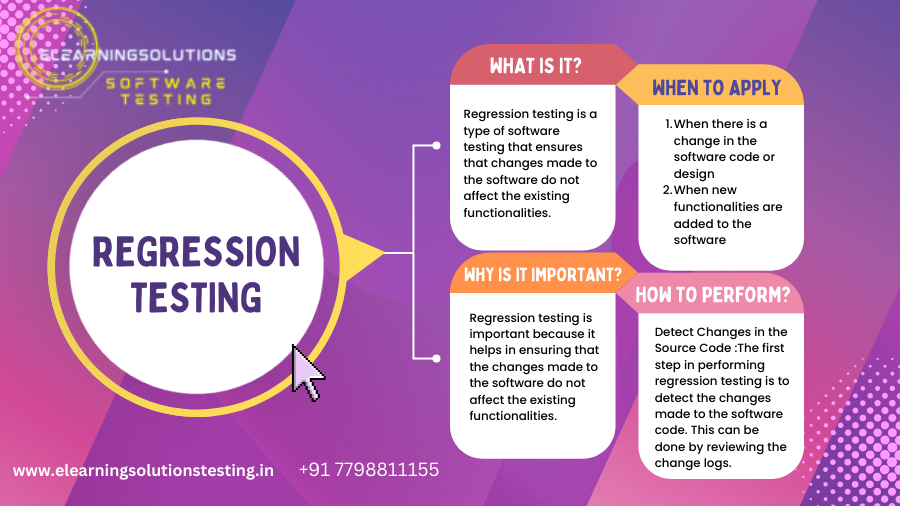
- Regression Testing: Ensures that new updates do not break existing functionality.
- Performance Testing: Measures how well the platform performs under high user traffic.
- Cross-Browser Testing: Automates testing across multiple browsers and devices to ensure compatibility.
- API Testing: Validates backend integrations like payment processing, student databases, and content delivery networks.
- Security Testing: Identifies vulnerabilities to protect user data from potential threats.
When is Automated Testing Useful?
Automated testing is best suited for repetitive and large-scale testing, such as regression and performance tests. It is especially useful when testing across multiple devices and browsers to ensure consistency. Additionally, for high-traffic platforms, automated testing can simulate thousands of users to detect performance bottlenecks.
Limitations of Automated Testing
Although automated testing is highly efficient, it comes with a high initial cost for setting up automation frameworks. It is not suitable for usability testing, as it lacks human judgment. Automated test scripts also require regular updates to stay aligned with changes in the platform.
Key Differences Between Manual and Automated Testing
Manual testing is slower than automated testing but allows for human intuition and flexibility. It is ideal for new feature testing, exploratory testing, and UI/UX evaluations. However, it can be error-prone and difficult to scale.
Automated testing, on the other hand, is fast and efficient for large-scale testing, performance testing, and regression testing. It ensures accuracy and consistency but lacks human insight, making it ineffective for usability and accessibility assessments.
In simple terms, manual testing is best for one-time or small-scale projects, while automated testing is necessary for repetitive, large-scale testing.
Pros and Cons of Manual and Automated Testing in eLearning
Manual Testing
Advantages:
- Provides better insight into UI/UX issues that automation tools might miss.
- Suitable for small projects and new feature testing where human judgment is essential.
- Useful for accessibility testing, ensuring compliance with industry standards.
Disadvantages:
- Time-consuming for large-scale platforms with frequent updates.
- Prone to human error, leading to inconsistent results.
- Difficult to repeat tests across multiple browsers and devices.
Automated Testing
Advantages:
- Saves time by executing tests much faster than manual methods.
- Ensures consistency across different browsers, devices, and environments.
- Useful for performance testing, identifying bottlenecks before they affect users.
Disadvantages:
- High initial investment for automation tools and script development.
- Not suitable for UI/UX testing, as it lacks human judgment.
- Requires ongoing maintenance to keep test scripts updated with platform changes.
When to Use Manual vs. Automated Testing in eLearning
Manual testing should be used for new feature testing, usability evaluation, and accessibility assessments. It is best for identifying design and navigation issues that impact the learner experience.
Automated testing is ideal for regression testing, performance analysis, and large-scale testing. It is essential for platforms with frequent updates and a large user base, ensuring stability and efficiency.
In most cases, a hybrid approach—combining both manual and automated testing—provides the best results.
Best Practices for eLearning Testing
- Use a Hybrid Testing Approach
Combining manual and automated testing helps maximize efficiency while ensuring a great user experience. - Prioritize Critical Functionalities
Focus testing efforts on essential features like course access, assessments, and progress tracking to maintain user satisfaction. - Regularly Update Test Cases
Keep both manual and automated test cases up to date with the latest platform changes to prevent undetected errors. - Test on Real Devices
While automated tools can simulate different devices, testing on actual smartphones, tablets, and desktops ensures better accuracy. - Implement Continuous Testing
Integrate testing into the development cycle to catch bugs early and prevent major disruptions. - Ensure Compliance with Industry Standards
Test for SCORM, xAPI, and WCAG compliance to ensure smooth content delivery and accessibility.
Conclusion
Choosing between manual and automated testing depends on your eLearning platform’s needs, budget, and complexity. Manual testing is essential for usability, accessibility, and exploratory testing, while automated testing is crucial for scalability, efficiency, and performance testing.
YOU MAY BE INTERESTED IN
The Art of Software Testing: Beyond the Basics
Automation testing course in Pune
Automation testing in selenium
Mastering Software Testing: A Comprehensive Syllabus
Frequently Asked Questions
What is the main difference between manual and automated testing in eLearning?
Manual testing involves human testers evaluating the eLearning content, while automated testing uses software tools to test the content. Automated testing is typically faster and more cost-effective, but may not catch all issues. Manual testing, on the other hand, can provide more detailed and nuanced feedback.
When should I use manual testing for my eLearning content?
Manual testing is ideal for complex or interactive content that requires human judgment, such as simulations, games, or videos. It’s also useful for testing content that requires subjective evaluation, like assessing the tone or style of the content. Additionally, manual testing can be useful for small-scale or one-time testing projects.
What are the benefits of automated testing in eLearning?
Automated testing can significantly reduce the time and cost associated with testing eLearning content. It can also increase the accuracy and consistency of testing, as automated tools can perform repetitive tasks without getting tired or making mistakes. Furthermore, automated testing can help identify issues early on, reducing the need for costly rework or revisions.
Can I use both manual and automated testing for my eLearning content?
Yes, it’s common to use a combination of both manual and automated testing to get the best of both worlds. Automated testing can be used to test basic functionality and usability, while manual testing can be used to evaluate more complex or subjective aspects of the content. This hybrid approach can help ensure that your eLearning content is thoroughly tested and meets the required standards.
How do I choose between manual and automated testing for my eLearning project?
To choose between manual and automated testing, consider the scope, complexity, and budget of your eLearning project. Ask yourself what type of testing is required, what are the timelines and deadlines, and what are the available resources. Additionally, consider the level of accuracy and consistency required, as well as the need for subjective evaluation or human judgment.