Software Testing Life Cycle (STLC) is a structured process that ensures the quality and reliability of software applications. It consists of multiple phases, each aimed at identifying and fixing defects before the final release. STLC is an integral part of the Software Development Life Cycle (SDLC) and helps improve software quality through systematic testing.
In this blog, we will explore the 7 essential steps of STLC, their significance, and best practices for effective software testing.
1. Requirement Analysis
Overview
The first phase of STLC involves understanding and analyzing the project requirements. This step helps testers comprehend what needs to be tested and identify potential risks.
Key Activities
- Analyzing functional and non-functional requirements.
- Identifying testing priorities and scope.
- Collaborating with stakeholders to clarify doubts.
- Preparing the Requirement Traceability Matrix (RTM) to track requirements throughout testing.
Best Practices
- Engage with business analysts and developers to understand requirements thoroughly.
- Identify ambiguous or missing requirements early to prevent defects later.
2. Test Planning
Overview
Once requirements are analyzed, the next step is test planning. This phase outlines the strategy, scope, budget, schedule, and objectives of testing.
Key Activities
- Defining the test strategy and approach.
- Identifying required testing tools and resources.
- Estimating effort, time, and cost.
- Assigning roles and responsibilities to testers.
- Preparing a risk management plan.
Best Practices
- Ensure all stakeholders approve the test plan before execution.
- Maintain flexibility to adapt to requirement changes.
3. Test Case Development
Overview
In this phase, testers create detailed test cases and test scripts based on the test plan and requirements.
Key Activities
- Designing test cases with clear inputs, expected outcomes, and conditions.
- Developing automated test scripts if applicable.
- Creating test data for execution.
- Reviewing test cases to ensure coverage and correctness.
Best Practices
- Follow industry standards for writing test cases (e.g., IEEE 829 format).
- Ensure test cases cover all possible scenarios, including edge cases.
4. Test Environment Setup
Overview
The test environment includes the hardware, software, and network configurations required for executing test cases.
Key Activities
- Setting up hardware and software resources.
- Configuring databases, servers, and test tools.
- Ensuring access permissions for testers.
- Validating the test environment before execution.
Best Practices
- Maintain a separate test environment to prevent conflicts with development.
- Simulate real-world scenarios as closely as possible.
5. Test Execution
Overview
In this phase, the actual execution of test cases takes place. Testers compare expected and actual results to identify defects.
Key Activities
- Executing manual and automated test cases.
- Logging defects and categorizing them based on severity.
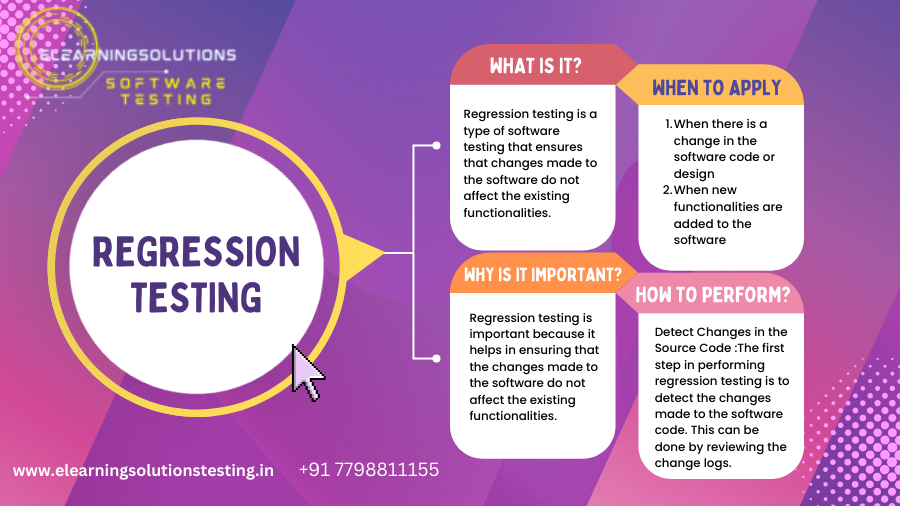
- Retesting fixed defects and performing regression testing.
- Updating test cases if requirements change.
Best Practices
- Follow a structured defect management process.
- Perform sanity testing before proceeding to full test execution.
6. Test Closure
Overview
After testing is completed, the test closure phase ensures all objectives are met, and the software is ready for deployment.
Key Activities
- Evaluating test results and assessing test coverage.
- Preparing test closure reports with insights and recommendations.
- Conducting retrospective meetings to improve future processes.
- Archiving test cases and documents for future reference.
Best Practices
- Document lessons learned to enhance future test cycles.
- Ensure all critical defects are fixed before sign-off.
7. Maintenance & Continuous Testing
Overview
After deployment, testing continues to ensure the software remains stable over time. Maintenance testing is performed when updates or patches are released.
Key Activities
- Conducting regression testing after every update.
- Monitoring user feedback and performance issues.
- Performing security and compliance testing periodically.
Best Practices
- Automate maintenance testing where possible.
- Maintain documentation for future reference.
Conclusion
The Software Testing Life Cycle (STLC) is a crucial part of software development, ensuring that applications meet quality standards before deployment. By following these 7 steps of STLC, organizations can enhance software reliability, improve user satisfaction, and reduce post-release defects.
Key Takeaways:
- Requirement analysis lays the foundation for effective testing.
- Test planning ensures a structured and cost-effective approach.
- Test execution and defect tracking improve software quality.
- Continuous testing and maintenance enhance long-term stability.
By implementing STLC best practices, businesses can optimize their testing processes and deliver high-quality software products. Whether you’re a beginner or an experienced tester, understanding these phases will help you excel in software testing and quality assurance.
Do you have experience with STLC? Share your insights in the comments below!
YOU MAY BE INTERESTED IN
What is test metrics in software testing?
API Testing in Software Testing
Software testing jobs in India
Frequently Asked Questions
What is the main purpose of the 7 Steps in Software Testing Life Cycle (STLC)?
The main purpose of the STLC is to ensure that the software meets the required quality, functionality, and performance standards by following a structured approach to testing. This helps to minimize defects and risks, and ensures that the software is delivered on time and within budget. By following the STLC, teams can identify and address issues early on, reducing the overall cost and effort required for testing.
What is the first step in the Software Testing Life Cycle (STLC)?
The first step in the STLC is Requirements Analysis, where the testing team reviews and analyzes the software requirements to identify the testing scope, objectives, and deliverables. During this phase, the team also identifies the types of testing required, such as functional, performance, or security testing. This step helps to ensure that the testing effort is aligned with the project goals and objectives.
How does the Test Planning step contribute to the overall STLC process?
The Test Planning step is a critical phase in the STLC, where the testing team develops a detailed test plan that outlines the testing approach, scope, schedule, and resources required. This step helps to ensure that the testing effort is properly planned, organized, and executed, and that all stakeholders are aware of their roles and responsibilities. A well-planned test plan also helps to identify and mitigate potential risks and issues.
What is the role of Test Environment Setup in the STLC process?
The Test Environment Setup step involves setting up the necessary hardware, software, and network configurations required for testing. This step is critical to ensure that the testing team has a stable and reliable environment to execute the tests, and that the test results are accurate and reliable. A well-configured test environment also helps to reduce the risk of errors and defects, and ensures that the testing effort is efficient and effective.
How does the Defect Reporting and Tracking step contribute to the quality of the software?
The Defect Reporting and Tracking step is an essential phase in the STLC, where the testing team identifies, reports, and tracks defects found during testing. This step helps to ensure that all defects are properly documented, reported, and tracked, and that the development team is aware of the issues that need to be fixed. By tracking defects, the team can also identify trends and patterns, and take corrective action to prevent similar defects from occurring in the future.