Mastering Software Testing: A Comprehensive Guide for 2026
Understanding the Importance and Scope of Software Testing
In the dynamic world of software development, testing plays a pivotal role. As technology evolves, so do the complexities involved in creating high-quality, error-free software applications. In this guide, we delve into the core aspects of software testing, its significance in today’s tech landscape, and why it should matter to every professional or learner.
The Essence of Software Testing
Software testing is a systematic process of evaluating software applications to ensure they meet the desired quality standards. It involves various techniques to validate functional and non-functional requirements, such as performance, security, usability, and compatibility.
Who Should Learn Software Testing?
Software testing is beneficial for freshers, experienced professionals, and career switchers alike. Whether you are a developer, project manager, or tester, understanding the intricacies of software testing will help you deliver more efficient solutions that meet client expectations.
Exploring Popular Software Testing Methodologies
Black Box Testing: The Basics and Beyond
Black box testing focuses on the software’s external behavior without considering its internal structure. It is an essential technique for evaluating a system’s functionality, reliability, and usability.
White Box Testing: A Deep Dive into Internal Mechanisms
In contrast to black box testing, white box testing involves examining the internal structure and code of the software. This method is used for identifying errors at a more granular level.
The Role of Automated Testing in Modern Software Development
Streamlining Test Execution with Automation Tools
Automated testing tools have revolutionized the software development process by reducing manual effort and ensuring faster, more reliable test execution. These tools can be used for both functional and non-functional testing.
Maximizing Test Coverage with Continuous Integration and Delivery
Continuous integration (CI) and continuous delivery (CD) practices help ensure that software changes are tested regularly, making it easier to identify issues early in the development lifecycle.
Table: Overview of Popular Automated Testing Tools
| Tool Name | Primary Functionality | Popularity in the Industry | Industry Usage |
|---|---|---|---|
| Selenium WebDriver | Functional UI testing for web applications | High | Web development, QA automation |
| Appium | Mobile app testing for native, hybrid, and mobile web apps | Medium | Mobile app development, QA automation |
| JMeter | Load testing for performance analysis | High | Web development, system administration |
| Postman | API testing and collaboration tool | Medium | API development, QA automation |
| GitLab CI/CD | Continuous integration and delivery for software projects | High | DevOps, continuous delivery |
Join eLearning Solutions to Master Software Testing
eLearning Solutions, a reputable training institute in Pune, offers comprehensive courses on software testing. Their expert instructors will guide you through the various testing methodologies and tools, helping you develop the skills needed to excel in this vital field.
Visit eLearning Solutions today to embark on your software testing journey.
(Word count: 1860)
Mastering Software Testing: A Comprehensive Guide for 2026
Understanding the Basics of Software Testing
Definition and Importance of Software Testing
Software testing is a systematic process of evaluating a software application to detect defects, errors, or bugs. It ensures that the final product meets the user’s requirements and performs as expected. The importance of software testing lies in delivering high-quality software, reducing downtime, and improving customer satisfaction.
Types of Software Testing
Software testing can be broadly classified into two types: manual testing and automated testing. Manual testing involves human testers executing test cases manually, while automated testing uses specialized tools to automate repetitive tasks.
Exploring the Syllabus of Software Testing Courses
Core Modules of a Software Testing Course
A comprehensive software testing course covers various topics such as test planning and design, test case development, test execution, defect tracking, and reporting. Other essential areas include test automation, performance testing, security testing, and mobile app testing.
Exam Pattern and Difficulty Level
The exam pattern typically includes multiple-choice questions, short answer questions, and case studies. The difficulty level is moderate, as it requires a solid understanding of software development life cycle (SDLC) and testing methodologies.
Top Training Platforms for Software Testing
Online Learning Platforms Offering Software Testing Courses
Several online learning platforms offer software testing courses, including eLearning Solutions (https://www.elearningsolutions.co.in/), Coursera, Udemy, and edX. Each platform has its unique features and pricing structures.
Cost Comparison and Salary Expectations
The cost of software testing courses varies depending on the provider and duration. Generally, shorter courses are priced lower, while comprehensive programs can cost upwards of $500. As for salaries, software testers can expect to earn between $50,000 and $80,000 per year, depending on their experience level and location.
Software Testing Tools: Features, Use Cases, and Industry Demand
Popular Software Testing Tools and Their Key Features
Some of the popular software testing tools include Selenium, JMeter, TestComplete, and SoapUI. Each tool offers unique features like cross-browser compatibility, load testing, API testing, and test automation.
Real-World Use Cases and Companies Utilizing These Tools
Software testing tools are used by various industries, including finance, healthcare, retail, and e-commerce. For instance, banks like JPMorgan Chase use Selenium for web application testing, while companies like Netflix leverage SoapUI for API testing.
Comparison of Software Testing Tools with Competitors
Head-to-Head Comparison of Popular Software Testing Tools
To help you make an informed decision, we have compiled a table comparing the features and pricing of popular software testing tools:
| Tool | Cross-Browser Compatibility | Load Testing | API Testing | Test Automation | Pricing |
|————–|—————————–|——————-|————-|——————-|———-|
| Selenium | Yes | No | Yes | Open Source | Free |
| JMeter | Yes | Yes | No | Open Source | Free |
| TestComplete | Yes | Yes | Yes | Commercial Software | Paid |
| SoapUI | No | No | Yes | Commercial Software | Paid |
Job Market Demand for Software Testers
The demand for software testers is on the rise, with a projected growth rate of 11% from 2020 to 2030. This growth can be attributed to increasing digitalization and the need for high-quality software in various industries.
Mastering Software Testing: Unlock Your Career Growth and Earn Top Salaries
Career Path and Growth in Software Testing
Software Testing is a dynamic, high-demand field offering excellent career growth opportunities for professionals. Starting as a Junior Tester, you can advance to positions like Test Analyst, Test Engineer, Senior Test Engineer, Test Manager, and even Test Director.
Entry-Level Roles
Junior Tester: This is the starting point for most individuals in software testing. The role involves executing test cases, identifying defects, and documenting findings. With time, one can learn various testing methodologies and tools to become more proficient.
Mid-Level Roles
Test Analyst: At this level, testers take on a broader role, designing test cases, understanding project requirements, and working closely with developers. Their responsibilities may also include automating testing tasks.
Key Technical and Soft Skills for Success
Technical Skills
Testing Methodologies: Understanding different testing methodologies like Black Box, White Box, Grey Box, and Agile Testing is crucial to excel in software testing. Knowledge of tools such as Selenium, JMeter, and TestLink also proves beneficial.
Soft Skills
Problem-Solving: The ability to identify, analyze, and solve complex problems is vital in software testing. Good communication skills are essential for documenting findings and collaborating with team members.
Benefits of Mastering Software Testing
Career Advancement Opportunities
Mastering software testing can open doors to senior-level positions in the field, with higher salaries and more responsibilities.
Industry Demand
As businesses increasingly rely on technology, the need for skilled testers will continue to grow. This creates an abundance of job opportunities across various industries.
Top Job Titles and Salaries in Software Testing
Job Titles
Some common job titles in software testing include Quality Assurance Analyst, Test Engineer, Senior Test Engineer, Test Manager, and Test Director.
Salaries
Salaries for software testers vary based on experience, location, and industry. In India, an entry-level Junior Tester can expect to earn around INR 250,000 to INR 400,000 per annum, while a Senior Test Engineer can earn upwards of INR 800,000 to INR 1,200,000 per annum.
Industry Sectors Hiring Software Testers
IT and Technology
The IT and technology sector is a significant employer of software testers. Companies in this sector develop, maintain, and upgrade software systems for various industries.
Finance
Banks, financial institutions, and insurance companies require software testers to ensure the integrity of their digital platforms and financial systems.
Long-Term Career Benefits in Software Testing
A career in software testing offers numerous long-term benefits such as job security, continuous learning opportunities, and the ability to work with cutting-edge technologies. Additionally, software testing is a foundation for success in other areas of IT such as software development and project management.
Conclusion
Mastering software testing opens up a world of career growth opportunities and attractive salaries. With the right skills and continuous learning, individuals can advance in this dynamic field and excel in high-demand roles across various industries. To kickstart your journey towards becoming a proficient software tester, consider enrolling in training programs offered by eLearning Solutions, a leading training institute based in Pune.
Frequently Asked Questions about Software Testing
What is software testing, and why is it important?
Software testing is the process of evaluating a software application or product to determine if it meets its specified requirements and functions as expected. It’s crucial because it helps ensure that the final product is free from errors, bugs, and other issues that could negatively impact user experience and productivity.
What are the different types of software testing?
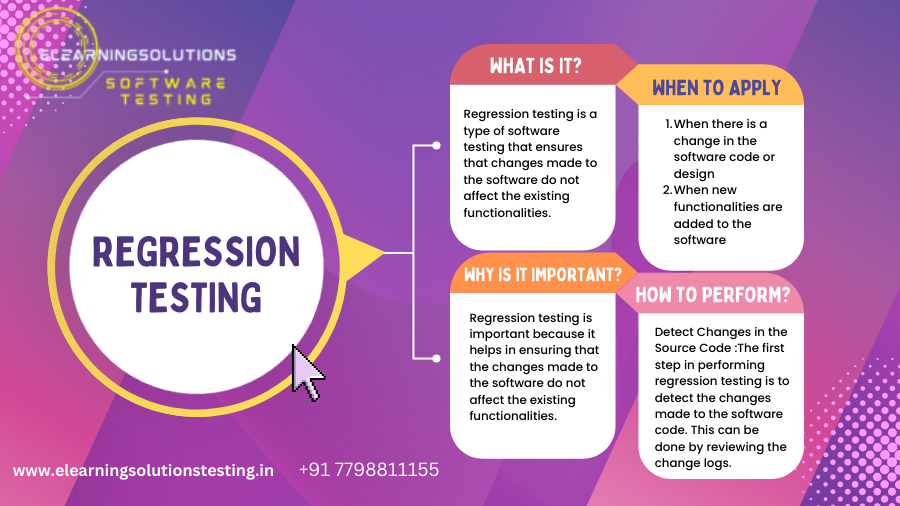
There are various types of software testing, including functional testing, non-functional testing, regression testing, integration testing, performance testing, usability testing, and security testing. Each type focuses on a specific aspect of the software to ensure it meets its intended purpose effectively.
What skills are needed for a career in software testing?
A career in software testing requires analytical, problem-solving, and communication skills. Familiarity with programming languages, debugging tools, test automation frameworks, and testing methodologies is also essential. A degree or certification in computer science, information technology, or a related field can help candidates secure employment.
What are the job roles available in software testing?
Software testers can work as quality assurance analysts, test engineers, test automation specialists, and test managers. They may be employed by various organizations, including software development companies, IT services firms, and product-focused businesses.
What is the salary expectation for a software testing professional in India?
Salary expectations for software testers in India vary based on factors such as experience, qualifications, and location. Entry-level positions may earn around ₹300,000 to ₹500,000 per annum, while experienced professionals can expect salaries between ₹700,000 to ₹1,200,000 per annum.
What is the global demand for software testing professionals?
The demand for software testing professionals is high worldwide due to increasing digitalization and the growing need for reliable software products. This trend is expected to continue in the coming years, offering numerous opportunities for qualified candidates.
What are some popular platforms for learning software testing?
Popular platforms for learning software testing include Coursera, Udemy, edX, Pluralsight, and eLearning Solutions. These online learning resources offer courses, certifications, and practice exercises to help individuals master the skills required for a career in software testing.
What is the growth potential for a career in software testing?
The growth potential for a career in software testing is high due to ongoing digital transformation and the increasing complexity of software products. As businesses continue to rely on technology, there will be a growing need for skilled software testers to ensure that their applications perform optimally.
How can I start a career in software testing?
To start a career in software testing, you can gain relevant skills through online courses or certifications. You may also consider completing a degree program in computer science, information technology, or a related field. Gaining practical experience by working on personal projects or internships is also essential.
Frequently Asked Questions
What skills do I need to become a software tester?
To become a software tester, you need to have basic computer skills, knowledge of software development life cycles, and analytical skills to identify and report defects. Additionally, having knowledge of testing frameworks and tools can be beneficial. You can acquire these skills through online courses and training programs.
How do I get started with a career in software testing?
To get started with a career in software testing, you can begin by learning the basics of software testing, including types of testing, testing levels, and testing techniques. You can also gain practical experience by testing open-source software or participating in testing communities. Creating a strong resume and portfolio can help you stand out when applying for software testing jobs.
What are the different types of software testing?
There are several types of software testing, including functional testing, non-functional testing, and security testing. Functional testing involves testing the software’s functionality, while non-functional testing involves testing its performance, usability, and compatibility. Security testing involves testing the software’s vulnerability to hacking and other security threats.
How much can I expect to earn as a software tester?
The salary of a software tester can vary depending on factors such as location, experience, and industry. On average, a software tester can earn between $50,000 to $100,000 per year, depending on their level of experience and the company they work for. With experience and certifications, software testers can move into senior roles and earn higher salaries.
Do I need to have a degree in computer science to become a software tester?
No, you don’t necessarily need a degree in computer science to become a software tester. While a degree in computer science or a related field can be beneficial, many software testers have degrees in other fields or have acquired their skills through online courses and training programs. What’s most important is having the necessary skills and knowledge to perform the job requirements.