In the world of software testing, quick validations and repeated checks play a crucial role in ensuring that an application is stable and reliable at every stage of development. Three essential types of testing used for this purpose are Smoke Testing, Sanity Testing, and Regression Testing. While they might seem similar, each serves a specific goal and is applied at different stages.
In this blog, we will explore what these tests are, their key differences, and when to use them.
What is Smoke Testing?
Smoke Testing is a preliminary test performed after a new build is deployed. It checks whether the most critical functionalities of an application are working. Think of it as a “build verification test.”
Characteristics:
- Performed on initial builds
- Covers basic functionality
- Shallow and wide approach
- Often automated
- Acts as a gatekeeper before deeper testing begins
Example:
After deploying a new build, testers verify whether the login page opens, users can access the homepage, and major menus respond.
What is Sanity Testing?
Sanity Testing is a narrow and deep test performed when a small change or fix is made in the application. It ensures that the specific functionality works as expected and that the change hasn’t caused any obvious issues.
Characteristics:
- Focuses on a particular module or feature
- Performed after minor updates or bug fixes
- Usually done manually
- Quick check without deep coverage
Example:
If a bug related to the “Forgot Password” feature is fixed, sanity testing would focus solely on that function to confirm it’s working.
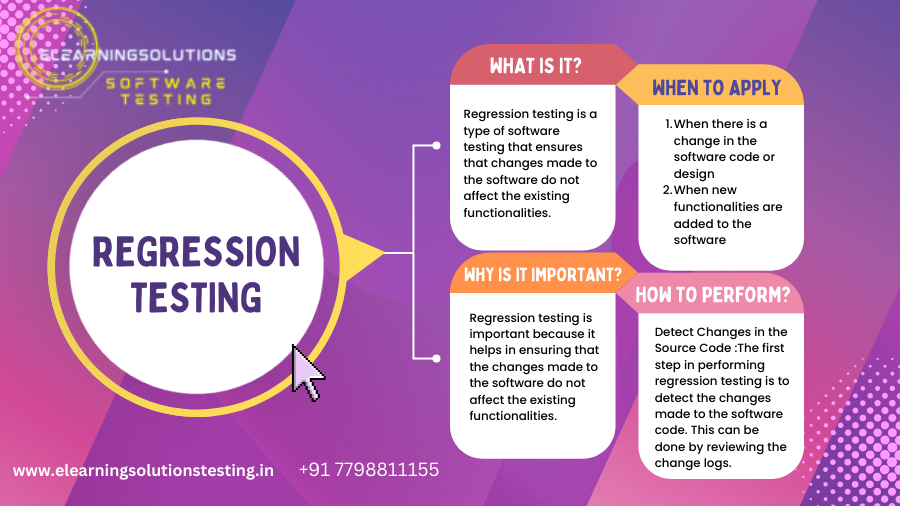
What is Regression Testing?
Regression Testing is a comprehensive test that verifies whether existing functionalities still work after changes like bug fixes, enhancements, or new feature additions. Its goal is to ensure that new code hasn’t broken old functionality.
Characteristics:
- Conducted after any significant changes
- Ensures software stability
- Can be partial or full regression
- Often automated for efficiency
Example:
After adding a new payment method, regression testing checks login, product selection, cart management, and checkout to ensure existing features remain unaffected.
Key Differences Between Smoke, Sanity, and Regression Testing
| Feature | Smoke Testing | Sanity Testing | Regression Testing |
|---|---|---|---|
| Purpose | Basic build verification | Verify recent bug fixes | Ensure old functionality works |
| Depth of Testing | Shallow | Narrow and deep | Deep and wide |
| Scope | High-level features | Specific area | Complete system or modules |
| Automation | Frequently automated | Typically manual | Often automated |
| When Performed | On new build | After minor changes | After any major change |
When to Use Each Type
- Smoke Testing: When a new build is received for the first time
- Sanity Testing: When a small patch or fix is made
- Regression Testing: Before release or after any significant update
Final Thoughts
Understanding the difference between smoke, sanity, and regression testing is vital for building an efficient QA strategy. Each test type serves a unique purpose—whether it’s verifying that the build is testable, ensuring a bug fix hasn’t introduced new issues, or checking that new code doesn’t break existing features.
You may be interested in:
What are the Levels of Testing in Software Engineering
Different types of manual testing
Automation testing in Selenium
API Testing in Software Testing
Frequently Asked Questions
What is the primary difference between smoke, sanity, and regression testing?
Smoke, sanity, and regression testing are all types of software testing, but they differ in their scope and purpose. Smoke testing is a preliminary test to ensure the software is stable enough for further testing, sanity testing is a subset of regression testing that verifies a specific functionality, and regression testing is a comprehensive test to ensure that changes have not introduced new bugs. Each type of testing serves a unique purpose in the software development lifecycle.
What is the purpose of smoke testing in the software development process?
Smoke testing is a high-level test that checks the basic functionality of the software to ensure it is stable enough to proceed with further testing. The primary purpose of smoke testing is to catch any major issues early on, saving time and resources by avoiding more detailed testing on an unstable system. By identifying critical issues early, smoke testing helps to prevent downstream problems.
How does sanity testing differ from regression testing?
Sanity testing is a subset of regression testing that focuses on a specific set of features or functionalities to verify that they are working as expected after changes have been made. Unlike regression testing, which is a comprehensive test of the entire system, sanity testing is a more limited test that checks for any obvious or glaring issues. Sanity testing is typically used to quickly verify that the changes have not introduced any major problems.
What are the benefits of performing regression testing?
Regression testing helps to ensure that changes made to the software have not introduced new bugs or affected existing functionality. The benefits of regression testing include identifying and fixing defects early, reducing the risk of downstream problems, and providing confidence that the software is stable and reliable. By performing regression testing, developers can ensure that the software meets the required standards and is ready for release.
When should sanity testing be performed in the software development process?
Sanity testing should be performed after changes have been made to the software, such as bug fixes, new feature implementations, or configuration changes. The goal of sanity testing is to quickly verify that the changes have not introduced any major issues, so it is typically performed before proceeding with more comprehensive testing. Sanity testing can be performed at various stages of the software development process, including after builds, sprints, or releases.