Software testing plays a crucial role in ensuring the quality, functionality, and reliability of applications before they reach the end user. In today’s competitive digital market, even a single bug can cost companies millions in revenue and damage their reputation. This is where manual testing and automation testing come in — two approaches that help developers and QA teams deliver flawless products.
If you’re new to the world of testing or work in a company exploring ways to improve software quality, understanding the difference between manual and automation testing is essential. Let’s break it down in simple, beginner-friendly terms with real-world examples.
What is Manual Testing?
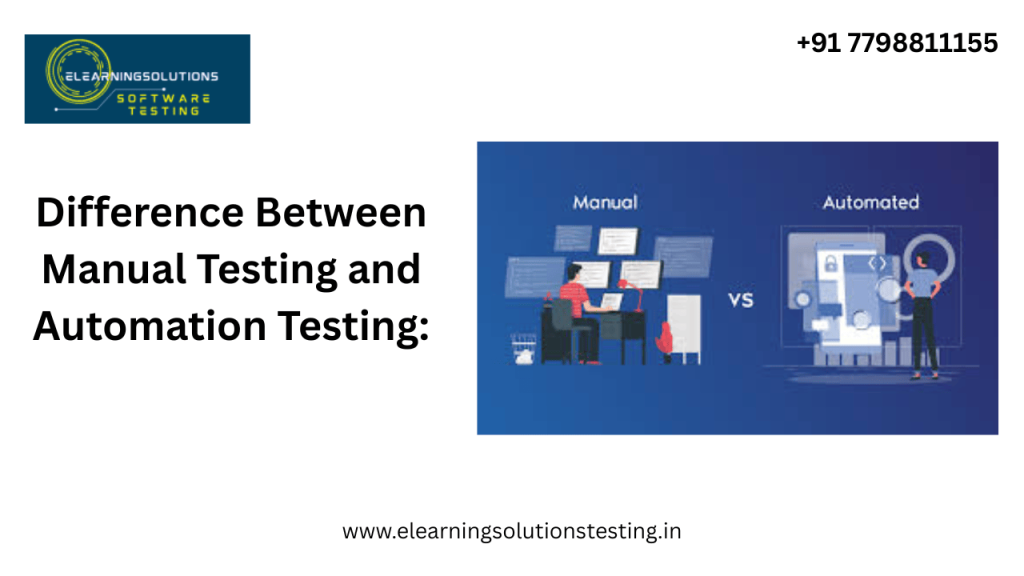
Manual testing is the process where testers execute test cases manually without using any automation tools. The tester plays the role of the end-user, ensuring that the application works as intended.
Example: Imagine testing a mobile banking app by physically logging in, checking balance, making transfers, and verifying the results — all by hand.
Key Characteristics of Manual Testing:
- Human involvement: Relies on the tester’s skills, intuition, and attention to detail.
- Flexibility: Suitable for projects where requirements change frequently.
- Exploratory nature: Great for finding unexpected issues that automation scripts may miss.
What is Automation Testing?
Automation testing uses specialized tools and scripts to execute test cases without human intervention. It’s faster, repeatable, and ideal for large-scale projects.
Example: Instead of manually logging into a banking app every time, a script automatically performs the login, checks balance, and validates results within seconds.
Key Characteristics of Automation Testing:
- Speed and efficiency: Tests run much faster than manual testing.
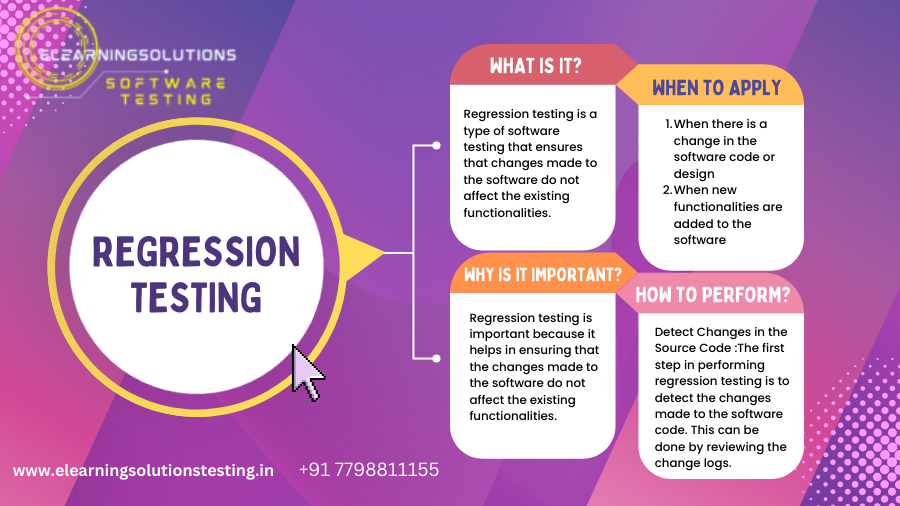
- Repeatability: Perfect for regression testing (checking that new updates don’t break old features).
- Scalability: Can handle thousands of test cases simultaneously.
Manual Testing vs Automation Testing: A Side-by-Side Comparison
| Feature | Manual Testing | Automation Testing |
| Execution | Performed by humans | Performed by tools/scripts |
| Speed | Slower, time-consuming | Faster, ideal for repetitive tasks |
| Cost | Lower initial cost, higher long-term cost | Higher initial cost, lower long-term cost |
| Accuracy | Prone to human errors | Highly accurate if scripts are written well |
| Best For | Usability, exploratory, ad-hoc testing | Regression, load, and performance testing |
| Maintenance | Easy to adapt to changes | Requires script updates with changes |
When to Choose Manual Testing
Manual testing is the go-to choice when:
- The project is small or in early stages.
- User interface and user experience testing are important.
- Requirements change frequently.
- Testing needs human judgment, creativity, or emotional feedback.
When to Choose Automation Testing
Automation testing is ideal when:
- You have large projects with repetitive test cases.
- Regression testing is frequent.
- You need to test across multiple devices, browsers, and operating systems.
- Speed and scalability are priorities.
Industry Insights & Market Trends
The global software testing market is projected to reach $50 billion by 2030, with automation testing driving much of the growth. Businesses are adopting automation to:
- Reduce time-to-market.
- Improve product quality.
- Lower long-term testing costs.
However, manual testing still holds a significant place, especially for exploratory and usability-focused projects. Many companies adopt a hybrid approach, combining the strengths of both methods.
Real-World Applications
- Manual Testing Example: Testing a brand-new video game’s graphics, storyline, and player experience.
- Automation Testing Example: Running load tests on an e-commerce platform during a flash sale to ensure the site can handle high traffic.
Practical Tips for Beginners
- Learn both approaches: Companies value testers who can adapt to both manual and automation testing.
- Start small: Begin with manual testing to understand test case creation and bug reporting.
- Explore automation tools: Familiarize yourself with Selenium, JUnit, or Cypress.
- Practice regularly: Use demo applications to apply what you learn.
Conclusion
Both manual testing and automation testing are essential in the software development lifecycle. Manual testing shines in areas requiring human judgment, while automation testing dominates repetitive, large-scale, and high-speed testing scenarios.
If you want to future-proof your career or improve your company’s testing efficiency, mastering both methods is key.
✅ Take the first step today!
Explore our advanced Software Testing Courses to gain hands-on experience with both manual and automation tools. Visit our course page and start your learning journey now.
YOU MAY BE INTERESTED IN
The Art of Software Testing: Beyond the Basics
Automation testing course in Pune
Automation testing in selenium
Mastering Software Testing: A Comprehensive Syllabus
Frequently Asked Questions
What is the primary difference between manual testing and automation testing?
Manual testing involves a human tester manually executing test cases, while automation testing uses software tools to execute test cases. This fundamental difference affects the speed, accuracy, and cost of testing. Automation testing is generally faster and more accurate than manual testing.
When should I choose manual testing over automation testing?
Manual testing is often preferred for short-term projects, exploratory testing, or situations where automation tools are not readily available. It is also useful for testing complex, one-time tasks that require human judgment and intuition. In such cases, the benefits of manual testing outweigh the benefits of automation testing.
Can automation testing completely replace manual testing?
While automation testing can cover a significant portion of testing, it cannot completely replace manual testing. Some tests, such as usability testing and user experience testing, require human intuition and judgment, making manual testing necessary. Therefore, a combination of both manual and automation testing is often the most effective approach.
What are the benefits of automation testing over manual testing?
Automation testing offers several benefits, including increased speed, improved accuracy, and reduced costs. It can also execute a large number of test cases in a short amount of time, making it ideal for regression testing and continuous integration. Additionally, automation testing reduces the risk of human error, resulting in more reliable test results.
How do I decide which tests to automate and which to perform manually?
To decide which tests to automate, consider the frequency of the test, the complexity of the test, and the resources required to perform the test. Tests that are repetitive, time-consuming, or require a large amount of data are ideal candidates for automation. On the other hand, tests that require human judgment or are one-time tasks are better suited for manual testing.