Cypress Unit Testing: A Complete Guide for Web Developers and Testers
Introduction
Building reliable and high-quality web applications requires more than writing functional code. Developers need to continuously test their applications to identify bugs, validate functionality, and prevent unexpected issues from reaching users.
Cypress has become a popular testing solution for modern JavaScript and front-end applications. It provides an interactive environment for writing, running, and debugging automated tests and can help development teams improve their software quality assurance process.
In this guide, we will explore Cypress unit testing, its benefits, setup process, key features, testing practices, and how Cypress can support modern web application testing.
What Is Cypress Unit Testing?
Cypress is an open-source, JavaScript-based testing tool designed for testing modern web applications. It provides developers and QA professionals with an environment where they can create automated tests and observe application behavior during test execution.
Although Cypress is commonly associated with end-to-end testing, it can also support component and unit-level testing workflows. The appropriate testing approach depends on the application and the specific functionality being validated.
Cypress can help teams test individual application components as well as complete user workflows.
Who Should Learn Cypress?
Cypress can be useful for a variety of technology professionals.
Front-End Developers
Developers working with JavaScript-based applications can use Cypress to validate application behavior and identify issues during development.
QA Engineers
Quality assurance professionals can use Cypress to build automated testing suites and reduce repetitive manual testing.
Automation Testers
Automation testers can add Cypress to their existing testing toolkit and work with modern web applications.
Beginners and Freshers
People starting a career in software testing can learn Cypress after developing a foundation in JavaScript and web application testing.
Career Switchers
Professionals moving toward software development or QA automation can use Cypress as one of the technologies in their learning roadmap.
Why Is Unit Testing Important?
Unit testing focuses on verifying small, individual parts of an application. Finding problems early can reduce the effort required to diagnose and fix defects later in the development lifecycle.
A good testing strategy can help teams:
- Detect defects earlier
- Improve code reliability
- Reduce repetitive manual testing
- Prevent regressions
- Increase confidence when making code changes
- Improve overall software quality
Automated testing becomes particularly useful when applications are continuously updated and released.
Why Use Cypress for Web Application Testing?
Cypress offers several features that can make automated testing easier for developers and testers.
Real-Time Test Execution
Cypress provides an interactive testing experience where developers can observe test execution and application behavior. This can make debugging and troubleshooting more efficient.
Easy Setup
Cypress can be installed as a project dependency using npm, making it relatively straightforward to introduce into a JavaScript project.
Automatic Waiting
Cypress automatically waits for many application conditions and DOM elements instead of requiring developers to add fixed delays throughout their tests.
Developer-Friendly API
Cypress provides commands that make common testing activities such as navigation, clicking, typing, and assertions easier to express.
Debugging Support
Cypress provides features such as command logs and browser debugging tools that help developers investigate test failures.
Prerequisites for Learning Cypress
Before starting with Cypress, it is helpful to have a basic understanding of:
- JavaScript
- HTML and CSS
- Web application development
- Software testing fundamentals
- Node.js and npm
The original material recommends using a modern web application, potentially built with frameworks such as React, Angular, or Vue.
How to Install Cypress
Cypress can be added to a Node.js project using npm.
Step 1: Create a Project
Create a project directory and move into it:
mkdir my-app
cd my-app
Step 2: Initialize the Project
Initialize a Node.js project:
npm init -y
Step 3: Install Cypress
Install Cypress as a development dependency:
npm install cypress --save-dev
Step 4: Open Cypress
You can launch the Cypress interface with:
npx cypress open
This allows you to configure your testing environment and begin creating test files.
Writing Your First Cypress Test
Once Cypress is installed, you can create a test specification and begin writing test cases.
A basic example looks like this:
describe('My First Test', function () {
  it('Visits the app homepage', function () {
    cy.visit('http://localhost:3000')

    cy.contains('Welcome to my app!')
  })
})
You can replace the URL and expected text with values appropriate to your own application.
The basic structure consists of:
describe()— groups related tests.it()— defines an individual test case.cy.visit()— navigates to a webpage.cy.contains()— finds content on the page.
As you progress, you can add more commands and assertions to validate different application behaviors.
Important Cypress Features
Time-Travel Debugging
Cypress provides an interactive command log that allows developers to inspect what happened during a test. This makes it easier to understand the sequence of actions leading to a failure.
Real-Time Reloading
When developing tests, Cypress can provide immediate feedback as test files are modified, helping developers iterate more quickly.
Network Control
Cypress provides tools for controlling and inspecting network activity. This can be useful when testing applications that depend on APIs or external services.
Command-Line Testing
Cypress can be executed through the command line, making it suitable for automated testing pipelines and CI/CD environments.
Cypress Testing Use Cases
Cypress can support multiple types of automated testing.
Component and Unit-Level Testing
Cypress can be used to test individual components and application behavior in isolation where appropriate.
End-to-End Testing
Cypress can simulate complete user workflows, such as logging in, navigating through an application, submitting forms, and verifying results.
Regression Testing
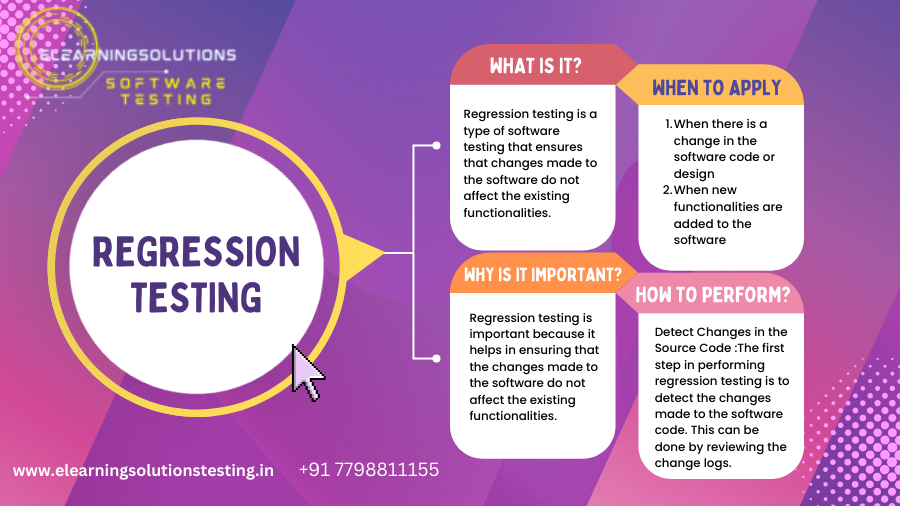
Automated Cypress tests can be executed after code changes to identify whether existing functionality has been affected.
API Testing
Cypress can also be incorporated into API testing workflows to validate requests and responses.
Smoke Testing
Teams can create quick automated tests to verify that important application functionality works after a deployment or build.
Cypress and Continuous Integration
Automated tests become more valuable when they are incorporated into the development pipeline.
Cypress can be executed from the command line and integrated with CI/CD platforms such as:
- Jenkins
- CircleCI
- Travis CI
A typical workflow can run Cypress tests automatically when developers push changes to a repository. This allows teams to identify potential issues earlier in the development process.
Cypress vs. Jest vs. Mocha
Different testing frameworks serve different purposes. The original content compares Cypress with Jest and Mocha based on features such as real-time reloading, API simplicity, JavaScript support, automatic waiting, and debugging capabilities.
| Feature | Cypress | Jest | Mocha |
|---|---|---|---|
| Real-time testing experience | Yes | Limited | Limited |
| JavaScript support | Yes | Yes | Yes |
| Automatic waiting | Yes | Limited | Generally requires additional handling |
| Browser-focused testing | Strong | Primarily test-runner focused | Flexible |
| Interactive debugging | Yes | Yes | Depends on setup |
Rather than choosing a framework based solely on feature comparisons, teams should consider their application architecture, testing requirements, technology stack, and existing development workflow.
Cypress vs. Selenium
Cypress and Selenium are both widely associated with automated web testing, but they use different approaches.
Cypress provides an integrated, developer-focused browser testing experience, while Selenium uses WebDriver-based browser automation.
When choosing between Cypress and Selenium, consider:
- Application requirements
- Browser coverage
- Existing automation infrastructure
- Programming language preferences
- CI/CD requirements
- Team expertise
- Testing strategy
The right choice depends on the needs of the project rather than one framework being universally better.
Cypress Testing Best Practices
Creating automated tests is only part of the process. Tests should also be designed for long-term maintainability.
Write Clear Tests
Test cases should have descriptive names and should clearly communicate what functionality they are validating.
Keep Tests Modular
Break large test cases into smaller, logical sections wherever possible.
Use Reliable Selectors
Stable selectors can help prevent tests from breaking when the visual design or page structure changes.
Avoid Unnecessary Delays
Use Cypress’s built-in waiting behavior instead of relying heavily on fixed time-based waits.
Organize Test Files
Keep related tests together and organize the project structure logically so that large test suites remain manageable.
Investigate Flaky Tests
Tests that fail intermittently can reduce confidence in an automation suite. Investigate timing, network, environment, and test-data issues when failures occur inconsistently.
Common Challenges When Using Cypress
Although Cypress provides many useful capabilities, testers may still encounter challenges.
Flaky Tests
Tests can become unreliable because of unstable application states, network conditions, or poorly designed selectors.
Large Test Suites
As the number of tests increases, execution time and maintenance requirements can also increase.
Learning JavaScript
Beginners without programming experience may need to learn JavaScript fundamentals before becoming comfortable with Cypress.
Understanding these challenges early can help teams build better testing strategies.
Skills That Complement Cypress
Cypress becomes more useful when combined with broader software testing and development knowledge.
Important complementary skills include:
- JavaScript
- HTML and CSS
- REST API testing
- Selenium
- Git
- CI/CD
- Test case design
- Debugging
- Web application fundamentals
Developing these skills can help automation testers work effectively across different stages of the software development lifecycle.
Career Opportunities After Learning Cypress
Cypress knowledge can contribute to a career in software testing and automation.
Potential roles include:
- QA Engineer
- Automation Test Engineer
- Software Test Engineer
- Test Analyst
- Front-End Developer
- QA Automation Specialist
Career growth depends on practical experience, technical knowledge, project exposure, and familiarity with broader automation and testing practices.
How to Learn Cypress Effectively
If you are new to Cypress, follow a structured learning approach:
- Learn JavaScript fundamentals.
- Understand HTML, CSS, and browser concepts.
- Learn software testing fundamentals.
- Install Cypress and create basic tests.
- Practice Cypress commands and assertions.
- Learn component and end-to-end testing concepts.
- Practice API and network testing.
- Integrate tests with CI/CD.
- Build real-world automation projects.
- Continuously improve your test design and debugging skills.
Hands-on practice is especially important because automation testing involves applying concepts to real application scenarios.
Frequently Asked Questions
What is Cypress unit testing?
Cypress is primarily known as a modern web testing tool and can support component and unit-level testing workflows in addition to end-to-end testing. It allows developers to automate and validate application behavior.
Is Cypress suitable for beginners?
Yes. Beginners can learn Cypress by first developing basic JavaScript and web development knowledge and then progressing through simple automated tests.
Can Cypress be used for end-to-end testing?
Yes. Cypress is widely used for automated end-to-end testing of web applications.
How does Cypress handle asynchronous operations?
Cypress provides built-in command handling and waiting behavior designed to synchronize many interactions with the application’s state. Commands such as cy.then() and cy.wait() can also be used where appropriate.
Can Cypress be integrated with Jenkins?
Yes. Cypress can be executed from the command line and incorporated into CI/CD workflows, including Jenkins-based pipelines.
How long does it take to learn Cypress?
The learning period varies depending on your JavaScript, testing, and web development experience. Consistent practice with real projects can help accelerate learning.
What skills should I learn with Cypress?
JavaScript, API testing, web technologies, Git, CI/CD, software testing fundamentals, and debugging are useful complementary skills.
Conclusion
Cypress is a powerful tool for modern web application testing and automation. Its interactive testing experience, automatic waiting, debugging capabilities, network control, and command-line support make it useful for developers and QA professionals.
While Cypress should be selected based on the requirements of a specific project, learning it alongside JavaScript, API testing, CI/CD, and software testing fundamentals can provide a strong foundation for automation testing.
By combining structured learning with consistent hands-on practice, developers and testers can use Cypress to create reliable automated tests and contribute to better software quality assurance.