Cypress Software: A Complete Guide to Modern Web Test Automation
Introduction to Cypress Software
In modern web development, delivering a fast and reliable application is only part of the challenge. Developers and QA professionals also need to make sure that every feature works correctly after new code is introduced. This is where test automation becomes essential.
Cypress is a modern testing framework designed for testing web applications. It provides developers and testers with tools for writing, running, debugging, and maintaining automated tests directly in the browser environment.
With features such as automatic waiting, network request control, interactive debugging, screenshots, videos, and support for multiple testing approaches, Cypress has become a popular choice for modern web application testing.
Whether you are a beginner entering automation testing or an experienced QA professional looking to expand your skills, learning Cypress can be a valuable addition to your technical toolkit.
What Is Cypress?
Cypress is an open-source testing framework focused primarily on modern web applications. It supports several types of testing, including:
- End-to-End (E2E) testing
- Component testing
- API testing workflows
- UI testing
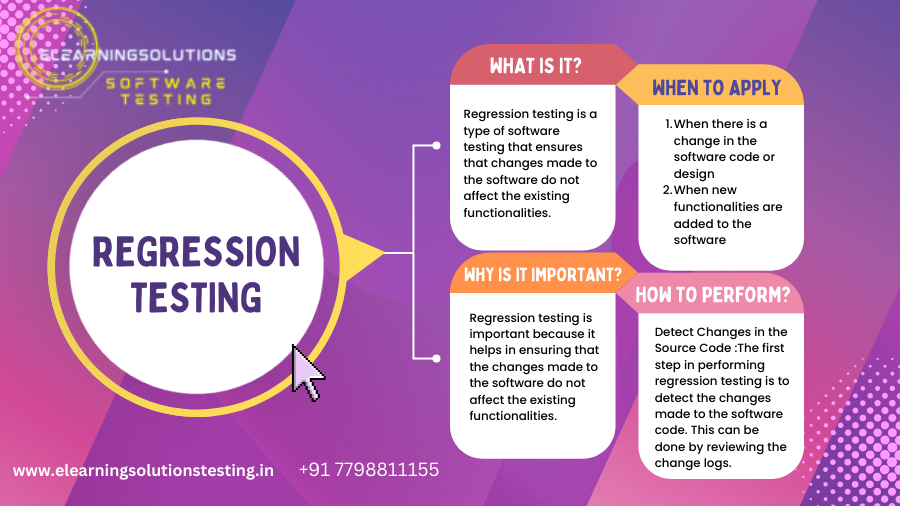
- Regression testing
One of Cypress’s major strengths is its developer-friendly testing experience. Instead of relying on a complicated collection of external tools and configuration, Cypress provides an integrated environment for creating and debugging tests.
A typical Cypress test can visit a web page, locate an element, interact with it, and verify the expected result.
For example:
describe('Login Test', () => {
  it('should allow a valid user to log in', () => {
    cy.visit('/login')
    cy.get('#username').type('testuser')
    cy.get('#password').type('password123')
    cy.get('button[type="submit"]').click()
    cy.contains('Dashboard').should('be.visible')
  })
})
This simple structure makes Cypress relatively easy for JavaScript developers and beginners in test automation to understand.
Who Should Learn Cypress?
Cypress can be useful for several types of technology professionals.
Beginners in Automation Testing
If you are starting your career in automation testing, Cypress provides a relatively straightforward way to learn concepts such as selectors, assertions, test cases, fixtures, and automated browser interactions.
Manual Testers Moving to Automation
Manual testers can use Cypress to transition into automation testing and expand their career opportunities.
JavaScript Developers
Because Cypress uses JavaScript and TypeScript, developers familiar with these technologies can quickly understand its syntax and testing approach.
QA Automation Engineers
Experienced automation engineers can use Cypress to build maintainable E2E and component test suites for modern web applications.
DevOps and CI/CD Professionals
Cypress tests can be incorporated into continuous integration and continuous delivery pipelines, allowing automated tests to run as part of the software delivery process.
Why Is Cypress Popular for Web Testing?
Traditional browser automation can sometimes involve complicated configuration, synchronization issues, and external dependencies.
Cypress takes a different approach by providing an integrated testing experience with features designed to simplify development and debugging.
Some important advantages include:
- Fast feedback during test development
- Automatic waiting for commands and assertions
- Interactive test debugging
- Network request interception
- Screenshots and video recording
- Built-in retry behavior
- Browser-based test execution
- CI/CD integration
- Support for JavaScript and TypeScript
These capabilities can help teams identify defects earlier and maintain reliable automated test suites.
Key Features of Cypress
1. Interactive Test Runner
Cypress provides an interactive environment where testers can execute tests and inspect what happens during test execution.
The test runner makes it easier to understand:
- Which command failed
- Which element was selected
- What the browser displayed
- Which assertion failed
- What happened immediately before the failure
This can significantly simplify debugging.
2. Automatic Waiting
Synchronization problems are common in UI automation.
For example, a test may attempt to click a button before the button becomes available. Cypress automatically waits for commands and assertions to satisfy their expected conditions instead of requiring testers to add unnecessary fixed delays in many situations.
This can make tests more stable and easier to maintain.
3. Time-Travel Debugging
One of Cypress’s well-known developer experience features is its ability to inspect different stages of a test.
When a test fails, users can examine commands in the Cypress interface and inspect the application’s state around the point where the problem occurred.
This makes debugging more visual and intuitive.
4. Network Request Control
Cypress provides network interception capabilities that allow testers to monitor, modify, stub, or simulate network requests.
For example, you can intercept an API request and return controlled test data.
cy.intercept('GET', '/api/users', {
  fixture: 'users.json'
}).as('getUsers')
This can be useful when testing applications that depend heavily on APIs.
5. Screenshots and Videos
Cypress can capture screenshots and record test execution in supported workflows.
These artifacts can be particularly useful in CI environments because testers may not be watching the test execution directly.
When a test fails, a screenshot or video can provide additional information about what happened.
6. Fixtures
Fixtures allow test data to be stored separately from test logic.
For example, you can create a JSON file containing user information and reuse that data across tests.
This helps keep automated test scripts organized and maintainable.
7. Spies, Stubs, and Clocks
Cypress provides tools for controlling application behavior during testing.
Spies can help monitor function calls.
Stubs can replace functions with controlled behavior.
Clocks can be useful when testing functionality involving dates, timers, or time-dependent behavior.
These capabilities allow testers to create more controlled test environments.
Getting Started with Cypress
Prerequisites for Learning Cypress
You do not need to be an expert programmer to start learning Cypress. However, having a basic understanding of the following technologies will be helpful:
- JavaScript or TypeScript
- HTML
- CSS
- DOM concepts
- Web browsers
- HTTP and APIs
- Basic software testing concepts
- npm and Node.js
A basic understanding of manual testing can also help you design meaningful automated test cases.
Installing Cypress
Cypress can be installed in a Node.js project using npm.
npm install cypress --save-devAfter installation, you can open the Cypress application with:
npx cypress openFrom there, you can configure your testing environment and create your first test.
Writing Your First Cypress Test
A basic Cypress test can be structured using describe() and it().
describe('Homepage Test', () => {
  it('should load the homepage successfully', () => {
    cy.visit('/')
    cy.get('h1').should('be.visible')
  })
})
The test visits the application and checks whether the expected heading is visible.
As you gain experience, you can introduce more advanced concepts such as fixtures, custom commands, API testing, reusable functions, and test data management.
Important Cypress Commands
Learning Cypress commands is an important part of becoming comfortable with the framework.
cy.visit()
Used to navigate to a URL.
cy.visit('https://example.com')cy.get()
Used to locate elements using selectors.
cy.get('#email').click()
Used to click an element.
cy.get('#login').click().type()
Used to enter text.
cy.get('#email').type('user@example.com').should()
Used to perform assertions.
cy.get('.message').should('be.visible')Understanding these fundamental commands provides a strong foundation for more advanced Cypress automation.
Cypress Best Practices
Writing automated tests is only the beginning. Creating tests that remain reliable as an application grows is equally important.
Use Stable Selectors
Avoid selectors that depend heavily on changing CSS classes or page structure.
Where appropriate, teams can use dedicated attributes such as:
<button data-cy="login-button">Login</button>And then:
cy.get('[data-cy="login-button"]').click()Avoid Unnecessary Hard Waits
Avoid depending on fixed delays such as:
cy.wait(5000)Whenever possible, synchronize tests using meaningful application conditions, network aliases, or assertions.
Keep Tests Independent
Tests should ideally be designed so that one test does not depend unnecessarily on another test having run successfully.
Independent tests are easier to execute, debug, and maintain.
Use Reusable Test Logic
Common actions can be organized using custom commands or reusable functions when appropriate.
This reduces duplication and makes test suites easier to maintain.
Use Meaningful Test Names
A test name should clearly communicate what functionality is being validated.
For example:
Good:
should display an error for invalid login credentialsThis is more useful than:
login test 1Real-World Applications of Cypress
Cypress can be used across many web application testing scenarios.
Regression Testing
Automated regression tests can verify that existing functionality continues to work after new features or code changes are introduced.
Functional Testing
Cypress can validate important user workflows such as:
- Login
- Registration
- Search
- Checkout
- Form submission
- Navigation
- User profile management
API-Driven Applications
Cypress can work with applications that communicate extensively with backend APIs, including workflows involving network interception and API requests.
Component Testing
Cypress also supports component testing for supported frontend technologies, allowing developers to test individual UI components in isolation.
CI/CD Testing
Cypress can be integrated into CI/CD pipelines so automated tests can run whenever developers push code or create pull requests.
Cypress vs Selenium


Cypress and Selenium are both widely known in web automation, but they use different approaches.
| Feature | Cypress | Selenium |
|---|---|---|
| Primary focus | Modern web testing | Browser automation |
| Languages | JavaScript/TypeScript | Multiple languages |
| Debugging experience | Highly interactive | Depends on tools/frameworks |
| Automatic waiting | Built into Cypress commands | Usually requires synchronization strategies |
| Browser architecture | Cypress-specific architecture | WebDriver-based |
| Ecosystem | Modern frontend testing | Mature, broad automation ecosystem |
| Mobile native apps | Not a primary use case | Not a native mobile testing framework either |
Neither tool is universally “better.” The right choice depends on the project’s technology stack, testing requirements, browser coverage, team expertise, and existing automation infrastructure.
Cypress vs Playwright
Playwright is another popular modern browser automation framework.
Both Cypress and Playwright can be used for modern web testing, but their architectures and capabilities differ.
Cypress emphasizes an integrated developer experience and interactive debugging, while Playwright provides broad browser automation capabilities and strong support for scenarios such as multi-page workflows and multiple browser contexts.
The best option depends on the application’s requirements and the team’s testing strategy.
Cypress in CI/CD and DevOps
Modern software teams increasingly integrate automated testing into CI/CD pipelines.
A typical workflow might look like this:
Developer commits code → CI pipeline starts → Application builds → Cypress tests execute → Results are generated → Deployment continues if tests pass
This approach helps teams identify defects earlier in the software development lifecycle.
Cypress can therefore play an important role in continuous testing and DevOps practices.
Career Opportunities After Learning Cypress
As organizations continue to automate software testing, knowledge of modern automation frameworks can complement broader QA skills.
Cypress knowledge can be useful for roles such as:
- QA Automation Engineer
- Software Test Engineer
- Automation Tester
- SDET
- QA Engineer
- JavaScript Test Automation Engineer
- Software Quality Engineer
However, learning only one automation tool is usually not enough for long-term career growth.
A stronger learning path combines:
Manual Testing + JavaScript/TypeScript + Cypress + API Testing + Git + SQL + CI/CD + Testing Fundamentals
This combination can provide a more comprehensive foundation for automation testing careers.
Common Challenges When Learning Cypress
Although Cypress is beginner-friendly, learners may encounter challenges.
Understanding Asynchronous Behavior
Cypress commands work differently from traditional synchronous JavaScript code. Understanding Cypress’s command queue and retry behavior is important.
Writing Reliable Selectors
Poor selectors can make automated tests fragile. Learning how to choose stable selectors is an important testing skill.
Managing Test Data
Large applications require effective strategies for handling test data, fixtures, API responses, and test environments.
Maintaining Large Test Suites
As the number of automated tests increases, organizations need proper test organization, reusable utilities, naming conventions, and CI/CD practices.
Frequently Asked Questions About Cypress
What is Cypress used for?
Cypress is primarily used for automated testing of modern web applications. It can support E2E and component testing along with workflows involving APIs and network requests.
Is Cypress easy for beginners?
Cypress can be relatively easy to start with, particularly for people who understand basic JavaScript, HTML, CSS, and software testing concepts.
Is JavaScript required to learn Cypress?
JavaScript or TypeScript knowledge is highly recommended because Cypress tests are commonly written using these languages.
Is Cypress better than Selenium?
Not necessarily. Cypress and Selenium have different architectures and strengths. The appropriate tool depends on project requirements, technology stack, browser needs, and team expertise.
Can Cypress be used for API testing?
Yes. Cypress provides capabilities for making requests and working with APIs, and its network interception features can be useful when testing API-driven applications.
Can Cypress test mobile applications?
Cypress is primarily designed for web applications rather than native mobile application automation. Mobile web testing is possible, but native mobile app testing generally requires tools designed specifically for native mobile platforms.
Is Cypress useful for a QA career?
Yes. Cypress can be a valuable automation testing skill, especially when combined with JavaScript or TypeScript, API testing, Git, CI/CD, and fundamental QA knowledge.
Conclusion
Cypress has become an important tool in the modern web testing ecosystem because it combines browser testing, debugging, network control, assertions, screenshots, and other testing capabilities into a developer-friendly workflow.
For beginners, Cypress offers a practical entry point into web automation. For experienced testers and developers, it provides powerful capabilities for building maintainable automated test suites and integrating testing into CI/CD pipelines.
However, becoming a successful automation professional requires more than learning a single framework. Building strong fundamentals in software testing, JavaScript, API testing, version control, CI/CD, and test automation principles can help you develop a more complete skill set.
If you are planning to build a career in automation testing, learning Cypress can be a strong step toward understanding modern web application testing.