Understanding Different Types of Automation Testing
Introduction to Automation Testing
Automation testing, a crucial aspect of software development, is gaining significant traction in the tech industry today. Its adoption is on the rise due to the increasing complexity of applications and the need for faster, more efficient testing processes. By automating repetitive tasks, teams can save time, reduce human error, and ensure consistent results.
What Exactly is Automation Testing?
Automation testing involves the use of specialized software tools to execute predefined test cases automatically. This helps in validating and verifying the functionality of an application or website under various conditions, without requiring human intervention.
Why Automate Testing?
Automation testing offers several advantages over manual testing. It can execute tests faster, run multiple tests simultaneously, and maintain consistency across test runs. This not only saves time but also increases the overall efficiency of the testing process, making it a valuable addition to any software development lifecycle (SDLC).
Types of Automation Testing
Functional Testing
Functional testing, as the name suggests, focuses on verifying the functionality of an application or website. It ensures that the software behaves as expected under various conditions and user interactions.
Regression Testing
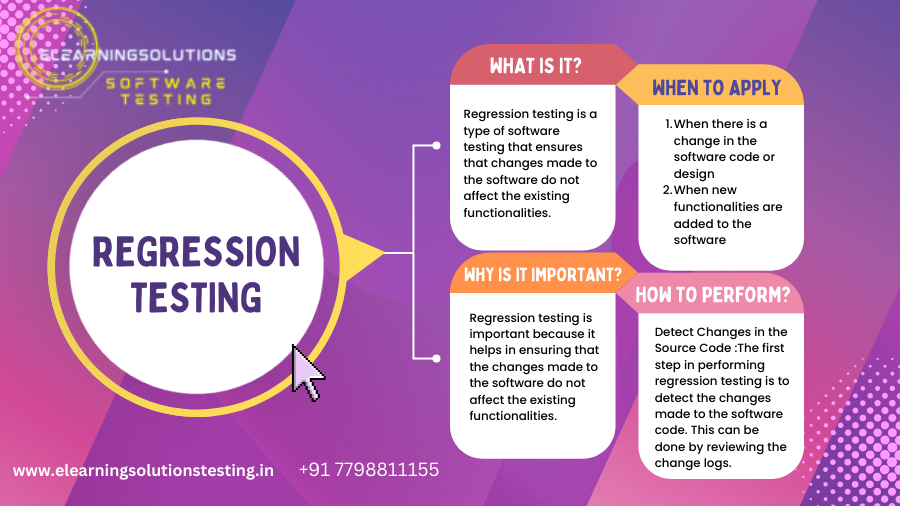
Regression testing is a type of functional testing that aims to verify if any changes in the software, such as bug fixes or updates, have caused unintended side effects. It helps maintain the overall stability and consistency of the application after modifications.
Unit Testing
Unit testing is a level of testing that focuses on individual software components, or units, to ensure they function as expected. It allows developers to isolate and test specific parts of the codebase without being affected by other components.
Integration Testing
Integration testing combines individual software components, or units, to verify their interaction and compatibility. It helps ensure that different parts of the application work together seamlessly and do not cause conflicts when integrated.
UI (User Interface) Testing
UI testing focuses on evaluating the visual elements and user experience of an application or website. It ensures that the interface is intuitive, responsive, and easy to navigate for users.
FAQs
What is the importance of automation testing?
Automation testing helps reduce human error, increase efficiency, and improve consistency in the testing process. It can execute tests faster and run multiple tests simultaneously, saving time and resources.
Is functional testing a type of automation testing?
Yes, functional testing is a type of automation testing that focuses on verifying the functionality of an application or website under various conditions and user interactions.
What is the difference between unit testing and integration testing?
Unit testing focuses on individual software components, while integration testing combines multiple units to verify their interaction and compatibility within the application as a whole.
Why is UI testing important in automation testing?
UI testing ensures that the visual elements and user experience of an application or website are intuitive, responsive, and easy to navigate for users. It helps improve the overall usability and accessibility of the software.
Can automation testing replace manual testing completely?
Automation testing can significantly reduce the need for manual testing but cannot completely replace it. Manual testing is still essential for exploratory testing, usability testing, and testing scenarios that are difficult to automate.
Conclusion
Automation testing has become an indispensable part of the software development process. By understanding different types of automation testing, such as functional, regression, unit, integration, and UI testing, teams can choose the most suitable approach for their specific needs and requirements.
As technology continues to evolve, so will the tools and techniques used in automation testing. Embracing this technology can help organizations improve their software quality, reduce time-to-market, and ultimately provide a better user experience.
Types of Automation Testing: A Comprehensive Guide for 2026
**1:** Understanding the Importance and Benefits of Automation Testing
In today’s fast-paced digital world, the demand for high-quality software applications is skyrocketing. To meet this demand, automation testing has become an essential tool for ensuring application performance, reliability, and user satisfaction. This section will provide a brief overview of the importance and benefits of automation testing in 2026.
**1:** Boosting Efficiency and Reducing Costs
One of the primary advantages of automation testing is its ability to significantly increase efficiency while reducing costs. Manual testing can be labor-intensive, time-consuming, and prone to human error. Automated tests run faster, execute consistently, and minimize the need for extensive manual intervention, making them more cost-effective in the long run.
**2:** Enhancing Application Quality and User Experience
By identifying bugs, errors, and performance issues early in the development cycle, automation testing helps ensure that applications are of high quality and provide an exceptional user experience. This contributes to increased customer satisfaction, improved brand reputation, and higher conversion rates, ultimately leading to business growth and success.
** 2:** Exploring Different Types of Automation Testing
Automation testing can be categorized into several types, each with its unique features and purposes. The following sections will delve deeper into the most common types of automation testing used in software development.
** 1:** Unit Tests
Unit tests are the smallest test units that focus on individual components or functions within a software application. They help ensure that each component performs as intended, and they contribute to the overall stability and maintainability of the codebase.
**2:** Integration Tests
Integration tests verify how different modules or components work together within an application. They are crucial for identifying compatibility issues, ensuring seamless interaction between various parts of the software, and maintaining its overall functionality.
** 3:** Functional Tests
Functional tests evaluate an application’s features and user interface against predefined requirements or business scenarios. They help ensure that the application behaves as expected under a variety of conditions, providing users with a reliable and intuitive experience.
** 4:** Regression Tests
Regression tests are designed to verify that changes made to an existing application do not negatively impact its overall functionality or introduce new bugs. They are essential for maintaining software quality and stability during the development, maintenance, and upgrade phases of a project.
**5:** Performance Tests
Performance tests measure an application’s speed, responsiveness, and scalability under various loads and conditions. They help identify bottlenecks, optimize resource utilization, and ensure that the application performs well for end-users, even as traffic and data volumes increase.
**3:** Top Training Platforms for Automation Testing Certification
If you’re interested in pursuing a career in automation testing, several renowned training platforms offer comprehensive courses and certification programs to help you build your skills and expertise. Some of the top options include:
1. eLearning Solutions – A leading training institute based in Pune (<https://www.elearningsolutions.co.in/>) that offers a wide range of automation testing courses tailored to different skill levels and job roles.
2. Bright-Minds – Another well-known training provider in Pune with a strong focus on automation testing, software development, and IT services (<https://bright-minds.in/>).
3. Udemy – A popular online learning platform that features numerous automation testing courses taught by industry experts and covering various tools and frameworks.
4. Coursera – An educational platform offering a variety of automation testing courses from top universities and organizations, such as the University of California, San Diego, and IBM.
5. edX – A massive open online course (MOOC) provider that collaborates with leading institutions like MIT and Harvard to offer high-quality automation testing courses for learners worldwide.
** 4:** Salary Expectations and Industry Demand
The demand for skilled automation testers is on the rise, as more businesses recognize the importance of software quality and user experience in their digital strategies. According to industry trends, automation testers can expect competitive salaries depending on their experience level, skillset, and location:
– Junior Automation Tester: INR 300,000 – 450,000 per annum (India)
– Mid-Level Automation Tester: INR 500,000 – 700,000 per annum (India)
– Senior Automation Tester: INR 800,000 – 1,200,000 per annum (India)
– Automation Testing Lead/Manager: INR 1,500,000 – 3,000,000 per annum (India)
**FAQ:**
1. What are the prerequisites for pursuing a career in automation testing?
A: Familiarity with programming languages such as Java, Python, or C#, and experience with test automation frameworks like Selenium or Appium can be beneficial.
2. How long does it take to become proficient in automation testing?
A: The time required to master automation testing depends on individual learning pace and dedication. On average, it may take several months to a year of focused study and practice to achieve proficiency.
3. Which companies are known for their extensive use of automation testing?
A: Companies like Amazon, Google, Facebook, and Microsoft have significant investments in automation testing to ensure the quality and performance of their software applications.
4. Can I learn automation testing online?
A: Yes, there are numerous online platforms that offer automation testing courses, allowing you to learn at your own pace from the comfort of your home or office.
5. What is the future outlook for automation testing careers?
A: The demand for automation testers is expected to grow as businesses continue to prioritize software quality and user experience in their digital strategies, making it an exciting field with numerous opportunities.
**Conclusion:**
In conclusion, automation testing plays a pivotal role in ensuring high-quality, reliable, and efficient software applications. By understanding the different types of automation testing, learning from top training platforms, and staying informed about industry trends and best practices, you can build a successful career as an automation tester in today’s digital landscape. With increased demand for skilled professionals in this field, now is the perfect time to take your first steps toward mastering automation testing.
Types of Automation Testing: A Comprehensive Guide for Testers and Developers
Introduction to Automation Testing
Automation Testing: A game-changer in the world of software testing, enabling testers and developers to perform repetitive tasks efficiently and accurately, saving time and resources.
Understanding the Need for Automation Testing
The Rise of Agile Methodologies: With agile development practices increasingly popular, the need for faster testing has become crucial. Manual testing cannot keep up with the speed and frequency of deployments.
Manual Testing vs Automation Testing
Comparative Analysis: Learn about the key differences between manual and automation testing, their advantages, and limitations to make an informed decision about which method to use in various scenarios.
Different Types of Automation Testing
Unit Testing
Testing Individual Components: Unit testing is the first level of automation testing that focuses on individual software components, ensuring they function correctly and maintain their integrity throughout the development process.
Integration Testing
Combining Components for System Verification: Integration testing combines multiple units to validate if they work together seamlessly and identify any compatibility issues or unexpected behavior.
Functional Testing vs Non-Functional Testing
Functional Testing: Validating Application’s Functionality
Verifying User Interface: Functional testing ensures that the application performs as expected according to its specifications and requirements.
Non-Functional Testing: Assessing Performance and Compatibility
Evaluating Application’s Reliability, Efficiency, and Usability: Non-functional testing examines an application’s performance, security, compatibility, usability, scalability, and maintainability.
Automation Testing Tools
Popular Automation Testing Frameworks
Selenium: An open-source testing framework for web applications supporting multiple programming languages.
Appium:
Mobile App Testing: A cross-platform automation tool that allows testers to write test scripts using popular programming languages and test mobile apps on various platforms, including Android and iOS.
Career Growth in Automation Testing
Key Technical Skills for Successful Automation Testers
Programming Languages: Familiarity with programming languages such as Java, Python, and C# is essential for writing test scripts.
Test Management Tools:
Testing Lifecycle Mastery: Knowledge of test management tools like TestLink, TestRail, and TestNG aids in managing testing projects efficiently.
Benefits of Mastering Automation Testing
Increased Efficiency and Productivity
Reduced Time and Costs: Automation testing allows teams to execute tests faster, reducing the time spent on manual tasks.
Improved Quality Assurance
Fewer Bugs and Issues: Automated tests increase accuracy and consistency, leading to higher-quality software with fewer bugs and issues.
Conclusion: Embrace the Power of Automation Testing
Automation testing is an indispensable tool for modern software development, ensuring quicker releases, improved efficiency, and higher-quality software. Mastering automation testing will open doors to exciting career opportunities and long-term professional growth. eLearning Solutions offers comprehensive training programs in automation testing to help you stay ahead of the curve in this rapidly evolving field.
**
Types of Automation Testing: A Comprehensive Guide for Testers and Developers
Understanding the Importance of Automation Testing
Automation testing is a critical aspect of software development that ensures the quality, reliability, and efficiency of applications. It allows for repetitive tasks to be automated, saving time, reducing human error, and ensuring consistent results.
What is Automation Testing and Why is it Important?
Automation testing is a method used in software testing that leverages software tools to control the execution of tests and compare actual test results with predicted or expected ones. It’s essential because it allows for faster, more efficient, and reliable testing, especially as applications grow in complexity.
Different Types of Automation Testing
There are several types of automation testing:
** Unit Testing**
What is Unit Testing?
Unit testing is a type of automation testing that focuses on individual units or components of an application, such as functions, methods, and classes. It helps in identifying and fixing issues early in the development lifecycle.
** Integration Testing**
What is Integration Testing?
Integration testing verifies how different units or modules of an application work together. It ensures that data can be shared and processed correctly between these components.
**Functional Testing**
What is Functional Testing?
Functional testing checks the functionality of an application by simulating user interactions. It ensures that the application behaves as intended and provides the expected results.
**Regression Testing**
What is Regression Testing?
Regression testing is used to verify that changes made to an existing system do not adversely affect its current functionality. It helps maintain the application’s stability and consistency.
** Performance Testing**
What is Performance Testing?
Performance testing measures the speed, scalability, reliability, and resource usage of an application under various load conditions. It helps identify bottlenecks and areas for optimization.
**Security Testing**
What is Security Testing?
Security testing checks an application’s vulnerabilities to cyber threats, such as unauthorized access, data breaches, and malware attacks. It helps ensure the security and privacy of user data.
**FAQ**
Frequently Asked Questions
What is the career outlook for automation testers?
The demand for automation testers is high and continues to grow. With the increasing complexity of software applications, the need for skilled testers to ensure their quality and reliability becomes more critical.
What are the prerequisites for learning automation testing?
A basic understanding of programming concepts, such as variables, loops, and conditional statements, is essential. Familiarity with a specific test automation tool, like Selenium or Appium, is also beneficial.
What are the best platforms for learning automation testing?
Online learning platforms like Coursera, Udemy, and edX offer comprehensive courses on automation testing. Additionally, official documentation and tutorials provided by test automation tool vendors can be valuable resources.
What skills are needed for a successful career in automation testing?
Besides technical skills, strong problem-solving abilities, attention to detail, and effective communication are essential for a successful career in automation testing.
How does automation testing compare to manual testing?
Automation testing is faster, more efficient, and less prone to human error than manual testing. However, it requires initial setup and maintenance, making it more suitable for repetitive tasks or large-scale applications.
What are the future prospects of automation testing?
The future of automation testing looks promising as technology continues to evolve. Advancements in AI, machine learning, and DevOps will likely drive the growth and adoption of automation testing.
**Conclusion**
Automation testing is an essential aspect of software development that ensures the quality, reliability, and efficiency of applications. By understanding the different types of automation testing, testers and developers can make informed decisions about which approach best suits their needs.
With the growing demand for skilled automation testers, it’s an exciting time to enter this field. By developing technical skills, problem-solving abilities, and a strong work ethic, you can build a successful career in automation testing.
**
Frequently Asked Questions
What is automation testing and how does it benefit my project?
Automation testing is a software testing technique that uses tools and scripts to execute tests, reducing manual effort and increasing test efficiency. This approach enables testers and developers to run tests repeatedly and consistently, ensuring that the application meets the required standards. By adopting automation testing, teams can improve product quality and reduce time-to-market.
What skills do I need to learn for automation testing?
To get started with automation testing, you should have a basic understanding of programming languages such as Java, Python, or C#, as well as experience with testing frameworks like Selenium or Appium. Additionally, knowledge of agile methodologies and version control systems like Git is beneficial. Familiarity with test management tools and continuous integration pipelines is also essential for a career in automation testing.
How do I choose the right automation testing tool for my project?
Selecting the right automation testing tool depends on several factors, including the type of application, testing requirements, and budget. You should consider the tool’s compatibility with your project’s technology stack, its ease of use, and the level of support provided by the vendor. It’s also essential to evaluate the tool’s scalability and integration with other tools in your development ecosystem.
Can automation testing replace manual testing entirely?
While automation testing can cover a significant portion of testing, it’s unlikely to replace manual testing entirely. Manual testing is still necessary for exploratory testing, usability testing, and testing complex business workflows that require human intuition and judgment. Automation testing should be seen as a complementary approach to manual testing, allowing teams to focus on high-value tasks that require human expertise.
How do I measure the effectiveness of my automation testing efforts?
To measure the effectiveness of your automation testing efforts, you should track key metrics such as test coverage, test execution time, and defect leakage. You can also monitor the return on investment (ROI) of automation testing by comparing the costs of automation with the benefits of reduced manual testing effort and improved product quality. Additionally, continuous feedback from stakeholders and team members can help you refine your automation testing strategy and improve its overall effectiveness.