eLearning applications have transformed education, making learning more accessible and interactive. However, ensuring their functionality, security, and performance across multiple devices and platforms requires a robust testing approach. Automated testing is a powerful solution to streamline testing processes, enhance accuracy, and reduce manual effort.
In this blog, we will explore key automated testing strategies, tools, and best practices to improve the quality and reliability of eLearning applications.
Why Automate Testing for eLearning Applications?
Automated testing helps:
- Reduce testing time and increase efficiency.
- Ensure consistency across different devices and browsers.
- Enhance security by identifying vulnerabilities early.
- Improve user experience by detecting and fixing bugs faster.
- Support scalability, handling large numbers of users without performance issues.
- With a well-planned test automation strategy, organizations can deliver high-quality, error-free eLearning applications while minimizing costs.
Key Automated Testing Strategies for eLearning Applications
- Functional Testing
Ensures that all features of the eLearning platform work as expected, such as:
User authentication and access control
Course enrollment and content accessibility
Interactive elements like quizzes, videos, and animations
Tools: Selenium, Cypress, TestComplete
- Cross-Browser and Cross-Device Testing
Validates that the eLearning platform is compatible with different browsers and devices.
Test responsiveness on desktops, tablets, and mobile devices
Ensure smooth functionality across Chrome, Firefox, Safari, and Edge
Tools: BrowserStack, Sauce Labs
- Performance and Load Testing
Determines how well the system handles multiple users and ensures a lag-free learning experience.
Simulate thousands of users accessing the platform simultaneously
Measure page load times, video buffering, and quiz response times
Identify bottlenecks and optimize server performance
Tools: JMeter, LoadRunner, Gatling
- API Testing
eLearning platforms integrate with payment gateways, databases, and third-party services. API testing ensures these integrations work flawlessly.
Validate course purchase transactions and student data retrieval
Ensure seamless interaction with LMS (Learning Management System) APIs
Tools: Postman, RestAssured, SoapUI
- Security Testing
Protects student data, payment information, and course content from cyber threats.
Detect vulnerabilities like SQL injection, cross-site scripting (XSS), and unauthorized access
Ensure compliance with data privacy regulations (GDPR, CCPA, etc.)
Tools: OWASP ZAP, Burp Suite
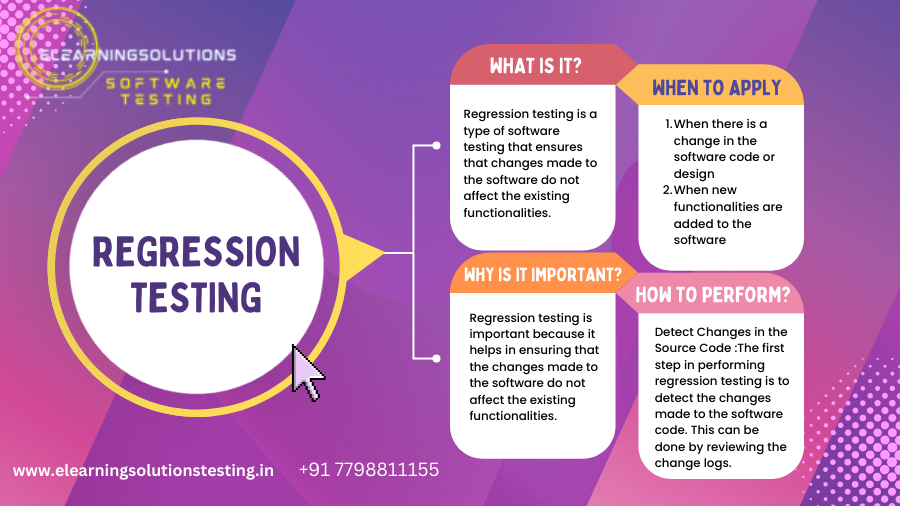
- Regression Testing
Ensures that new updates do not break existing functionality.
Run automated test scripts after every software update
Detect bugs early and prevent disruptions in the learning experience
Tools: Selenium, TestNG, Ranorex
Best Practices for Automated Testing in eLearning Applications
Choose the right automation framework (Selenium for web apps, Appium for mobile).
Prioritize test cases based on risk and business impact.
Maintain and update test scripts as the application evolves.
Integrate automated testing into CI/CD pipelines for continuous testing.
Monitor test results regularly and improve test coverage.
Conclusion
Automating testing in eLearning applications ensures a seamless, secure, and high-performance learning experience. By implementing functional, performance, API, and security testing strategies, you can identify issues early and deliver a flawless eLearning platformeLearning applications have transformed education, making learning more accessible and interactive. However, ensuring their functionality, security, and performance across multiple devices and platforms requires a robust testing approach. Automated testing is a powerful solution to streamline testing processes, enhance accuracy, and reduce manual effort.
In this blog, we will explore key automated testing strategies, tools, and best practices to improve the quality and reliability of eLearning applications.
Why Automate Testing for eLearning Applications?
Automated testing helps:
Reduce testing time and increase efficiency.
Ensure consistency across different devices and browsers.
Enhance security by identifying vulnerabilities early.
Improve user experience by detecting and fixing bugs faster.
Support scalability, handling large numbers of users without performance issues.
With a well-planned test automation strategy, organizations can deliver high-quality, error-free eLearning applications while minimizing costs.
Key Automated Testing Strategies for eLearning Applications
- Functional Testing
Ensures that all features of the eLearning platform work as expected, such as:
User authentication and access control
Course enrollment and content accessibility
Interactive elements like quizzes, videos, and animations
Tools: Selenium, Cypress, TestComplete
- Cross-Browser and Cross-Device Testing
Validates that the eLearning platform is compatible with different browsers and devices.
Test responsiveness on desktops, tablets, and mobile devices
Ensure smooth functionality across Chrome, Firefox, Safari, and Edge
Tools: BrowserStack, Sauce Labs
- Performance and Load Testing
Determines how well the system handles multiple users and ensures a lag-free learning experience.
Simulate thousands of users accessing the platform simultaneously
Measure page load times, video buffering, and quiz response times
Identify bottlenecks and optimize server performance
Tools: JMeter, LoadRunner, Gatling
- API Testing
eLearning platforms integrate with payment gateways, databases, and third-party services. API testing ensures these integrations work flawlessly.
Validate course purchase transactions and student data retrieval
Ensure seamless interaction with LMS (Learning Management System) APIs
Tools: Postman, RestAssured, SoapUI
- Security Testing
Protects student data, payment information, and course content from cyber threats.
Detect vulnerabilities like SQL injection, cross-site scripting (XSS), and unauthorized access
Ensure compliance with data privacy regulations (GDPR, CCPA, etc.)
Tools: OWASP ZAP, Burp Suite
- Regression Testing
Ensures that new updates do not break existing functionality.
Run automated test scripts after every software update
Detect bugs early and prevent disruptions in the learning experience
Tools: Selenium, TestNG, Ranorex
Best Practices for Automated Testing in eLearning Applications
Choose the right automation framework (Selenium for web apps, Appium for mobile).
Prioritize test cases based on risk and business impact.
Maintain and update test scripts as the application evolves.
Integrate automated testing into CI/CD pipelines for continuous testing.
Monitor test results regularly and improve test coverage.
Conclusion
Automating testing in eLearning applications ensures a seamless, secure, and high-performance learning experience. By implementing functional, performance, API, and security testing strategies, you can identify issues early and deliver a flawless eLearning platform.
YOU MAY BE INTERESTED IN
The Art of Software Testing: Beyond the Basics
Automation testing course in Pune
Automation testing in selenium
Mastering Software Testing: A Comprehensive Syllabus
Frequently Asked Questions
What are the benefits of using automated testing for eLearning applications?
Automated testing for eLearning applications helps reduce testing time and costs, while also improving the overall quality and reliability of the application. By automating the testing process, developers can quickly identify and fix defects, ensuring a better user experience. This also allows for faster deployment of updates and new features.
How do I choose the right automated testing tool for my eLearning application?
Choosing the right automated testing tool depends on several factors, including the type of application, the programming languages used, and the specific testing requirements. It’s essential to evaluate different tools based on their features, compatibility, and user support to ensure the best fit for your needs. Popular tools like Selenium and Appium are widely used for eLearning application testing.
Can automated testing replace manual testing for eLearning applications?
While automated testing is highly effective for repetitive and regression testing, it cannot completely replace manual testing for eLearning applications. Manual testing is still necessary for tasks that require human judgment, such as usability testing and user experience evaluation. A balanced approach that combines automated and manual testing is often the most effective way to ensure comprehensive testing.
How often should I run automated tests for my eLearning application?
The frequency of running automated tests depends on the development cycle and the rate of changes made to the application. It’s recommended to run automated tests at least once a day, or after each build, to catch defects early and prevent downstream issues. Continuous integration and continuous deployment (CI/CD) pipelines can also be used to automate the testing process.
What are some common challenges faced during automated testing of eLearning applications?
Common challenges faced during automated testing of eLearning applications include test data management, test environment setup, and handling dynamic content. Additionally, issues like browser and device compatibility, as well as third-party integrations, can also pose challenges. To overcome these challenges, it’s essential to have a well-planned testing strategy and a skilled testing team.