As eLearning applications continue to grow in complexity, ensuring their functionality, performance, and security is crucial. Automated testing plays a vital role in maintaining a seamless user experience while reducing manual efforts and errors.
This guide explores key automated testing strategies, tools, and best practices to enhance the quality and reliability of eLearning applications.
Why Automate Testing for eLearning Applications?
Automated testing helps:
- Save time and effort by reducing manual testing cycles.
- Improve accuracy by eliminating human errors in repetitive tasks.
- Enhance scalability, ensuring the platform works across various devices and browsers.
- Ensure security and compliance with data protection regulations.
- Identify performance issues before they impact users.
Key Automated Testing Strategies for eLearning Applications
1. Functional Testing
Ensures that all features work as expected, including:
- Course enrollment, progress tracking, and assessments
- Login authentication and user role management
- Content upload, multimedia playback, and quizzes
Tools: Selenium, TestComplete, Cypress
2. Cross-Browser and Cross-Device Testing
Validates that the application runs smoothly across different browsers and devices.
- Test across Chrome, Firefox, Safari, and Edge
- Ensure responsiveness on desktops, tablets, and mobile devices
Tools: BrowserStack, Sauce Labs
3. Performance and Load Testing
Evaluates how the system handles multiple users simultaneously.
- Test LMS performance during peak traffic
- Measure response time for course loading and quizzes
- Identify bottlenecks and optimize database queries
Tools: JMeter, Gatling, LoadRunner
4. API Testing
Ensures seamless integration between different system components, such as:
- LMS and third-party content providers
- Payment gateways for course purchases
- Analytics tools tracking learner progress
Tools: Postman, RestAssured, SoapUI
5. Security Testing
Protects user data and prevents cyber threats by automating security checks.
- Detect SQL injections, cross-site scripting (XSS), and unauthorized access
- Validate encryption of user credentials and payment details
Tools: OWASP ZAP, Burp Suite
6. Regression Testing
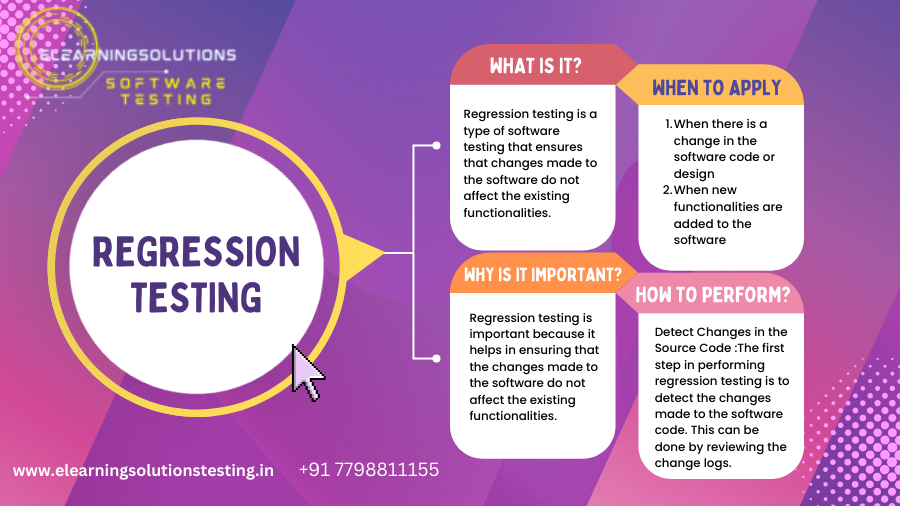
Ensures new updates do not break existing features by running test scripts on every software update.
Tools: Selenium, TestNG, Ranorex
Best Practices for Automated Testing in eLearning Applications
- Choose the right test automation framework (e.g., Selenium for web apps, Appium for mobile).
- Prioritize test cases based on risk and business impact (e.g., login functionality, course tracking).
- Regularly update test scripts to adapt to new platform features.
- Integrate with CI/CD pipelines for continuous testing and faster deployment.
- Monitor test results and optimize test coverage for better accuracy.
Conclusion
Automating testing for eLearning applications improves efficiency, reliability, and user experience. By implementing strategies like functional, performance, API, and security testing, organizations can ensure a robust and scalable learning platform.
YOU MAY BE INTERESTED IN
The Art of Software Testing: Beyond the Basics
Automation testing course in Pune
Automation testing in selenium
Mastering Software Testing: A Comprehensive Syllabus
Frequently Asked Questions
What is automated testing and how does it apply to eLearning applications?
Automated testing refers to the use of software tools to execute tests on an application, reducing the need for manual testing. In eLearning applications, automated testing can help ensure that courses, quizzes, and other interactive elements function correctly. This saves time and improves the overall quality of the application.
How do I determine which parts of my eLearning application to automate?
To determine which parts of your eLearning application to automate, identify the most critical and frequently used features, such as user authentication, payment processing, and course enrollment. You should also consider automating tests for areas that are prone to errors or have complex workflows. This will help you maximize the benefits of automated testing.
What are the benefits of using automated testing strategies for eLearning applications?
The benefits of using automated testing strategies for eLearning applications include reduced testing time, improved test coverage, and increased confidence in the application’s quality. Automated testing also allows for faster deployment of updates and changes, which is critical in the rapidly evolving eLearning landscape. Additionally, automated testing can help reduce costs associated with manual testing.
Can automated testing replace manual testing entirely in eLearning applications?
While automated testing can cover a significant portion of testing needs, it is unlikely to replace manual testing entirely. Certain aspects, such as user experience and usability, require human judgment and cannot be fully automated. A balanced approach that combines automated and manual testing is typically the most effective way to ensure the quality of eLearning applications.
How often should I run automated tests for my eLearning application?
It’s a good practice to run automated tests for your eLearning application regularly, such as with each code change or update, to ensure that new issues are caught quickly. You should also consider running automated tests as part of your continuous integration and deployment pipeline to ensure that the application remains stable and functional. Regular testing helps identify and fix issues before they affect users.