
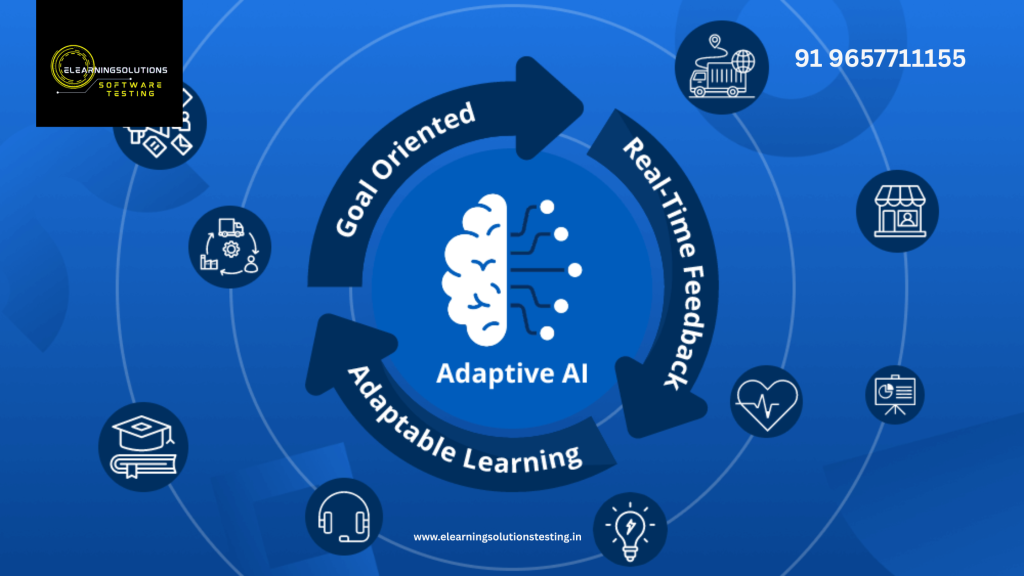
In the ever-evolving world of eLearning, the integration of artificial intelligence (AI) has sparked a significant transformation in how assessments are designed, delivered, and analyzed. One of the most impactful applications of AI in this domain is adaptive testing — a method that personalizes the testing experience for each learner. As we progress through 2025, AI-driven adaptive testing is emerging as a dominant trend, reshaping educational strategies and learner outcomes.
Understanding Adaptive Testing
Adaptive testing refers to the dynamic adjustment of questions based on the learner’s responses in real time. Unlike traditional tests that present the same set of questions to all participants, adaptive testing uses algorithms to evaluate performance and modify the difficulty, order, or content of upcoming questions accordingly.
For example, if a learner answers a question correctly, the system may present a slightly more challenging question next. If the learner struggles, the next question may be easier, helping build confidence and ensuring that learners are neither bored nor overwhelmed.
Role of AI in Adaptive Testing
AI is the backbone of modern adaptive testing systems. Through machine learning models and data analytics, AI can:
- Analyze learner behavior and performance patterns
- Predict learning gaps and areas that need reinforcement
- Provide personalized feedback and study recommendations
- Continuously improve test design based on user interaction data
These capabilities make AI-driven testing far more insightful and effective than static, one-size-fits-all assessments.
Benefits Driving the Trend
1. Personalized Learning Experiences
AI enables customized learning journeys. Adaptive testing tailors each assessment to a learner’s current skill level, making the learning experience more relevant and efficient.
2. Improved Engagement and Motivation
Learners are more likely to stay engaged when they are presented with challenges that match their abilities. Adaptive testing keeps learners in their optimal challenge zone, maintaining interest and reducing frustration.
3. Faster and Accurate Skill Assessment
Because the system adjusts in real time, it requires fewer questions to accurately assess skill levels, saving time while delivering more precise results.
4. Data-Driven Decision Making
Educators and administrators can use insights from AI-driven testing to make informed decisions about curriculum design, content delivery, and individual learner support.
5. Scalability and Efficiency
With AI handling the adaptation and evaluation process, assessments can be delivered at scale without sacrificing quality or accuracy.
Future Outlook
As online education continues to grow, the demand for smart, scalable, and learner-centric testing solutions will increase. AI-driven adaptive testing is not just a trend — it represents a foundational shift toward more intelligent and human-focused learning environments.
YOU MAY BE INTERESTED IN
The Art of Software Testing: Beyond the Basics
Automation testing course in Pune
Automation testing in selenium
Mastering Software Testing: A Comprehensive Syllabus
Frequently Asked Questions
What is AI-driven adaptive testing and how does it work?
AI-driven adaptive testing is a method of assessment that uses artificial intelligence to adjust the difficulty of test questions based on a learner’s performance in real-time. This approach ensures that the test is tailored to the individual’s knowledge and skills, providing a more accurate measure of their abilities. By using AI, adaptive testing can provide a more efficient and effective way of evaluating learner knowledge.
How does AI-driven adaptive testing improve the learning experience?
AI-driven adaptive testing improves the learning experience by providing learners with a more personalized and engaging assessment experience. It helps to identify knowledge gaps and provides targeted feedback, allowing learners to focus on areas where they need improvement. This approach also helps to reduce test anxiety and increase learner motivation.
What are the benefits of using AI-driven adaptive testing in education and training?
The benefits of using AI-driven adaptive testing include improved assessment accuracy, increased learner engagement, and enhanced personalized learning. It also helps to reduce the administrative burden of testing and provides instructors with valuable insights into learner performance. Additionally, AI-driven adaptive testing can help to identify areas where learners may need additional support or review.
Is AI-driven adaptive testing more effective than traditional testing methods?
Yes, AI-driven adaptive testing has been shown to be more effective than traditional testing methods in many cases. It provides a more accurate measure of learner knowledge and skills, and helps to reduce the impact of test anxiety and other external factors. Additionally, AI-driven adaptive testing can provide more detailed and actionable feedback, which can help learners to improve their performance over time.
Will AI-driven adaptive testing replace human instructors and evaluators?
No, AI-driven adaptive testing is designed to augment and support the work of human instructors and evaluators, rather than replace them. It can help to automate routine tasks and provide data-driven insights, but it is not a substitute for human judgment and expertise. Instructors and evaluators will continue to play a critical role in designing and implementing effective assessments, as well as providing guidance and support to learners.


