Agile Testing: A Complete Guide for QA Professionals
Agile testing is an essential part of modern software development. It helps teams identify defects early, adapt to changing requirements, and deliver reliable software through continuous feedback and collaboration. Unlike traditional approaches that often place testing at the end of development, Agile testing integrates quality assurance throughout the software development lifecycle.
For QA professionals, developers, freshers, and career switchers, understanding Agile testing can help build practical software testing skills and prepare for modern development environments.
What Is Agile Testing?
Agile testing is a software testing approach in which testing activities take place continuously throughout iterative development. Teams develop and test software in small increments, allowing them to identify issues, collect feedback, and improve the product throughout the project.
Agile testing encourages developers, testers, product owners, and stakeholders to work together toward a shared quality goal. Rather than treating QA as a separate final stage, the team considers quality from the beginning of development.
Why Is Agile Testing Important?
Agile testing helps organizations deliver software more efficiently without overlooking quality. Its major benefits include:
- Early defect detection: Identifying issues during development reduces the effort required to fix them later.
- Faster feedback: Continuous testing helps teams understand the impact of code changes quickly.
- Adaptability: Testing activities can change as requirements and business priorities evolve.
- Better collaboration: Developers, testers, and stakeholders share responsibility for software quality.
- Improved customer satisfaction: Frequent feedback helps teams build software that better meets user expectations.
Who Should Learn Agile Testing?
Agile testing is useful for manual testers, QA analysts, automation engineers, software developers, fresh graduates, and professionals transitioning into software testing. It is especially valuable for people working in teams that follow Scrum, Kanban, or other Agile practices.
Core Principles and Techniques of Agile Testing
Agile testing follows the values of the Agile Manifesto, including collaboration, working software, customer involvement, and responding to change. These principles help teams make quality a continuous responsibility rather than a final checkpoint.
Key Agile Testing Principles
The main principles include:
- Test early and continuously throughout development.
- Collaborate closely with developers, product owners, and business stakeholders.
- Adapt test plans as requirements change.
- Prioritize customer needs and business value.
- Use automation where it provides reliable, repeatable feedback.
- Maintain shared responsibility for product quality.
Common Agile Testing Techniques
Agile teams use different testing techniques depending on project requirements, technical complexity, and risk.
| Technique | Description |
|---|---|
| Test-Driven Development (TDD) | Developers write a test before implementing the corresponding functionality, then develop code to pass it. |
| Behavior-Driven Development (BDD) | Teams describe expected application behavior using examples and a shared business-focused language. |
| Acceptance Test-Driven Development (ATDD) | Team members define acceptance tests collaboratively before implementing a feature. |
| Exploratory Testing | Testers investigate an application, learn how it behaves, and design further tests based on their observations. |
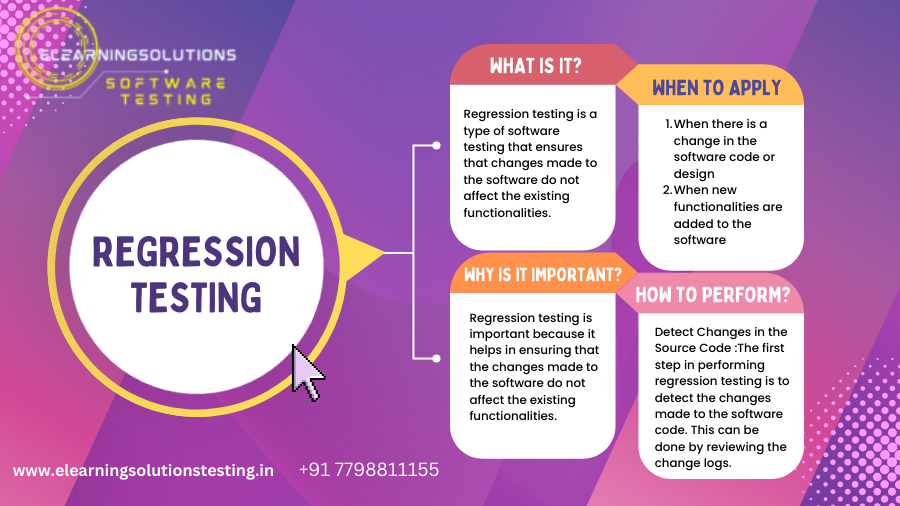
| Regression Testing | Existing functionality is retested to identify unintended effects of code changes. |
| Continuous Integration Testing | Automated tests run as code changes are integrated into a shared repository. |
These techniques can complement one another. For example, a team may use BDD to clarify business requirements, TDD to guide implementation, and regression automation to validate existing functionality.
Understanding the Agile Testing Pyramid
The Agile testing pyramid is a model for organizing automated tests according to their scope, speed, and maintenance cost. It commonly contains three levels: unit tests, service or integration tests, and user-interface or acceptance tests.
1. Unit Testing
Unit tests validate small, isolated pieces of code, such as individual functions or methods. They usually execute quickly and help developers identify defects close to their source.
2. Service and Integration Testing
Service and integration tests verify interactions between components, APIs, databases, and other services. They help identify issues that unit tests may not detect, such as incorrect data exchange or integration failures.
3. UI and Acceptance Testing
UI and acceptance tests validate application behavior from a user or business perspective. They can cover critical workflows, but they are often slower and more expensive to maintain than unit tests.
A balanced testing strategy uses many fast, focused tests and a smaller number of broader end-to-end tests. The exact distribution depends on the architecture, risk profile, and testing needs of the application.
How to Implement Agile Testing Effectively
Successful Agile testing requires a repeatable process that combines collaboration, appropriate test coverage, automation, and continuous feedback.
Encourage Collaboration and Communication
QA professionals should participate in sprint planning, backlog refinement, daily stand-ups, and sprint reviews where appropriate. Early discussions help clarify requirements, identify risks, and establish acceptance criteria before development is complete.
For example, a tester working on a login feature can help the team define expected behavior for valid credentials, invalid passwords, locked accounts, and password recovery.
Build an Effective Test Automation Strategy
Automation reduces repetitive manual work and provides faster feedback on frequently tested functionality. Teams can select tools based on the application and technology stack.
Popular examples include:
- Selenium: Automates web browser interactions.
- Appium: Supports automated testing of mobile applications.
- JUnit: Provides a testing framework commonly used with Java.
- TestNG: Supports test organization, execution, and reporting.
- Cucumber: Supports behavior-driven development using readable scenarios.
Automation should focus on stable, repeatable, and valuable test cases. Exploratory testing and other human-led activities remain important for evaluating usability, unexpected behavior, and new features.
Integrate Testing into CI/CD Pipelines
Continuous integration and continuous delivery help teams build, test, and prepare software releases frequently. Agile testing strengthens these workflows by providing automated quality checks throughout the pipeline.
A typical workflow includes:
- A developer commits code to version control.
- The CI pipeline builds the application and runs unit tests.
- Integration and API tests validate interactions between components.
- Additional regression, security, or UI tests run according to the project’s needs.
- The team reviews failures and fixes issues before the release progresses.
Not every test must run at every stage. Fast tests can run on each change, while longer end-to-end tests may run at later stages or on scheduled builds.
Monitor Results and Improve Continuously
Teams should review failed tests, defect trends, test execution time, flaky tests, escaped defects, and feedback from users. These insights help identify weak areas and improve the testing process over successive sprints.
Agile Testing Career Opportunities and Essential Skills
Agile testing can support several career paths in software quality assurance. Job titles and responsibilities vary between organizations, so candidates should focus on developing practical testing skills rather than relying on a certification or job title alone.
Essential Skills for Agile QA Professionals
Important skills include:
- Testing fundamentals: Test cases, test scenarios, defect reporting, regression testing, and test planning.
- Agile methodologies: Understanding Scrum, Kanban, sprint planning, and acceptance criteria.
- Automation: Experience with an appropriate framework, such as Selenium, Appium, or a language-specific testing tool.
- Programming and scripting: Knowledge of Java, Python, or JavaScript can support automation and debugging.
- API and integration testing: Understanding requests, responses, status codes, and data validation.
- CI/CD fundamentals: Familiarity with version control and build pipelines.
- Communication: The ability to explain defects, collaborate with developers, and clarify business requirements.
Career Progression for Agile Testers
| Experience Stage | Potential Roles | Typical Responsibilities |
|---|---|---|
| Entry level | Junior QA Tester, QA Analyst | Execute test cases, document defects, and learn Agile workflows. |
| Intermediate | QA Engineer, Automation Tester | Design test scenarios, maintain automated tests, and support regression testing. |
| Advanced | Senior QA Engineer, SDET, Test Lead | Develop testing strategies, improve automation frameworks, and guide team practices. |
| Leadership | QA Manager, Test Manager | Manage quality processes, team priorities, risk, and delivery objectives. |
Actual career progression depends on practical experience, technical depth, industry, and the responsibilities of each role.
Agile Testing Certifications and Training
Certifications can help professionals structure their learning and demonstrate familiarity with Agile concepts. However, certification requirements, eligibility, and exam formats differ by provider and can change over time.
Topics to Learn in an Agile Testing Course
A practical learning plan may include:
- Agile and Scrum fundamentals.
- Software testing principles and test design.
- Test-driven development and behavior-driven development.
- Exploratory, regression, and acceptance testing.
- Automation testing fundamentals.
- API and integration testing.
- CI/CD concepts and continuous testing.
- Defect tracking, reporting, and collaboration.
- Practical exercises and project-based testing.
How to Prepare for Agile Testing Certification
Start by reviewing the syllabus and learning objectives of the specific certification you intend to pursue. Study Agile principles, practice testing scenarios, review sample questions where officially available, and apply the concepts to a small software project.
Before enrolling in a training program, confirm the current syllabus, course duration, practical components, and whether the provider offers a recognized external certification or its own course-completion certificate.
Future Scope of Agile Testing
Agile testing remains relevant wherever teams need frequent releases, reliable software, and rapid feedback. As applications become more interconnected, QA professionals can strengthen their skills by learning API testing, cloud-based test environments, automation frameworks, security testing fundamentals, and CI/CD practices.
AI-assisted testing tools may also help with test generation, test maintenance, and failure analysis. However, testers still need to validate results, understand business requirements, investigate unexpected behavior, and make informed quality decisions.
The strongest career strategy is to combine solid testing fundamentals with hands-on experience, communication skills, and the ability to adapt to new tools.
Frequently Asked Questions About Agile Testing
1. What is Agile testing?
Agile testing is an approach that integrates testing throughout iterative software development. It emphasizes collaboration, continuous feedback, adaptability, and early defect detection.
2. How is Agile testing different from traditional testing?
Agile testing takes place throughout development in short iterations, while traditional sequential approaches may reserve a separate phase for testing after development. The actual process varies by organization, and both approaches can include manual and automated testing.
3. Which tools are commonly used for Agile testing?
Popular tools include Selenium and Appium for UI automation, JUnit and TestNG for test execution, Cucumber for BDD, and CI tools such as Jenkins or GitLab CI. The best choice depends on the project.
4. Is automation mandatory in Agile testing?
No. Automation is valuable for repeatable tests and rapid feedback, but manual and exploratory testing remain important for usability, discovery, and scenarios that are difficult to automate reliably.
5. What skills are required to become an Agile tester?
Begin with software testing fundamentals, Agile concepts, test case design, and defect reporting. Then develop automation, programming, API testing, CI/CD, and collaboration skills according to your career goals.
Conclusion
Agile testing helps teams build and deliver better software by integrating quality assurance into every stage of development. Through collaboration, exploratory testing, automation, and continuous feedback, QA professionals can help identify defects early and respond effectively to changing requirements.
Whether you are starting your software testing career or expanding your existing skills, focus on practical experience, a strong understanding of Agile principles, and the ability to select the right testing approach for each situation.
Explore software testing training and learning resources at eLearning Solutions to build your foundation in QA and automation testing.