API Testing Interview Questions and Answers (2026): Complete Guide
API testing is an essential part of modern software testing because it verifies that different applications, services, and systems communicate correctly. From mobile applications and e-commerce platforms to banking software and cloud-based services, APIs help exchange data and perform important business operations.
For freshers and experienced QA professionals, preparing for API testing interviews requires more than knowing definitions. Candidates should understand HTTP methods, status codes, REST and SOAP APIs, request and response validation, authentication, test automation, and commonly used testing tools.
This guide covers important API testing interview questions and answers for 2026, along with practical examples, popular tools, essential skills, and career preparation tips.
1. What Is API Testing?
API testing is the process of verifying an Application Programming Interface (API) to ensure that it behaves as expected. Testers send requests to an API endpoint and examine the responses to check functionality, data accuracy, error handling, performance, and security.
An API acts as a communication layer between software components. For example, when a customer places an order on an e-commerce website, APIs may communicate with inventory, payment, and delivery services.
API testing helps identify problems at the communication layer without requiring testers to interact with the application’s user interface.
Why Is API Testing Important?
API testing offers several benefits:
- Early defect detection: Identifies problems before they affect the user interface or connected systems.
- Data validation: Checks whether APIs return accurate and complete information.
- Integration reliability: Verifies communication between different applications and services.
- Security verification: Helps identify authorization, authentication, and data exposure issues.
- Automation: Supports repeatable tests during development and continuous integration.
- Performance evaluation: Measures response times and helps identify bottlenecks under load.
What Are the Main Types of API Testing?
The main types include:
- Functional testing: Verifies that API operations work according to requirements.
- Integration testing: Checks communication between connected services.
- Validation testing: Confirms that response data, formats, and business rules are correct.
- Negative testing: Tests invalid inputs, missing parameters, and unsupported operations.
- Security testing: Evaluates authentication, authorization, and potential vulnerabilities.
- Performance testing: Measures response time, throughput, and behavior under different workloads.
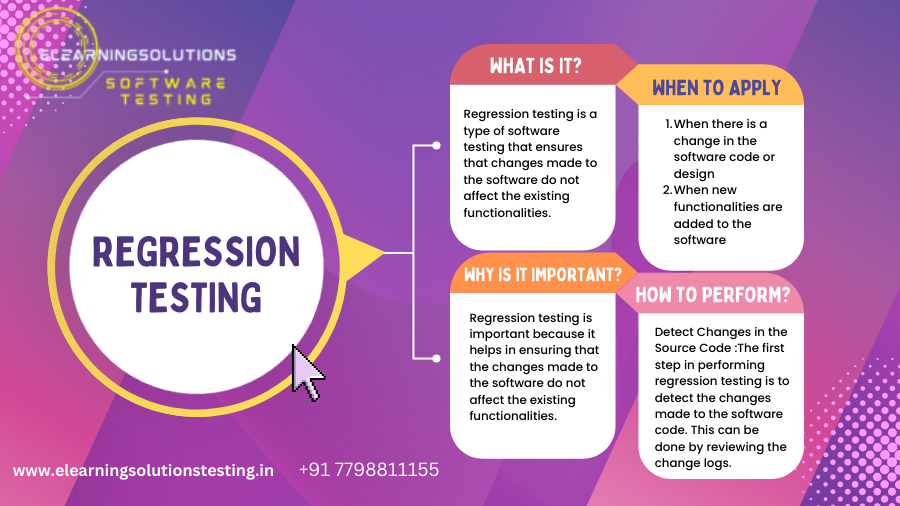
- Regression testing: Ensures that API changes do not break existing functionality.
2. Basic API Testing Interview Questions and Answers
Q1. What Is an API?
An API, or Application Programming Interface, is a set of rules that allows different software components to communicate. It defines how requests are made, what information can be exchanged, and how responses are returned.
For example, a weather application may use an API to retrieve temperature and forecast information from a weather service.
Q2. What Is API Testing?
API testing verifies that an API works correctly by sending requests and checking responses. It can include functional, integration, negative, security, and performance testing.
Q3. How Is API Testing Different from UI Testing?
API testing focuses on the application’s communication and business logic at the API layer. UI testing focuses on visible elements such as buttons, forms, menus, and pages.
API tests can often execute faster because they do not need to interact with the graphical interface. UI tests remain important for checking the complete user experience.
Q4. What Is an API Endpoint?
An endpoint is a specific URL or address through which a client accesses an API resource or operation.
For example:
https://api.example.com/products
This example represents a possible endpoint for accessing product information. It is illustrative and not intended to be a live API.
Q5. What Is the Difference Between REST and SOAP?
REST is an architectural style commonly used to build web APIs. It frequently uses HTTP methods and JSON responses.
SOAP is a messaging protocol with structured rules and XML-based messages. It supports standards for features such as message security and enterprise integrations.
The appropriate choice depends on the system’s requirements, existing architecture, and integration needs.
Q6. What Is the Difference Between Manual and Automated API Testing?
Manual API testing involves sending requests and inspecting responses directly, often using a tool such as Postman.
Automated API testing uses scripts or automated collections to execute tests repeatedly and verify expected results. Automation is particularly useful for regression testing, large test suites, and continuous integration workflows.
3. HTTP Methods, Status Codes, and Request Validation
Q7. What Are the Common HTTP Methods Used in API Testing?
Common HTTP methods include:
- GET: Retrieves a resource.
- POST: Submits data, often to create a resource or trigger an operation.
- PUT: Replaces a resource or its representation.
- PATCH: Partially updates a resource.
- DELETE: Requests the removal of a resource.
The exact behavior depends on the API’s design and documentation.
Q8. What Are HTTP Status Codes?
HTTP status codes indicate the result of an HTTP request.
Common examples include:
- 200 OK: The request succeeded.
- 201 Created: A resource was created successfully.
- 204 No Content: The request succeeded without a response body.
- 400 Bad Request: The request is invalid or cannot be processed.
- 401 Unauthorized: Valid authentication credentials are missing or not accepted.
- 403 Forbidden: The server refuses the requested operation.
- 404 Not Found: The requested resource was not found.
- 409 Conflict: The request conflicts with the current resource state.
- 429 Too Many Requests: The client has exceeded a rate limit.
- 500 Internal Server Error: The server encountered an unexpected problem.
- 503 Service Unavailable: The service is temporarily unable to handle the request.
A good API test checks both the status code and the response content.
Q9. What Should You Validate in an API Response?
A comprehensive response validation may include:
- HTTP status code.
- Response body and required fields.
- Data types and values.
- Response headers and content type.
- Response time against the defined requirement.
- Error messages for invalid requests.
- Authentication and authorization behavior.
- Data consistency and business rules.
Q10. What Is the Difference Between Headers, Parameters, and a Request Body?
Headers carry metadata, such as the content type or authentication information.
Path parameters identify a specific resource, while query parameters can filter, sort, or modify a request.
The request body contains the data sent to the API, commonly in JSON or XML format.
For example, a product search request might use a path such as /products/101, a query parameter such as ?category=books, and a JSON body for a product creation request.
Q11. What Is JSON, and Why Is It Used in API Testing?
JSON stands for JavaScript Object Notation. It is a lightweight data format commonly used to exchange information between clients and servers.
Testers inspect JSON responses to verify field names, data types, nested objects, arrays, and expected values.
For example:
{
  "id": 101,
  "name": "Laptop",
  "available": true
}
A test can verify that id is numeric, name is a string, and available is a Boolean.
Q12. What Is Negative Testing in API Testing?
Negative testing checks how an API behaves when it receives invalid or unexpected input.
Examples include submitting an invalid email address, omitting a required field, using an unsupported HTTP method, sending malformed JSON, or requesting a resource without sufficient permissions.
The goal is to confirm that the API handles errors safely and returns appropriate responses.
4. API Testing Tools and Automation Interview Questions
Q13. Which Tools Are Commonly Used for API Testing?
Popular API testing tools include:
- Postman: Useful for sending requests, organizing collections, validating responses, and automating tests.
- SoapUI: Supports SOAP and REST API testing, with capabilities that depend on the edition.
- REST Assured: A Java library for writing automated tests for REST APIs.
- Apache JMeter: Supports load and performance testing, including HTTP-based APIs.
- k6: A performance-testing tool that uses code-based test scripts.
- Playwright: Can send HTTP requests through its API testing capabilities, alongside browser automation.
The best tool depends on whether the project needs manual exploration, functional automation, performance testing, or integration with a programming language and CI/CD pipeline.
Q14. How Do You Test an API Using Postman?
A typical Postman workflow includes:
- Create a new HTTP request.
- Enter the API endpoint.
- Select the required HTTP method.
- Add query parameters, headers, or a request body.
- Configure authentication if required.
- Send the request.
- Inspect the status code, response body, headers, and response time.
- Add assertions or tests for expected results.
- Save the request in a collection.
- Run the collection to repeat tests and identify failures.
Always use an authorized test environment and avoid exposing real credentials or sensitive production data.
Q15. What Is REST Assured?
REST Assured is a Java library used to automate tests for REST APIs. It allows testers to create requests, send them to endpoints, and validate response status codes, headers, and body content.
It is particularly useful for teams that use Java-based automation frameworks.
Q16. What Is Mock Service Testing?
Mock service testing uses a simulated API response instead of depending on a real backend service.
Mocks are useful when the actual service is unavailable, still under development, expensive to access, or difficult to reproduce reliably. They also help test scenarios such as timeouts, server errors, and unusual response data.
Mock testing does not replace testing against the real service; it complements it.
Q17. What Is Data-Driven API Testing?
Data-driven testing executes the same test logic with multiple sets of input data.
For example, a login API test could use valid credentials, an incorrect password, an empty username, and an invalid account identifier.
This approach improves test coverage and reduces duplicated test code.
Q18. What Is Test-Driven Development (TDD) in API Testing?
Test-driven development is a development approach in which tests are written before the implementation. The developer then writes code to pass the tests and refactors the solution.
In API development, tests can define expected endpoint behavior, validation rules, and error handling before the API implementation is complete.
TDD is a development practice, while API testing is a broader activity that can be performed using several testing approaches.
5. Advanced API Testing Questions: Security, Performance, and Debugging
Q19. How Do You Test API Authentication and Authorization?
Authentication verifies who or what is making a request. Authorization determines whether the authenticated identity has permission to perform the requested operation.
Testing should cover valid and invalid credentials, expired tokens, missing tokens, insufficient permissions, and access to resources belonging to other users.
A successful login alone does not prove that authorization is implemented correctly. Testers should verify that users cannot access restricted operations or other users’ data.
Q20. What Is the Difference Between Authentication and Authorization?
Authentication answers, “Who are you?” Authorization answers, “What are you allowed to do?”
For example, a user may successfully authenticate but still be prohibited from accessing an administrator-only endpoint.
Q21. How Do You Perform API Performance Testing?
API performance testing measures how the API behaves under expected and increased workloads.
A typical process includes defining performance goals, preparing representative test data, generating a controlled workload, measuring response times and throughput, reviewing error rates, and examining server resource usage.
Tools such as Apache JMeter and k6 can help generate workloads. Performance results should be compared against agreed service-level objectives rather than arbitrary thresholds.
Q22. What Is API Rate Limiting?
Rate limiting restricts how many requests a client can make within a defined period. It helps protect services from excessive traffic and supports fair resource usage.
Testers should verify that requests within the permitted limit work correctly and that excessive requests receive the expected response. Some APIs communicate rate limits through response headers.
Q23. What Is API Versioning?
API versioning allows an API to evolve while managing compatibility with existing clients.
Versions may be represented in a URL, header, or another documented mechanism. Testers should verify that supported versions behave as expected and that changes do not unintentionally break existing integrations.
Q24. How Do You Debug a Failed API Test?
A structured debugging process includes:
- Confirm the endpoint and HTTP method.
- Check the request body, parameters, and headers.
- Verify authentication and access permissions.
- Inspect the status code and response body.
- Check the environment, base URL, and test data.
- Review logs and correlation IDs when available.
- Reproduce the failure with a controlled request.
- Determine whether the cause is in the test script, API implementation, configuration, or dependent service.
A useful defect report should include reproducible steps, expected and actual results, relevant request details, and sanitized response evidence.
Q25. What Are Common Challenges in API Testing?
Common challenges include changing API specifications, complex authentication, dependent services, unstable test data, asynchronous operations, rate limits, and environment differences.
These challenges can be reduced through clear API documentation, reusable test utilities, stable test environments, controlled test data, meaningful assertions, and collaboration between testers and developers.
6. API Testing Career, Skills, and Interview Preparation
What Skills Are Required for an API Tester?
Important skills include:
- Understanding HTTP methods, status codes, headers, and request formats.
- Knowledge of REST and SOAP APIs.
- Practical experience with Postman or similar tools.
- JSON and XML validation.
- SQL basics for verifying backend data when access is available.
- Automation fundamentals using Java, JavaScript, Python, or another suitable language.
- Knowledge of authentication, authorization, and common API security risks.
- Debugging, analytical thinking, documentation, and communication.
Not every entry-level role requires expertise in every area. Requirements vary by employer and project.
Is API Testing a Good Career Option in 2026?
API testing can be a valuable career path for people interested in software quality assurance, automation, integration testing, and backend systems.
APIs support web applications, mobile platforms, cloud services, and enterprise software. As a result, API testing skills can be useful across many industries. Actual job demand depends on the region, employer, and experience required.
What Are the Career Opportunities in API Testing?
Depending on experience and technical skills, possible roles include:
- QA Tester or Software Test Engineer.
- API Test Engineer.
- Automation Test Engineer.
- Quality Assurance Engineer.
- Senior QA Engineer.
- QA Lead or Test Manager.
Some professionals later specialize in performance testing, security testing, test architecture, or quality engineering.
How Can Freshers Prepare for an API Testing Interview?
Freshers can follow a practical learning plan:
- Learn HTTP fundamentals, REST concepts, and common status codes.
- Practice GET, POST, PUT, PATCH, and DELETE requests.
- Create tests using Postman and validate JSON responses.
- Practice positive, negative, boundary, and authorization test cases.
- Learn basic SQL and understand how APIs interact with databases.
- Build a small test collection and document the expected results.
- Learn automation basics and understand how tests run in CI/CD pipelines.
- Practice explaining test scenarios and debugging failures clearly.
Hands-on practice is especially valuable because interviewers may ask candidates to design test cases or investigate a sample API failure.
Frequently Asked Questions About API Testing
1. Is API testing difficult for beginners?
API testing is manageable for beginners who learn HTTP fundamentals, request methods, response validation, and tools such as Postman. Automation and advanced security testing can be learned progressively.
2. Which API testing tool should I learn first?
Postman is a practical starting point because it allows beginners to send requests and inspect responses through a graphical interface. Later, learners can explore REST Assured, JMeter, or k6 based on their career goals.
3. Is coding required for API testing?
Manual API testing can begin with limited coding. However, programming skills become important for building maintainable automated tests and working with advanced testing frameworks.
4. What is the difference between API testing and performance testing?
API testing is a broad category that checks whether APIs meet their functional and non-functional requirements. Performance testing focuses specifically on behavior such as response time, throughput, scalability, and stability under workload.
5. How can I gain practical API testing experience?
Practice with public demo APIs or a local test application, create positive and negative test cases, validate responses, and automate a collection of tests. Use only systems you are authorized to test.
Conclusion
API testing is an important skill in modern software quality assurance because it helps verify communication, data accuracy, security, and reliability between software components.
For API testing interview preparation in 2026, focus on HTTP methods, status codes, REST and SOAP concepts, request and response validation, Postman, automation fundamentals, authentication, and performance testing. Combine theoretical knowledge with practical exercises so you can explain not only what a testing concept means, but also how you would apply it to a real scenario.
With consistent practice, clear documentation, and strong debugging skills, aspiring testers can build a foundation for roles in API testing, test automation, and quality engineering.