Mastering Automation Testing: A Complete Guide for Career Growth
Introduction to Automation Testing
In today’s fast-paced digital world, software applications are becoming increasingly complex. Businesses need to deliver reliable, secure, and high-performing applications while meeting shorter development and release cycles.
This growing demand for speed and quality has made automation testing an essential part of modern software development.
Automation testing uses specialized tools and scripts to execute repetitive test cases automatically. It helps testing teams improve efficiency, increase test coverage, and identify defects faster than relying entirely on manual testing.
For students, freshers, software testers, and IT professionals, learning automation testing can open the door to exciting career opportunities in the software testing industry.
What Is Automation Testing?
Automation testing is a software testing process in which testing tools and scripts are used to perform predefined test cases automatically.
Instead of manually repeating the same tests, testers create automated scripts that can execute tests multiple times with minimal human intervention.
Automation testing is commonly used for:
- Regression testing
- Functional testing
- Web application testing
- Mobile application testing
- API testing
- Performance testing
The primary objective of automation testing is to improve the speed, accuracy, and efficiency of the software testing process.
Why Is Automation Testing Important?
Modern software applications are updated frequently. Every new feature, bug fix, or system update can potentially introduce new issues.
Testing applications manually after every change can be time-consuming and challenging.
Automation testing helps organizations address this challenge by executing repetitive tests quickly and consistently.
Some major advantages include:
- Faster test execution
- Reduced repetitive manual effort
- Improved testing accuracy
- Increased test coverage
- Faster feedback for development teams
- Better support for continuous testing
- More efficient regression testing
Automation testing allows QA teams to focus more on complex testing scenarios while automated scripts handle repetitive tasks.
Benefits of Automation Testing
Faster Testing Process
Automated tests can execute significantly faster than manual tests, especially when the same test cases need to be repeated multiple times.
This helps organizations reduce testing time and accelerate software delivery.
Improved Test Accuracy
Manual testing can sometimes be affected by human error.
Automated test scripts follow predefined steps consistently, helping teams execute repetitive tests accurately.
Better Test Coverage
Automation allows testing teams to execute a large number of test cases across different environments and configurations.
This can help improve overall test coverage.
Faster Feedback
Automation testing can provide quick feedback to developers when an issue is detected.
This helps teams identify and address problems earlier in the software development lifecycle.
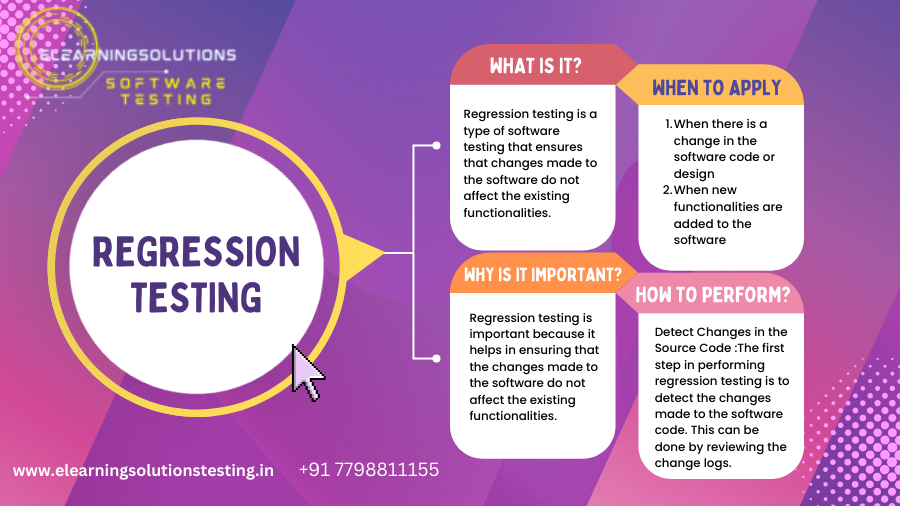
Efficient Regression Testing
Regression testing is one of the most common uses of automation testing.
Whenever an application is updated, previously tested features need to be verified again. Automated regression test suites can help teams perform this process more efficiently.
Popular Automation Testing Tools
Several tools are available for automation testing. The right tool depends on the application type, technology stack, and testing requirements.
Selenium WebDriver
Selenium WebDriver is widely used for automating web application testing.
It allows testers to simulate user actions such as:
- Clicking buttons
- Entering information into forms
- Navigating between pages
- Validating page elements
- Verifying application functionality
Selenium supports multiple programming languages and is commonly used for web automation testing.
TestNG
TestNG is a testing framework that is commonly used with Selenium.
It helps testers organize and manage automated test cases.
Important features include:
- Test execution management
- Test grouping
- Test prioritization
- Reporting
- Parallel execution
Appium
Appium is commonly used for mobile application testing.
It supports the automation of applications on platforms such as Android and iOS.
It can be used for:
- Native mobile applications
- Hybrid applications
- Mobile web applications
Postman
Postman is widely used for API testing.
It allows testers and developers to test APIs, validate responses, and check how applications communicate with different services.
API testing has become increasingly important as modern applications rely heavily on APIs and integrations.
JUnit
JUnit is a popular testing framework, particularly in Java-based development environments.
It is commonly used for unit testing and can also support automated testing workflows.
Key Skills Required for Automation Testing
To build a successful career in automation testing, professionals should develop both technical and soft skills.
Programming Skills
Basic programming knowledge is important because automation testing often involves writing and maintaining test scripts.
Popular programming languages include:
- Java
- Python
- JavaScript
- C#
The choice of language may depend on the tools and technology used by an organization.
Knowledge of Testing Fundamentals
Before learning automation tools, professionals should understand software testing concepts such as:
- Software Testing Life Cycle
- Test cases
- Test scenarios
- Defect management
- Regression testing
- Functional testing
- Integration testing
A strong foundation in testing helps professionals create more effective automated test strategies.
Automation Framework Knowledge
Automation testers should understand how testing frameworks work.
Important concepts may include:
- Page Object Model
- Data-driven testing
- Keyword-driven testing
- Hybrid frameworks
- Test reporting
API Testing Knowledge
Modern software applications frequently communicate through APIs.
Learning API testing tools and concepts can provide an additional advantage for automation testing professionals.
Version Control
Knowledge of version control tools such as Git can also be useful for managing automation projects and collaborating with development teams.
Real-World Applications of Automation Testing
Automation testing is used across many industries and application types.
Web Application Testing
Automation tools can test web applications across different browsers and environments.
Common activities include:
- Form validation
- Login testing
- Navigation testing
- Checkout process testing
- User interface validation
Mobile Application Testing
Mobile testing tools help organizations test applications on different devices and operating systems.
Automation can improve the efficiency of testing mobile applications across multiple configurations.
API Testing
API testing ensures that communication between different software systems works correctly.
Testers can verify:
- API responses
- Status codes
- Request validation
- Authentication
- Error handling
Enterprise Application Testing
Large enterprise applications often contain complex workflows and integrations.
Automation testing can help teams execute repetitive regression tests and validate important business processes.
Career Opportunities in Automation Testing
Automation testing offers several career opportunities for individuals interested in software quality assurance.
Some common job roles include:
- Automation Test Engineer
- QA Automation Engineer
- Software Test Engineer
- Software QA Engineer
- Automation Testing Specialist
- API Test Engineer
- Mobile Test Automation Engineer
- Test Lead
- Automation Test Architect
As professionals gain experience, they can move into senior technical and leadership positions.
Career Roadmap for Automation Testers
Step 1: Learn Manual Testing Fundamentals
Begin by understanding the fundamentals of software testing.
Learn how to:
- Write test cases
- Identify defects
- Understand test scenarios
- Perform functional testing
Step 2: Learn a Programming Language
Choose a programming language commonly used in automation testing, such as Java or Python.
Focus on:
- Variables
- Conditions
- Loops
- Functions
- Object-oriented programming concepts
Step 3: Learn Automation Tools
Start learning tools based on your career goals.
For example:
- Selenium for web automation
- Appium for mobile automation
- Postman for API testing
Step 4: Learn Testing Frameworks
Explore frameworks such as:
- TestNG
- JUnit
Learn how to organize test cases, generate reports, and manage automated test execution.
Step 5: Build Automation Projects
Practical experience is essential.
Create automation projects that demonstrate your skills.
You can build projects involving:
- E-commerce websites
- Login systems
- API testing
- Mobile applications
Step 6: Learn CI/CD Concepts
Modern software development increasingly uses Continuous Integration and Continuous Delivery practices.
Understanding how automation tests integrate with development pipelines can help professionals become more industry-ready.
Common Challenges in Automation Testing
Although automation testing offers many advantages, it also comes with challenges.
Selecting the Right Test Cases
Not every test case should be automated.
Organizations should prioritize repetitive, stable, and frequently executed test cases.
Test Script Maintenance
Applications change frequently.
Automation scripts may need to be updated when application interfaces or functionality change.
Initial Setup Time
Building an automation framework can require an initial investment of time and resources.
However, automation can provide long-term benefits when implemented effectively.
Technical Skills
Automation testers need to continuously develop their technical skills as tools and technologies evolve.
Automation Testing Training for Beginners and Professionals
Learning automation testing requires a combination of theoretical knowledge and practical experience.
A structured training program can help students understand:
- Software testing fundamentals
- Programming basics
- Selenium WebDriver
- TestNG
- API testing
- Automation frameworks
- Real-world projects
Hands-on practice is particularly important because automation testing involves writing, executing, debugging, and maintaining test scripts.
eLearning Solutions provides training opportunities for individuals interested in developing practical skills in software testing and automation. The course content focuses on helping learners understand automation concepts and commonly used testing tools.
Who Should Learn Automation Testing?
Automation testing can be suitable for:
- Fresh graduates
- Manual testers
- Software developers
- QA professionals
- IT professionals looking to upgrade their skills
- Individuals interested in software quality assurance
Beginners can start with manual testing and programming fundamentals before moving into automation tools.
Frequently Asked Questions About Automation Testing
What is automation testing?
Automation testing is the process of using software tools and scripts to automatically execute predefined test cases and verify whether an application works as expected.
Which programming language is best for automation testing?
Java and Python are popular choices for automation testing. The best language depends on the tools, frameworks, and career requirements of the learner.
Is automation testing difficult to learn?
Automation testing requires technical knowledge and practice. Beginners can learn it step by step by first understanding manual testing, programming basics, and automation tools.
Which tools are commonly used for automation testing?
Popular automation testing tools include Selenium WebDriver, Appium, Postman, TestNG, and JUnit.
Can freshers learn automation testing?
Yes. Freshers can begin by learning software testing fundamentals and basic programming before moving to automation testing tools and frameworks.
What career opportunities are available in automation testing?
Automation testing professionals can work as Automation Test Engineers, QA Engineers, Software Test Engineers, API Testers, Test Leads, and Automation Architects.
Is automation testing a good career choice?
Automation testing can be a valuable career path for individuals interested in software development and quality assurance. Continuous learning and hands-on project experience can help professionals grow in this field.
Conclusion
Automation testing has become an essential part of modern software development. As organizations continue to deliver applications faster and more frequently, the need for efficient and reliable testing processes continues to grow.
By learning software testing fundamentals, programming, automation tools, and testing frameworks, professionals can build strong skills for a career in Quality Assurance.
Whether you are a fresher starting your IT career or a manual tester looking to upgrade your skills, automation testing offers an opportunity to work with modern technologies and contribute to delivering high-quality software.
The key to success is continuous learning, hands-on practice, and staying updated with the latest testing tools and industry trends.