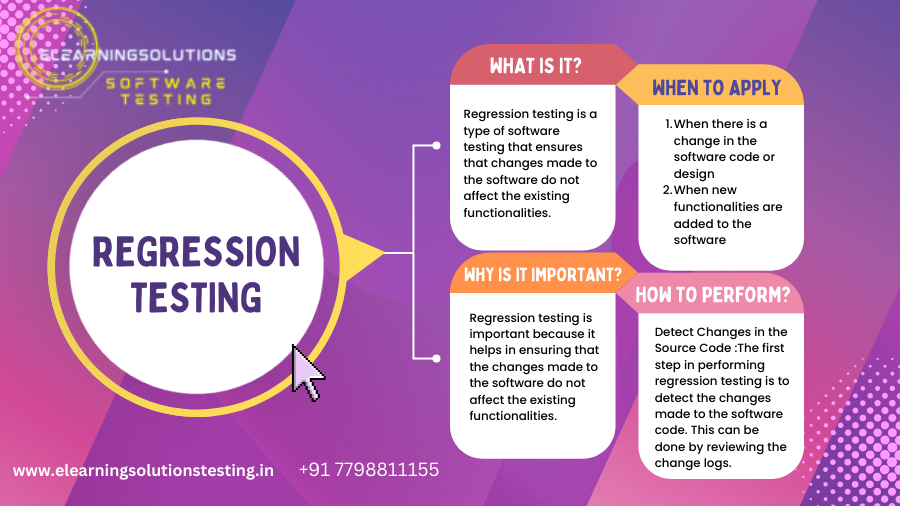
Mastering Assertions: A Comprehensive Guide for Software Professionals
Introduction to Assertions
In software development, writing code that works is only part of the job. Developers also need ways to verify that their code behaves as expected and to identify problems as early as possible.
Assertions are a useful programming mechanism for checking assumptions and validating conditions during development and testing. When an assertion condition is not satisfied, the program can report an assertion failure, helping developers identify unexpected behavior.
Assertions are commonly available in programming languages such as Java, Python, C++, and JavaScript, although their syntax, behavior, and recommended usage differ between languages.
Whether you are a beginner learning programming or an experienced developer maintaining a large application, understanding assertions can improve debugging, code quality, and development practices.
What Are Assertions?
An assertion is a statement that checks whether a particular condition is true.
The basic concept is:
Expected condition → Check condition → Continue if true → Report failure if false
For example, suppose a program expects a value to always be greater than zero. An assertion can verify that assumption during development.
Assertions are particularly useful for detecting programming errors, invalid assumptions, and unexpected internal states.
However, assertions should not generally be treated as a replacement for normal application error handling. Conditions that can legitimately occur during normal operation should usually be handled using appropriate validation and exception-handling mechanisms.
Why Are Assertions Important?
Assertions provide developers with an additional layer of protection during software development.
Detecting Problems Early
Assertions can identify incorrect assumptions close to where they occur. Early detection can make debugging considerably easier because developers can investigate the problem before it propagates through other parts of the application.
Improving Code Reliability
By explicitly documenting assumptions within code, assertions can make expected conditions easier for developers to understand and maintain.
Supporting Testing and Debugging
Assertions are also widely used in automated testing frameworks. Testing assertions verify whether actual application behavior matches the expected result.
Making Code Intent Clear
An assertion can communicate an assumption directly within the source code.
For example:
assert user != null : "User should not be null";This tells developers that the code expects user to be available at that point.
Assertions in Different Programming Languages
The concept of assertions is common across programming languages, but implementation varies.
Assertions in Java
Java provides the assert statement for checking conditions.
Example:
public class AssertionExample {

    public static void main(String[] args) {

        int num1 = 5;
        int num2 = 7;

        assert num1 + num2 == 12 :
                "Addition result is incorrect.";

        System.out.println("Assertion completed.");
    }
}
Java assertions are typically enabled explicitly at runtime. For example:
java -ea AssertionExampleThe -ea option enables assertions.
This is an important distinction because Java assertions are disabled by default when running Java applications normally.
Assertions in Python
Python provides the assert statement for checking conditions.
Example:
def calculate_total(price, quantity):
    total = price * quantity

    assert total >= 0, "Total should not be negative"

    return total
If the assertion condition evaluates to false, Python raises an AssertionError.
Assertions can be useful for checking assumptions during development, but they should not be relied upon for validating untrusted user input or enforcing critical production security rules because Python can run with assertions disabled using optimization options.
Common Uses of Assertions
Assertions can be useful in several areas of software development.
1. Checking Program Assumptions
Developers can use assertions to verify assumptions about the internal state of an application.
2. Debugging
Assertions can help identify unexpected states while developing or troubleshooting software.
3. Unit Testing
Testing frameworks use assertion methods to compare expected and actual results.
For example:
Assert.assertEquals(actual, expected);4. Validating Internal Conditions
Assertions can verify conditions that developers expect to remain true throughout program execution.
5. Detecting Regression Issues
Assertions in automated tests can help detect when a change unexpectedly affects existing functionality.
Assertions vs. Exceptions
Assertions and exceptions both help identify problems, but they serve different purposes.
| Feature | Assertions | Exceptions |
|---|---|---|
| Primary purpose | Check assumptions | Handle runtime conditions |
| Typical use | Development/debugging | Application error handling |
| Can be disabled? | Depends on language | Generally not in the same way |
| User input validation | Usually not appropriate | Appropriate |
| Unexpected internal state | Useful | Sometimes appropriate |
| Testing | Widely used | Also commonly tested |
When Should You Use Assertions?
Use assertions when you want to verify something that should always be true according to your program’s design.
When Should You Use Exceptions?
Use exceptions when a condition can reasonably occur during normal program execution and needs to be handled by the application.
For example, invalid user input should generally be validated and handled rather than relying on an assertion.
Assertions and Automated Testing
Assertions are fundamental to automated testing.
A test does not become meaningful simply because the test script executes without errors. It needs to verify the expected outcome.
For example:
@Test
public void verifyLoginMessage() {

    String expected = "Login Successful";
    String actual = "Login Successful";

    Assert.assertEquals(actual, expected);
}
Here, the assertion determines whether the application produced the expected result.
Assertions are commonly used in:
- Unit testing
- Integration testing
- API testing
- UI automation
- Database testing
- Regression testing
- End-to-end testing
Popular testing frameworks such as JUnit and TestNG provide extensive assertion functionality.
Common Types of Test Assertions
Testing frameworks typically provide different assertion methods for different validation requirements.
Equality Assertion
Checks whether two values are equal.
Assert.assertEquals(actual, expected);Inequality Assertion
Checks whether two values are different.
Assert.assertNotEquals(actual, expected);Boolean Assertion
Checks whether a condition is true.
Assert.assertTrue(condition);Negative Boolean Assertion
Checks whether a condition is false.
Assert.assertFalse(condition);Null Validation
Checks whether an object is null or not null.
Assert.assertNull(value);
Assert.assertNotNull(value);
The exact methods available depend on the testing framework being used.
Best Practices for Using Assertions
Using assertions effectively requires understanding when and where they should be applied.
Keep Assertions Simple
An assertion should ideally check one clear condition.
Instead of creating complicated expressions that are difficult to understand, break complex validations into logical checks.
Write Meaningful Messages
A descriptive message can make debugging easier.
Assert.assertEquals(
    actualTitle,
    expectedTitle,
    "Page title does not match the expected value"
);
Use Assertions for Genuine Assumptions
Avoid adding assertions simply because they are available. Use them where they provide meaningful protection or validation.
Do Not Use Assertions as General Error Handling
Assertions are not a substitute for handling expected runtime conditions.
For example, an application should not depend on an assertion to validate whether a customer entered a valid email address.
Understand Your Language’s Behavior
Some languages can disable assertions. Developers should understand how assertions behave in development, testing, and production environments.
Combine Assertions with Testing Frameworks
Assertions are most effective as part of a structured testing strategy that includes appropriate test cases, test data, reporting, and continuous integration.
Common Mistakes When Using Assertions
Even though assertions are simple to use, developers can misuse them.
Using Assertions for User Input
User input can be invalid under normal circumstances. Use validation and appropriate error handling instead.
Relying on Assertions for Security
Security-critical checks should not depend on assertions that can potentially be disabled.
Writing Unclear Assertions
A vague assertion can make failures difficult to diagnose.
Adding Too Many Assertions
A large number of unrelated validations can make tests difficult to maintain. Keep test cases focused on meaningful behavior.
Assuming Assertions Are Always Enabled
This is particularly important in languages such as Java and Python, where assertions can be disabled under certain execution configurations.
Advantages and Limitations of Assertions
Advantages
Assertions offer several benefits:
- Help detect programming errors early
- Make assumptions explicit
- Support debugging
- Improve test validation
- Increase confidence in code behavior
- Help identify regression problems
- Make certain programming contracts easier to understand
Limitations
Assertions also have limitations:
- They are not a replacement for exception handling
- They may be disabled depending on the language and runtime configuration
- Poorly written assertions can make debugging harder
- Excessive assertions can add unnecessary complexity
- They should not be used for critical validation that must always execute
Understanding these limitations is essential for using assertions correctly.
Assertions in Modern Software Development
Modern development practices rely heavily on automated testing and continuous integration. Assertions play an important role in this ecosystem because they provide the validation mechanism that determines whether a test has achieved the expected result.
For example, a CI pipeline may execute hundreds or thousands of automated tests. Assertions can verify:
- API response codes
- Database values
- UI elements
- Business rules
- Calculated results
- Authentication behavior
- Application workflows
When an assertion fails, the test framework can report the failure to the development team for investigation.
This makes assertions an important building block for reliable automated testing and continuous quality improvement.
Assertions for Software Professionals
Learning assertions is useful for a wide range of technology professionals.
Beginners
Assertions help beginners understand how programs validate assumptions and how automated tests determine whether expected results have been achieved.
Software Developers
Developers can use assertions to identify programming errors and document important assumptions.
Automation Testers
Automation testers use assertions extensively to validate UI, API, database, and end-to-end test results.
QA Engineers
Assertions help QA teams build reliable automated regression and functional testing suites.
DevOps Professionals
Automated tests containing assertions can become part of CI/CD pipelines, helping teams detect defects before software reaches production.
Frequently Asked Questions
What is an assertion in programming?
An assertion is a mechanism used to check whether a condition that is expected to be true actually holds. If the condition fails, the program or testing framework reports a failure.
Why are assertions important?
Assertions help developers identify incorrect assumptions, detect programming errors, validate test results, and improve software reliability.
Are assertions the same as exceptions?
No. Assertions are primarily intended to verify assumptions, while exceptions are generally used to handle conditions that may occur during normal program execution.
Can assertions be used in automated testing?
Yes. Assertions are a fundamental part of automated testing and are commonly used to compare expected and actual results.
Which programming languages support assertions?
Many programming languages support assertions, including Java, Python, C++, and JavaScript, although the syntax and behavior vary.
Should assertions be used for input validation?
Generally, no. User input and external data should be validated using normal validation and error-handling mechanisms rather than relying on assertions.
Can assertions be disabled?
Yes, depending on the programming language and runtime environment. For example, Java assertions are disabled by default unless enabled at runtime, and Python can also disable assertions under optimization.
Are assertions a replacement for testing frameworks?
No. Assertions are an important component of testing frameworks, but they do not replace complete testing frameworks such as JUnit, TestNG, or pytest.
Conclusion
Assertions are a simple but powerful tool for improving software quality. They allow developers and testers to express expectations clearly, identify unexpected conditions, and validate application behavior.
From built-in programming-language assertions to assertion methods provided by automated testing frameworks, the underlying principle remains the same: verify that the expected condition is true and identify problems when it is not.
To use assertions effectively, software professionals should understand their purpose, choose the right validation approach, write meaningful messages, and avoid using assertions as a replacement for normal error handling.
When combined with unit testing, automation testing, code reviews, and continuous integration, assertions can contribute significantly to building reliable, maintainable, and high-quality software.