Mastering Test Automation: Skills, Career Opportunities, Tools & Learning Guide
Introduction
In today’s fast-paced software industry, delivering reliable and high-quality applications is essential. As businesses release new features and updates more frequently, relying entirely on manual testing can become time-consuming and difficult to scale.
This is where test automation plays an important role.
Test automation uses software tools, frameworks, and scripts to execute repetitive test cases automatically. It can help software teams improve testing efficiency, reduce repetitive manual effort, identify defects earlier, and support faster software releases.
For professionals interested in software testing and quality assurance, learning test automation can also create opportunities to develop technical skills and progress toward roles such as Test Automation Engineer, QA Engineer, SDET, and DevOps Engineer.
In this guide, we will explore what test automation is, why it matters, the skills required, popular automation tools, career opportunities, best practices, and how you can start learning test automation.
What Is Test Automation?
Test automation is the process of using software tools and automated scripts to perform predefined testing activities with limited manual intervention.
Instead of manually repeating the same test cases every time an application changes, testers can create automated scripts that execute those scenarios repeatedly.
For example, an automated test can:
- Open a web application
- Enter login credentials
- Click buttons
- Submit forms
- Verify expected results
- Check application functionality
- Generate test results
- Identify failures
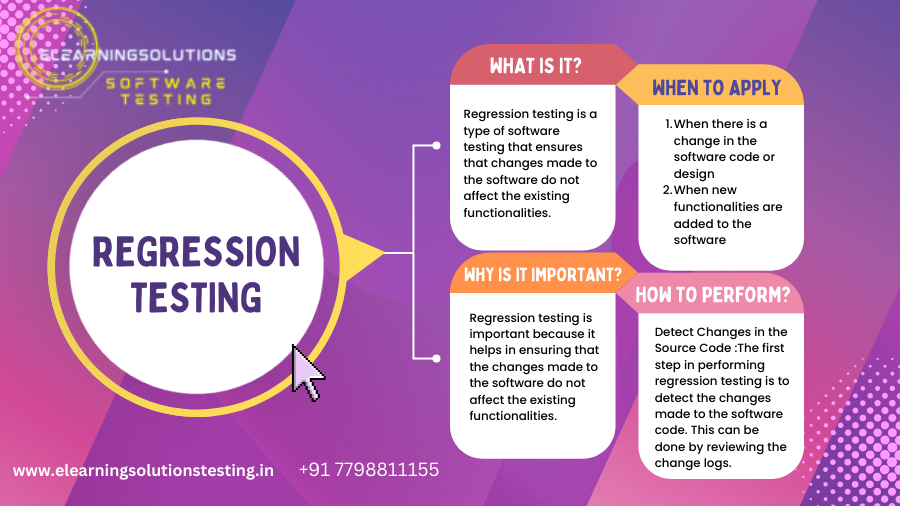
Automation is particularly useful for repetitive and regression testing, where the same scenarios need to be executed frequently.
Why Is Test Automation Important?
Modern software development requires faster development and release cycles. Testing must therefore keep pace with development.
Test automation can help organizations:
1. Reduce Repetitive Testing Effort
Automated scripts can execute repetitive test cases without requiring testers to manually perform every step.
2. Improve Testing Efficiency
Automation can execute large test suites efficiently, helping teams spend more time on exploratory testing, analysis, and quality improvement.
3. Reduce Human Error
Automated tests execute predefined steps consistently, reducing errors that may occur during repetitive manual testing.
4. Support Faster Releases
Automated regression testing can help development teams receive faster feedback when new code or features are introduced.
5. Improve Software Quality
Regular automated testing can help identify defects and regression issues earlier in the development lifecycle.
6. Support CI/CD
Automation testing can be integrated with Continuous Integration and Continuous Delivery (CI/CD) pipelines, allowing tests to run automatically as part of the software development process.
Benefits of Learning Test Automation
Mastering test automation can provide benefits for both organizations and technology professionals.
Some important benefits include:
- Increased testing efficiency
- Reduced repetitive manual effort
- Improved test consistency
- Faster feedback
- Better regression testing
- Support for CI/CD
- Improved software quality
- Opportunities for career growth
The original content also highlights career paths such as Test Automation Engineer, Quality Assurance Engineer, and DevOps Engineer.
For professionals already working in software testing, adding automation skills can help expand their technical capabilities.
Skills Required for a Career in Test Automation
A successful test automation professional needs a combination of technical knowledge and soft skills.
Technical Skills
Programming
A basic understanding of programming is important for creating and maintaining automated test scripts.
Popular languages used in automation include:
- Java
- Python
- C#
- JavaScript
The original blog specifically identifies Java, Python, and C# as important programming options for automation professionals.
Testing Frameworks
You should understand testing frameworks and automation tools relevant to your technology stack.
For example:
- Selenium WebDriver
- TestNG
- Appium
- TestComplete
CI/CD Tools
Knowledge of continuous integration tools can help automation engineers integrate testing into software delivery pipelines.
Jenkins is one example mentioned in the source material.
Version Control
Learning Git and basic version-control practices is also valuable when working with automation projects and development teams.
Soft Skills for Test Automation Professionals
Technical knowledge alone is not enough.
Important soft skills include:
Problem-Solving
Automation engineers need to analyze failures, identify the root cause, and determine appropriate solutions.
Attention to Detail
Small errors in test data, scripts, locators, or expected results can affect test execution.
Communication
Automation professionals often work with developers, testers, business analysts, and other stakeholders.
Teamwork
Software testing is a collaborative activity. Effective communication and teamwork help create reliable and maintainable testing processes.
The original article emphasizes problem-solving, attention to detail, communication, and teamwork as important soft skills.
Popular Test Automation Tools
Choosing the right automation tool depends on the application type, programming language, testing requirements, and budget.
Some tools highlighted in the original article include:
Selenium WebDriver
Selenium is widely used for web application automation testing.
It can be used with multiple programming languages and is a common technology to learn for browser automation.
Appium
Appium is commonly used for mobile application automation, making it useful for teams testing mobile applications.
TestComplete
TestComplete is a commercial automation platform that can be used for different application testing requirements.
The original article identifies Selenium WebDriver, Appium, and TestComplete as popular choices for web, mobile, and desktop application testing respectively.
How to Choose the Right Test Automation Tool
There is no single automation tool that is perfect for every project.
Before selecting a tool, consider:
Application Type
Determine whether you are testing:
- Web applications
- Mobile applications
- Desktop applications
- APIs
- Enterprise applications
Programming Language
Choose a tool that works well with the programming language used by your team.
Project Requirements
Consider browser compatibility, test execution requirements, reporting, integrations, and maintenance.
Budget
Open-source and commercial tools have different cost structures. Evaluate the overall requirements of the project before making a decision.
Learning Curve
For beginners, a tool with good documentation, community support, and learning resources can make the learning process easier.
The source also recommends evaluating tools based on application type, programming language, and budget.
Prerequisites for Learning Test Automation
You do not need to master everything before starting automation testing.
However, having a basic understanding of the following can make learning easier:
- Software testing fundamentals
- Programming concepts
- Scripting
- Web technologies
- Databases
- APIs
- Version control
- Basic development concepts
The original material recommends familiarity with programming languages such as Java, C#, Python, or Ruby and an understanding of the application’s technology stack.
Test Automation Course at eLearning Solutions
According to the provided content, eLearning Solutions in Pune offers test automation training designed for beginners as well as experienced professionals.
The course content mentioned in the source includes:
- Selenium WebDriver
- Page Object Model
- TestNG
- Maven
These technologies can help learners understand how automated test frameworks are structured and managed.
Course Duration
The source states that the test automation course is approximately 3 months long. It also states that there are no specific eligibility requirements, although a basic understanding of programming is preferred.
Before publishing this information, make sure the duration and curriculum match the current course offering.
Career Opportunities in Test Automation
The demand for software testing and automation skills is closely connected with the growth of digital products and software development.
Organizations need professionals who can design, implement, maintain, and improve automated testing frameworks.
The original article identifies several potential roles, including:
- Test Automation Engineer
- Quality Assurance Engineer
- QA Automation Engineer
- Test Engineer
- Test Analyst
- Software Developer
- SDET
- DevOps Engineer
Career Growth Roadmap in Test Automation
A test automation career can develop progressively as your technical knowledge and professional experience increase.
Stage 1: Beginner
Learn:
- Software testing fundamentals
- Programming basics
- Automation fundamentals
- Selenium or another relevant tool
Stage 2: Junior Automation Tester
Work on:
- Test scripts
- Regression testing
- Test execution
- Defect reporting
- Framework maintenance
Stage 3: Automation Engineer
Develop skills in:
- Automation frameworks
- Page Object Model
- API testing
- CI/CD
- Version control
- Advanced test design
Stage 4: Senior Automation Engineer
Take responsibility for:
- Framework architecture
- Automation strategy
- Code reviews
- Mentoring
- Test optimization
Stage 5: Lead or Manager
Experienced professionals may progress toward positions such as:
- Lead Test Automation Engineer
- Test Lead
- QA Manager
- Quality Engineering Manager
The source describes career growth as progressing from junior positions to senior roles with increasing responsibility and leadership.
Salary Expectations in Test Automation
Salary varies significantly based on:
- Experience
- Technical skills
- Location
- Company
- Job role
- Industry
- Programming knowledge
- Automation expertise
The original source mentions an approximate range of INR 4–5 LPA for beginners and up to INR 15–20 LPA for experienced professionals.
However, salary figures change over time and vary significantly between individuals. Therefore, these numbers should be treated as illustrative rather than guaranteed salary expectations.
Best Practices for Test Automation
Building automated tests is only the beginning. Maintaining a reliable automation framework is equally important.
1. Keep Test Scripts Modular
Break large tests into smaller reusable components.
2. Use a Maintainable Framework
A well-structured framework makes test maintenance easier.
3. Use Meaningful Naming
Test cases, methods, variables, and files should have clear names.
4. Maintain Good Documentation
Document important test processes, framework structures, and execution procedures.
5. Integrate With CI/CD
Automated tests can be incorporated into CI/CD pipelines for faster feedback.
6. Review and Maintain Tests
Application interfaces change frequently. Automation scripts must therefore be reviewed and updated when necessary.
The source specifically recommends modular test scripts, robust frameworks, CI/CD pipelines, systematic processes, documentation, and continuous learning.
Challenges of Test Automation
Although automation offers many benefits, implementing it successfully can require planning and ongoing maintenance.
Common challenges include:
Initial Setup
Creating an automation framework may require significant initial effort.
Script Maintenance
Tests may fail when application functionality, UI elements, or workflows change.
Cross-Browser Compatibility
Web applications may behave differently across browsers and environments.
Test Data Management
Automated tests often require reliable and reusable test data.
Skill Requirements
Automation requires technical knowledge, particularly when building and maintaining sophisticated frameworks.
The source specifically identifies initial setup costs, script maintenance, and compatibility across platforms and browsers as challenges.
Freelancing Opportunities in Test Automation
Test automation professionals can also explore freelance opportunities.
Potential freelance services include:
- Automated test development
- Regression testing
- Selenium automation
- Test framework development
- Test script maintenance
- QA consulting
The original article mentions platforms such as Upwork and Freelancer as possible channels for finding freelance projects.
Freelancers should build a strong portfolio and demonstrate practical automation experience before taking on complex projects.
Future Scope of Test Automation
Software development continues to evolve, and testing is becoming increasingly integrated with modern development practices.
Areas that can increase the importance of automation include:
- Agile development
- CI/CD
- Cloud applications
- Mobile applications
- API-based architectures
- DevOps
- Continuous testing
- AI-assisted software development
The source notes increasing demand for test automation specialists as businesses continue adopting digital transformation.
For professionals, continuously learning new tools and testing approaches can help maintain relevant skills.
How to Start a Career in Test Automation
If you are a beginner, follow a structured learning path.
Step 1: Learn Software Testing
Understand:
- Manual testing
- Test cases
- Test scenarios
- Bug life cycle
- Regression testing
- Functional testing
Step 2: Learn Programming
Choose one language such as:
Java, Python, or C#
Step 3: Learn Automation
Start with a widely used automation tool such as Selenium.
Step 4: Learn a Testing Framework
Explore tools such as TestNG and framework concepts such as Page Object Model.
Step 5: Learn Build and Dependency Tools
Understand Maven or equivalent tools used in your technology stack.
Step 6: Learn Git and CI/CD
Learn version control and how automated tests can run through CI/CD pipelines.
Step 7: Build Projects
Practice automating real-world scenarios such as:
- Login
- Registration
- Search
- Form submission
- E-commerce workflows
- User management
Step 8: Create Your Resume and Portfolio
Document your projects, tools, programming languages, frameworks, and testing experience.
Frequently Asked Questions
1. What skills are needed to start test automation?
A basic understanding of software testing and programming is useful. Java, Python, C#, or other relevant programming languages can help you develop automation scripts.
2. Which tools are commonly used for test automation?
Popular tools mentioned in the source include Selenium WebDriver, Appium, and TestComplete.
3. How long does it take to learn test automation?
The time depends on your existing testing and programming knowledge. The provided eLearning Solutions course information states an approximate duration of three months.
4. Is test automation a good career option?
Test automation can provide opportunities across software testing, quality assurance, development, and DevOps-related roles.
5. Can beginners learn test automation?
Yes. Beginners can start by learning testing fundamentals, programming basics, and one automation tool before progressing to advanced frameworks.
6. Is programming required for test automation?
Programming knowledge is highly useful, particularly for developing maintainable automation frameworks and troubleshooting test scripts.
7. What is Selenium used for?
Selenium WebDriver is commonly used for automating web browser interactions and testing web applications.
8. What are the best practices for test automation?
Important practices include modular test design, good documentation, maintainable frameworks, continuous learning, and CI/CD integration.
Conclusion
Test automation is an important skill in modern software quality assurance. It can help organizations improve testing efficiency, reduce repetitive manual effort, support faster releases, and maintain software quality.
For individuals, learning test automation can open career opportunities in roles such as Test Automation Engineer, QA Engineer, SDET, Test Analyst, and DevOps Engineer.
A successful learning journey should combine software testing fundamentals, programming, automation tools, testing frameworks, CI/CD, practical projects, and soft skills.
If you are planning to build a career in software testing, start with the fundamentals, choose one automation technology, practice consistently, and gradually develop advanced automation and framework skills.
.