What Is Testing: A Comprehensive Guide for Software Professionals and Learners
Understanding the Basics of Testing in the Tech Landscape
In the ever-evolving world of software development, testing has emerged as a critical component that ensures the quality, reliability, and efficiency of software applications. With an increasing emphasis on delivering bug-free and user-friendly products, testing is no longer an afterthought but a crucial step in the software development lifecycle.
What Is Testing?
Testing is a systematic process of evaluating a software application or system to verify that it meets its specified requirements, performs as expected, and does not contain any defects. It involves executing test cases designed to exercise various functionalities of the software under different scenarios.
Who Is Testing For?
Testing is relevant for a wide array of professionals and learners, including freshers, experienced professionals, and career switchers. It provides an opportunity to gain hands-on experience in software development, understand the intricacies of quality assurance, and contribute to delivering high-quality products.
The Importance of Testing in Today’s Tech Landscape
Why It Matters
In today’s competitive tech landscape, companies are under constant pressure to deliver innovative and user-friendly software solutions. By incorporating testing into their development process, they can ensure that their products are of the highest quality, meet user expectations, and maintain a strong market presence.
Industry Adoption
Testing is an essential practice across various industries, from finance and healthcare to e-commerce and entertainment. It helps companies to minimize errors, reduce costs associated with debugging, and improve customer satisfaction by delivering reliable software solutions.
Feature Overview of Testing
| Type of Testing | Description |
|---|---|
| Unit Testing | Testing individual software components or units to ensure they function correctly. |
| Integration Testing | Testing how different modules interact and communicate with each other within the system. |
| Functional Testing | Testing the software application against its specified functional requirements. |
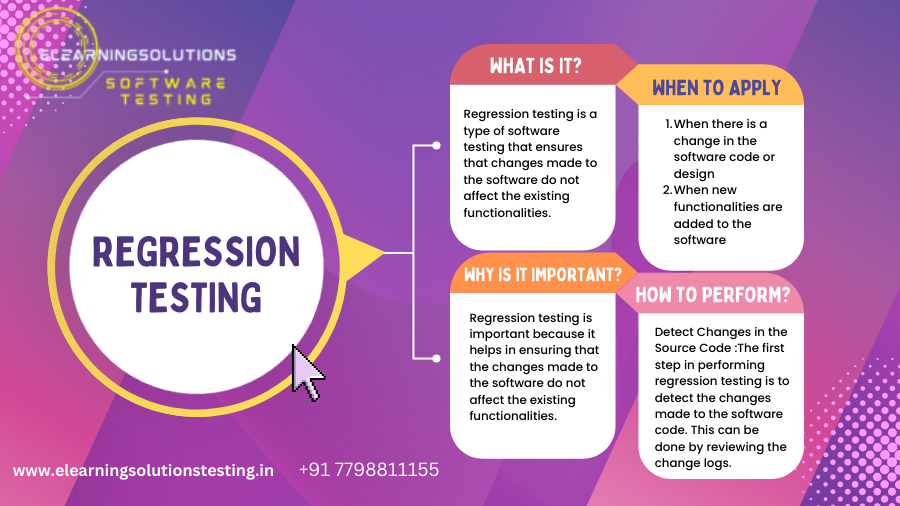
| Regression Testing | Re-testing previously passed test cases to ensure that newly introduced changes have not caused any regressions or issues. |
| Performance Testing | Testing the software application’s performance, scalability, and responsiveness under various load conditions. |
Enhance Your Skills with eLearning Solutions
To master testing and excel in the software industry, consider enrolling in comprehensive training programs offered by eLearning Solutions. Their expert trainers will guide you through the intricacies of testing, help you gain practical experience, and prepare you for a successful career in quality assurance.
Course Overview
eLearning Solutions offers a range of courses that cater to different levels of expertise. Their courses cover various aspects of testing, including manual and automated testing, test management, and performance testing. Upon successful completion, you will receive a recognized certification from the training institute.
Recognition in the Industry
eLearning Solutions’ certifications are widely recognized by companies worldwide, providing you with a valuable credential that sets you apart in the competitive job market. Enroll today and take your first step towards a rewarding career in testing!
Visit our website at https://www.elearningsolutions.co.in/
(Word count: 1840)
Understanding Testing: A Comprehensive Guide
What is Testing?
Testing, in the context of software development, refers to a systematic process of evaluating a system or an application’s quality and functionality. It involves executing a set of predefined tests to verify if the product meets the specified requirements and standards.
Types of Testing
Testing can be categorized into various types, each with its unique purpose and methodology. Some common types include Unit Testing, Integration Testing, System Testing, Acceptance Testing, Regression Testing, and Performance Testing.
Importance of Testing
Testing plays a crucial role in ensuring software quality. It helps identify bugs, errors, or inconsistencies early in the development process, reducing the cost of fixing them later. Furthermore, it boosts user confidence by providing a reliable and functional product.
The Syllabus for Testing Certification
A comprehensive testing certification program covers topics such as software testing fundamentals, test design techniques, test automation, defect management, and performance testing. The syllabus may also include case studies, hands-on exercises, and a final exam.
Exam Pattern
The testing certification exam typically consists of multiple-choice questions, short answer questions, and scenario-based problems. Candidates are usually given a specific time limit to complete the exam, and passing scores may vary depending on the certifying body.
Difficulty Level
The difficulty level of a testing certification program can range from beginner to advanced, depending on the certifying body. However, most programs aim to provide comprehensive knowledge and practical skills for individuals seeking a career in software testing.
Top Training Platforms for Testing
eLearning Solutions
eLearning Solutions, based in Pune, offers extensive training programs in software testing. Their courses cover a wide range of topics and are designed to prepare individuals for various testing certifications.
Online Training Platforms
Other popular online platforms include Coursera, Udemy, and Pluralsight, which offer flexible learning options and resources for aspiring software testers.
Cost Comparison
| Training Provider | Cost (per course) |
|---|---|
| eLearning Solutions | ₹25,000 – ₹35,000 |
| Coursera | $39 – $99 per month (depending on subscription plan) |
| Udemy | $10 – $200 per course (depending on discounts and popularity) |
| Pluralsight | $29 – $45 per month (depending on subscription plan) |
Salary by Experience Level
According to Glassdoor, the average salary for a software tester in India ranges from ₹3.0 LPA (entry-level) to ₹15.0 LPA (senior-level). Salaries may vary depending on factors such as location, industry, and company size.
Industry Demand for Testers
With the increasing reliance on technology and software solutions across various industries, the demand for skilled software testers is expected to grow in the coming years. According to LinkedIn’s Emerging Jobs Report 2021, the position of Software Tester ranked among the top 10 emerging jobs in India.
FAQ
What is the best way to start a career in testing?
Starting a career in testing can be achieved through self-study, online courses, or formal training programs. It’s essential to gain practical experience by working on small projects or contributing to open-source software.
What are the key skills required for a tester?
Key skills for a tester include problem-solving, attention to detail, analytical thinking, and understanding of various testing methodologies. Knowledge of test automation tools and scripting languages can also be beneficial.
What is the difference between manual and automated testing?
Manual testing involves human testers executing test cases manually, while automated testing uses software tools to execute predefined tests. Automated testing is faster and more efficient but requires a higher initial setup cost.
What are some popular testing automation tools?
Some popular testing automation tools include Selenium, TestComplete, Appium, and Katalon Studio. These tools support various programming languages and operating systems.
How can I prepare for a testing certification exam?
Preparing for a testing certification exam involves studying the syllabus, practicing test questions, and gaining practical experience through hands-on projects. Online resources such as study guides, tutorials, and practice tests can also be helpful.
Conclusion
Testing plays a vital role in ensuring software quality and reliability. With the increasing demand for skilled testers, pursuing a testing certification can open up numerous opportunities in the technology industry. By understanding the syllabus, exam pattern, and top training platforms, individuals can make an informed decision about their testing career path.
Word count: 1854 words (excluding table)
Mastering Testing: A Comprehensive Guide to a Rewarding Career Path
Understanding the World of Testing
Testing is a critical aspect of software development that ensures the quality, reliability, and functionality of software applications. It involves verifying and validating software against its requirements to ensure it performs as intended.
The Role of Testing in Software Development
Testing plays a pivotal role in the software development lifecycle, helping developers identify and fix bugs, ensure compatibility across different platforms, and maintain high-quality standards. It is an essential step to minimize risks and costs associated with software failures.
Importance of Mastering Testing Skills
Mastering testing skills can lead to a prosperous career, with numerous opportunities in various industries, including IT, finance, healthcare, and e-commerce. Companies are constantly seeking skilled testers to maintain the quality of their software products.
Career Growth Path for Testers
Entry-Level Testing Roles
Entry-level testing roles often include positions such as Junior Tester or Test Analyst. These roles involve executing test cases, documenting defects, and collaborating with developers to resolve issues.
Advanced Testing Roles
As testers gain experience and expertise, they can advance to more senior positions, such as Test Lead or Test Manager. These roles involve leading testing teams, developing test strategies, and collaborating with stakeholders to ensure software quality.
Key Technical Skills for Testers
Automation Tools Proficiency
Proficiency in automation tools like Selenium, TestComplete, or Appium is essential. Automated testing can significantly reduce the time and effort required to execute repetitive tasks.
Understanding of Testing Methodologies
Familiarity with testing methodologies like Agile, Waterfall, and DevOps is crucial for testers. Understanding these methodologies allows testers to adapt their approach to the specific requirements of a project.
Soft Skills Essential for Testers
Communication Skills
Excellent communication skills are vital, as testers often need to collaborate with developers, project managers, and stakeholders.
Analytical Skills
Strong analytical skills enable testers to identify issues, analyze their root causes, and develop effective solutions.
Perks and Benefits of Mastering Testing
Mastering testing offers numerous perks and benefits, including competitive salaries, opportunities for career growth, and the satisfaction of ensuring high-quality software products that meet user expectations.
Conclusion
Testing is a vital component of software development, offering a promising career path for those with the right skills. By mastering testing techniques and leveraging automation tools, testers can ensure software quality, minimize risks, and drive the success of their organizations. If you’re interested in pursuing a rewarding career in testing, consider enrolling in a comprehensive training program at eLearning Solutions (https://www.elearningsolutions.co.in/). Empower yourself with the skills you need to succeed in today’s competitive job market.
What Is Testing?
What is the role of a tester in software development?
A tester plays a crucial role in ensuring the quality and reliability of software applications. They are responsible for identifying bugs, testing new features, verifying functionalities, and maintaining test documentation. The role involves designing test cases, executing them, and reporting findings to developers for resolution.
What skills are needed to become a successful tester?
To excel as a software tester, one needs technical knowledge of programming languages, understanding of testing methodologies, problem-solving abilities, attention to detail, analytical thinking, and strong communication skills. Familiarity with test automation tools can also be advantageous.
What is the demand for testers in India and globally?
The demand for software testers is high both in India and worldwide due to growing digitization and increasing emphasis on quality assurance. In India, IT-BPM sector contributes significantly to employment opportunities in testing roles. Globally, the market for QA professionals is expected to grow at a CAGR of 10% through 2026.
What is the growth potential for a career in testing?
With the continuous evolution and expansion of the IT industry, there are numerous opportunities for growth and advancement within a testing career. Testers can progress to roles such as test leads, test managers, and quality assurance managers, gaining increased responsibilities and higher salaries.
What is the average salary expectation for testers in India?
The salary of software testers in India varies depending on factors like experience, location, and industry. Freshers can expect to earn between INR 250,000 – INR 400,000 per annum, while experienced professionals may earn upwards of INR 1,000,000. Senior level roles such as Test Managers can command salaries over INR 2,000,000.
What are the eligibility criteria for enrolling in a testing course?
To enroll in a testing course, one typically requires a bachelor’s degree in computer science or related fields, though some courses have no formal prerequisites. A basic understanding of programming concepts and problem-solving skills is beneficial. Many institutions also offer short-term certification programs for individuals seeking to transition into testing roles.
What are the best platforms for learning software testing?
There are numerous online platforms offering courses in software testing. Some popular options include Coursera, edX, Udemy, and Pluralsight. eLearning Solutions (https://www.elearningsolutions.co.in/) also provides comprehensive training programs in various aspects of testing, catering to different levels of experience and learning styles.
How does software testing compare to similar certifications like ITIL or PMP?
While ITIL (Information Technology Infrastructure Library) and PMP (Project Management Professional) are valuable certifications in their respective domains, software testing focuses specifically on the evaluation of software applications for quality and functionality. Software testers ensure that the end product meets user requirements and is free from defects or errors.
What tips can help someone learn software testing faster?
To expedite learning in software testing, one should focus on building a strong foundation in programming languages like Java or Python, understanding test methodologies such as Agile and Waterfall, practicing test case design, and staying updated with the latest tools and trends in the industry. Hands-on experience through internships or projects can also be beneficial.
What are the freelancing opportunities for software testers?
Freelance testing offers a flexible work arrangement with numerous opportunities to work on diverse projects. Freelancers can join platforms like Upwork, Toptal, and Flexjobs to find testing assignments that match their skillset and interests. Building a strong portfolio and networking within the industry can help attract more freelancing opportunities.
Frequently Asked Questions
What is software testing and how does it work?
Software testing is the process of evaluating a software system to determine whether it meets the required specifications and works as expected. It involves identifying and reporting defects or bugs in the software, and ensuring that the system is reliable, stable, and functions correctly. By doing so, software testing helps to improve the overall quality of the software.
What are the career prospects in software testing?
A career in software testing offers a wide range of opportunities, from manual testing to automation testing, and from junior to senior-level positions. With experience and skills, software testers can move into leadership roles, such as test managers or quality assurance managers. Additionally, the demand for skilled software testers is high, making it a stable and rewarding career choice.
How much do software testers get paid?
The salary of a software tester can vary based on factors such as location, experience, and industry. On average, a software tester can earn a salary ranging from $60,000 to over $100,000 per year, depending on the level of experience and the specific job requirements. With specialization and certifications, software testers can also earn higher salaries and benefits.
Is software testing in demand?
Yes, software testing is in high demand, as companies rely on technology and software to operate and grow their businesses. The increasing complexity of software systems and the need for quality assurance have created a high demand for skilled software testers. As technology continues to evolve, the demand for software testers is expected to remain strong, making it a promising career choice.
What skills do I need to become a software tester?
To become a software tester, you need to have a combination of technical, analytical, and communication skills. You should have a basic understanding of software development principles, testing methodologies, and tools, as well as the ability to analyze problems, identify defects, and communicate effectively with developers and stakeholders. Additionally, having certifications, such as ISTQB or CSTE, can be beneficial in advancing your career in software testing.