Automation Testing Tutorial: A Comprehensive Guide for Software Testers
Understanding Automation Testing
In the ever-evolving world of software development, automation testing has become a crucial component. This tutorial aims to provide a comprehensive guide to understanding automation testing, its significance, and who it’s for.
What is Automation Testing?
Automation testing is the process of executing test cases automatically using software tools. It helps in reducing human effort, saving time, and ensuring consistency in test execution.
Who Needs Automation Testing?
Software testers, developers, QA analysts, project managers, and anyone involved in software development can benefit from automation testing. It helps in ensuring the quality of the software by detecting bugs and issues early in the development lifecycle.
Key Aspects of Automation Testing
Types of Automation Testing
Automation testing can be categorized into functional testing, regression testing, load testing, and performance testing. Each type serves a specific purpose in the software development process.
Benefits of Automation Testing
Automation testing offers numerous benefits such as increased efficiency, reduced human error, early bug detection, improved test coverage, and faster time-to-market. These benefits make it an essential tool for modern software development.
Automation Testing Tools
Open Source Automation Testing Tools
Some popular open-source automation testing tools include Selenium, Appium, TestComplete, and JMeter. These tools provide a robust platform for executing test cases automatically.
Commercial Automation Testing Tools
Commercial automation testing tools like TestComplete, Ranorex, and LoadRunner offer additional features such as reporting, integration with other tools, and dedicated support. These tools are suitable for large-scale projects and businesses.
| Tool | Type | Open Source/Commercial |
|---|---|---|
| Selenium | Functional Testing | Open Source |
| Appium | Mobile Testing | Open Source |
| TestComplete | Functional Testing | Commercial |
| Ranorex | Functional Testing | Commercial |
| JMeter | Load and Performance Testing | Open Source |
| LoadRunner | Load and Performance Testing | Commercial |
Getting Started with Automation Testing
Choosing the Right Tool for Your Project
Choosing the right automation testing tool depends on various factors such as the type of application, project requirements, and budget. Understanding these factors will help in selecting a suitable tool for your project.
Setting Up Your Testing Environment
Setting up a testing environment involves installing the chosen automation testing tool, configuring it for your application, and writing test cases. This step is crucial to ensure that your tests run smoothly and provide accurate results.
Best Practices for Automation Testing
Writing Effective Test Cases
Writing effective test cases involves understanding the application’s functionality, designing test scenarios, and creating test data. These steps help in ensuring that your tests are comprehensive and cover all aspects of the application.
Maintaining Your Test Suite
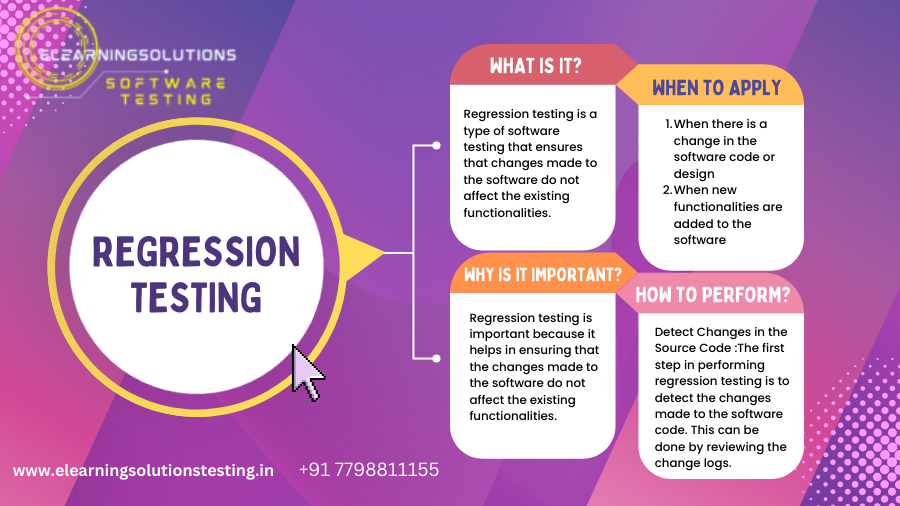
Maintaining your test suite involves updating test cases to reflect changes in the application, running regular regression tests, and monitoring test results. These steps help in ensuring that your tests remain relevant and effective.
Mastering Automation Testing: A Comprehensive Guide for Quality Assurance Professionals
Understanding the Importance and Benefits of Automation Testing
What is Automation Testing?
Automation testing is a method used in software testing that leverages specialized tools to execute repetitive tasks, compare results, and verify the functionality of an application under test (AUT). It significantly reduces the time, effort, and human error associated with manual testing.
Why Automate Testing? Key Benefits Explored
Automation testing offers numerous benefits for quality assurance professionals:
– **Increased Efficiency**: Automated tests can run faster than humans, enabling teams to test more scenarios and cover a broader spectrum of application functionality.
– **Consistency**: Automated tests execute the same steps in exactly the same way every time, reducing the risk of human error and ensuring consistent results.
– **Cost Savings**: Automating repetitive tasks allows organizations to save on labor costs, as fewer testers are needed to handle large test suites.
– **Scalability**: As applications grow in size and complexity, manual testing becomes more challenging. Automation enables teams to scale their testing efforts easily without worrying about the increasing workload.
A Comparative Analysis of Popular Automation Testing Tools
Key Features and Capabilities of Leading Automation Tools
To help you make an informed decision, we compare some popular automation testing tools:
1. **Selenium**: Open-source, supports various programming languages, and offers a rich ecosystem of plugins and integrations. Selenium is ideal for cross-browser and cross-platform testing.
2. **TestComplete**: A commercial tool offering robust functional testing capabilities, including support for multiple programming languages, GUI testing, and test data management. TestComplete is well-suited for complex desktop applications.
3. **Appium**: An open-source mobile automation tool that supports both Android and iOS platforms, as well as numerous programming languages. Appium is perfect for cross-platform mobile app testing.
4. **Katalon Studio**: A free, all-in-one solution that provides test automation for web, mobile, and API tests with an easy-to-use interface and built-in reusable keyword libraries. Katalon Studio is ideal for teams looking for a comprehensive automation tool without the expense of commercial tools.
Factors to Consider When Choosing an Automation Testing Tool
When selecting an automation testing tool, consider factors such as:
– **Ease of Use**: A user-friendly interface and intuitive learning curve can help speed up the adoption process for your team.
– **Compatibility**: Ensure that the chosen tool supports your development environment (e.g., programming languages, platforms, and frameworks).
– **Scalability**: Look for a tool that can handle large test suites without compromising performance or scalability.
– **Cost**: Determine whether you prefer an open-source, free solution or a commercial tool with additional features and support.
Location-Based Automation Testing: A Growing Trend
As globalization continues to increase, location-based testing is becoming increasingly important for ensuring the localization of applications for users in different regions. This approach involves tailoring your application to meet the unique needs and preferences of each market, including language, currency, and cultural nuances.
In Pune, India, eLearning Solutions offers automation testing training courses that cover location-based testing strategies. Visit their website at https://www.elearningsolutions.co.in/ to learn more about their offerings and enroll in a course today.
A Comprehensive Guide to Automation Testing Tutorial—Boost Your Career and Skills
Career Growth Path in Automation Testing
The Rising Demand for Automation Testers
With the digital transformation sweeping across industries, automation testing has become an indispensable part of software development. The increasing reliance on software applications for business operations has led to a surge in demand for skilled automation testers.
Progressive Career Opportunities
A career in automation testing offers promising opportunities for growth. Starting as an automation test engineer, one can progress to senior automation test engineer, test lead, and eventually, a test manager or director.
Key Skills Required for Excelling in Automation Testing
Technical Expertise
A strong foundation in programming languages such as Java, C#, Python, or Ruby is essential. Familiarity with test frameworks like Selenium WebDriver, TestNG, and JUnit is also crucial.
Test Automation Tools Knowledge
Proficiency in using automation testing tools like Jenkins, Maven, and Git is highly desirable. Understanding Continuous Integration (CI) and Continuous Delivery (CD) pipelines can further enhance your value as an automation tester.
Perks and Benefits of a Career in Automation Testing
Competitive Salaries
Automation testers enjoy competitive salaries, especially in technology hubs like Silicon Valley. The average salary for an automation tester can range from $60,000 to $100,000 per annum.
Flexible Work Environment
Many companies offer flexible work hours and remote working options, providing a better work-life balance. This flexibility is especially beneficial for those juggling family responsibilities alongside their careers.
Join eLearning Solutions to Kickstart Your Journey in Automation Testing
If you’re ready to embark on an exciting career in automation testing, look no further than eLearning Solutions. Our comprehensive training programs are designed to equip you with the necessary skills and knowledge to excel in this dynamic field.
Visit eLearning Solutions today to discover how we can help you achieve your career goals.
Conclusion
Automation testing offers a promising career path with ample opportunities for growth and advancement. By acquiring the right skills and staying updated with the latest tools and trends, you can carve out a successful career in this rapidly evolving field. With eLearning Solutions by your side, you’re one step closer to realizing your dream of becoming an automation testing professional.
Join us today and embark on a transformative journey towards a rewarding future in automation testing.
Frequently Asked Questions About Automation Testing
What is automation testing and why is it important?
Automation testing is a software testing approach that uses specialized tools to execute repetitive tasks, validate functionalities, and identify defects more efficiently. It’s crucial because it reduces human effort, saves time, improves test coverage, and enhances the overall quality of software applications.
What are the key benefits of automation testing?
The primary benefits include faster execution time, increased test coverage, consistent results, reduced manual errors, and cost savings. Automated tests can run simultaneously on multiple platforms, making it more effective than traditional manual testing methods.
Which programming languages are commonly used for automation testing?
Some popular programming languages for automation testing include Java, C#, Python, Ruby, and Selenium WebDriver. Each language has its unique advantages, but the choice often depends on the project requirements, team expertise, and tool compatibility.
What are the prerequisites for pursuing a career in automation testing?
A degree in computer science or related fields is beneficial but not always necessary. Essential skills include knowledge of programming languages, familiarity with testing methodologies, understanding of the software development life cycle (SDLC), and strong problem-solving abilities.
What is the average salary for automation testers?
The salary for automation testers varies depending on factors like location, experience, and industry. In the United States, the median annual salary for automation testers ranges between $60,000 to $90,000.
What career opportunities are available in automation testing?
Career opportunities include Automation Test Engineer, Quality Assurance (QA) Analyst, Test Automation Specialist, and Senior Automation Tester. With experience, professionals can progress to leadership roles like QA manager or software development manager.
What are the most demanded automation testing tools in 2026?
In 2026, some of the most sought-after automation testing tools include Selenium WebDriver, TestComplete, Appium, Katalon Studio, and Ranorex. These tools are popular due to their versatility, ease of use, and extensive support for various platforms and programming languages.
How does automation testing compare to manual testing?
Automation testing offers faster execution times, increased test coverage, and reduced human errors compared to manual testing. However, it requires a higher initial setup cost and ongoing maintenance effort. In some cases, a combination of both methods may be beneficial.
What tips would you give someone starting in automation testing?
A beginner in automation testing should focus on learning programming languages, understanding test methodologies, and familiarizing themselves with various tools. They should also practice writing clean, maintainable, and efficient code to ensure long-term success.
Frequently Asked Questions
What is automation testing and why is it important?
Automation testing is a software testing technique that uses automated tools to execute tests, reducing manual effort and increasing efficiency. It is important because it helps to improve the quality and reliability of software applications, while also reducing the time and cost of testing. By mastering automation testing, learners can enhance their skills and career prospects in the software testing industry.
What will I learn from this comprehensive tutorial on automation testing?
This tutorial will cover the fundamentals of automation testing, including the basics of testing frameworks, test automation tools, and best practices for implementing automation testing in real-world projects. Learners will gain hands-on experience with industry-leading tools and technologies, and will be able to design and implement automated tests for a variety of software applications. The tutorial will also cover advanced topics such as test data management and test environment setup.
Do I need prior experience in software testing to take this tutorial?
No, prior experience in software testing is not required to take this tutorial, as it is designed to be comprehensive and beginner-friendly. The tutorial will start with the basics of automation testing and gradually move on to more advanced topics, so learners with little or no experience can easily follow along. However, some basic knowledge of programming concepts and software development principles may be helpful.
How long will it take to complete this tutorial and what kind of support will I receive?
The duration of the tutorial will depend on the learner’s pace and the amount of time they can dedicate to studying each week. The tutorial is designed to be self-paced, and learners will have access to video lessons, quizzes, and practice exercises to help them learn and retain the material. Learners will also receive support from instructors and peers through online forums and discussion groups.
What kind of career opportunities are available to me after completing this tutorial on automation testing?
After completing this tutorial, learners can pursue a variety of career opportunities in the software testing industry, including test automation engineer, quality assurance engineer, and software test engineer. The tutorial will also prepare learners for certification exams in automation testing, such as ISTQB and CSTE, which can further enhance their career prospects. With the skills and knowledge gained from this tutorial, learners can work in a variety of industries, including IT, finance, and healthcare.