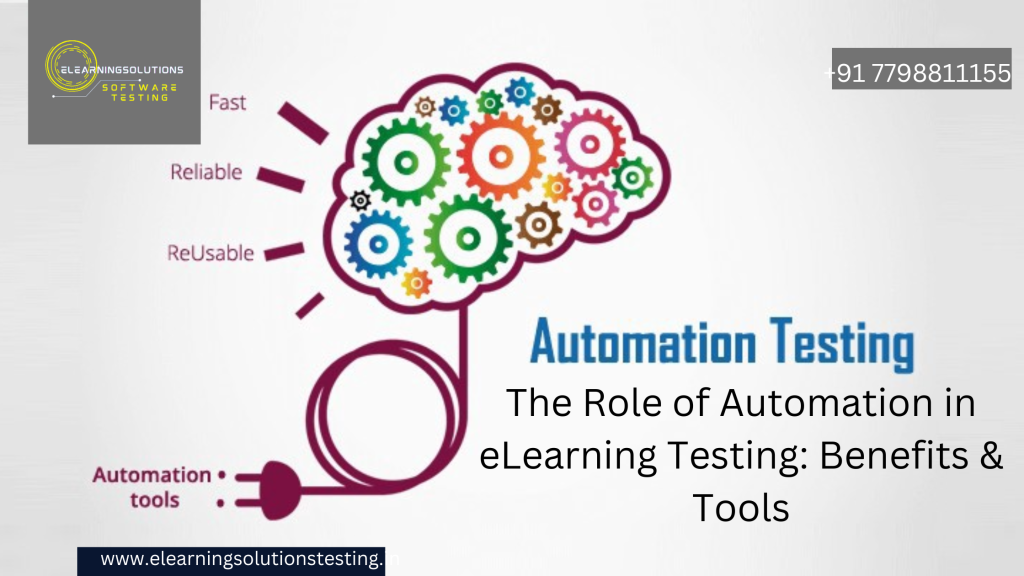
As eLearning platforms evolve, ensuring their functionality, performance, and accessibility through rigorous testing is crucial. Manual testing can be time-consuming and prone to human errors, making automation an essential component of eLearning testing. This blog explores the role of automation in eLearning testing, its benefits, and the best tools to use.
Why Automation is Essential for eLearning Testing
Automating eLearning testing streamlines repetitive tasks, increases accuracy, and enhances test coverage. It helps identify issues early, ensuring a seamless learning experience for users.
Key Benefits of Automation in eLearning Testing
1. Faster Testing & Reduced Time to Market
Automated test scripts can execute test cases much faster than manual testing, reducing the overall testing cycle and enabling quicker deployment.
2. Improved Accuracy & Consistency
Automated testing eliminates human errors, ensuring consistent results across multiple test executions.
3. Enhanced Test Coverage
Automation allows for comprehensive testing, including UI/UX validation, cross-browser testing, and API testing, ensuring all aspects of the eLearning platform function correctly.
4. Cost Savings in the Long Run
While automation requires an initial investment, it significantly reduces costs associated with repetitive manual testing and bug fixes.
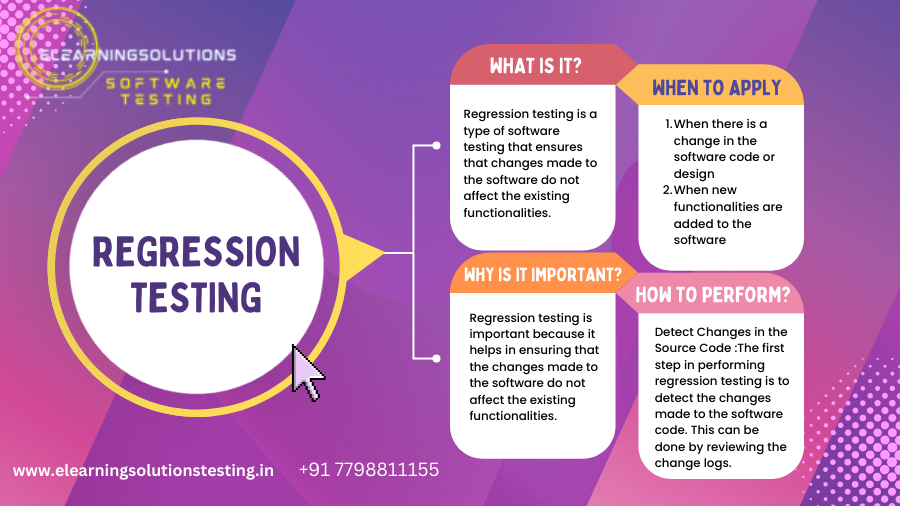
5. Regression Testing Made Easy
Updates and feature enhancements can break existing functionality. Automated regression testing ensures that new changes do not affect previously working features.
6. Scalability & Load Testing
Automation tools can simulate thousands of users accessing the platform simultaneously, helping to identify performance bottlenecks.
7. Better Compliance & Accessibility Testing
Automated tools help verify adherence to standards like SCORM, xAPI, WCAG, and ADA, ensuring accessibility and interoperability.
Best Automation Tools for eLearning Testing
1. Selenium
- Best for: Functional and regression testing
- Features: Cross-browser testing, integration with CI/CD pipelines
- Ideal for testing user interactions like navigation, quizzes, and multimedia playback
2. TestNG
- Best for: Automated test management and execution
- Features: Parallel execution, reporting, and integration with Selenium
3. JMeter
- Best for: Performance and load testing
- Features: Simulates multiple users to check system scalability
4. Cypress
- Best for: End-to-end testing of eLearning web applications
- Features: Fast execution, real-time debugging, and automatic waiting
5. Axe Accessibility Testing Tool
- Best for: Automated accessibility testing
- Features: Identifies WCAG compliance issues, integrates with Selenium and Cypress
6. SCORM Cloud
- Best for: SCORM and xAPI compliance testing
- Features: Validates course tracking, progress reporting, and LMS compatibility
7. Applitools
- Best for: Visual regression testing
- Features: AI-powered UI verification to check layout consistency across devices
Best Practices for Implementing Test Automation in eLearning
- Define clear test cases before automating.
- Prioritize frequently used and high-risk features.
- Use a combination of manual and automated testing for best results.
- Regularly update and maintain test scripts.
- Integrate automation with CI/CD pipelines for continuous testing.
Conclusion
Automation plays a vital role in eLearning testing, ensuring faster, more efficient, and error-free evaluations. By leveraging the right automation tools, eLearning providers can enhance platform quality, improve user experience, and stay ahead in the competitive digital learning landscape.
YOU MAY BE INTERESTED IN
The Art of Software Testing: Beyond the Basics
Automation testing course in Pune
Automation testing in selenium
Mastering Software Testing: A Comprehensive Syllabus
Frequently Asked Questions
What are the benefits of using automation in eLearning testing?
Automation in eLearning testing offers several benefits, including increased efficiency, reduced testing time, and improved accuracy. Automated testing can also help identify defects and bugs early in the development cycle, saving time and resources. This enables developers to focus on creating high-quality eLearning content.
How does automation improve the accuracy of eLearning testing?
Automation improves the accuracy of eLearning testing by minimizing human error and ensuring that tests are performed consistently and reliably. Automated tests can also be run multiple times, allowing for comprehensive coverage of all aspects of the eLearning content. This helps to identify and fix defects that may have been missed by manual testing.
What tools are commonly used for automating eLearning testing?
Common tools used for automating eLearning testing include Selenium, Appium, and TestComplete. These tools allow developers to create automated tests that simulate user interactions, such as clicking buttons and filling out forms, and verify that the eLearning content behaves as expected. Other tools, such as TestRail and PractiTest, can be used to manage and report on automated tests.
Can automation replace manual testing in eLearning development?
While automation can significantly reduce the need for manual testing in eLearning development, it is unlikely to completely replace it. Manual testing is still necessary for certain types of testing, such as usability and accessibility testing, which require human judgment and empathy. However, automation can be used to augment manual testing, freeing up testers to focus on higher-level testing activities.
How do I get started with automating eLearning testing?
To get started with automating eLearning testing, it is essential to identify the areas of testing that can be automated and choose the right automation tools for the job. Developers should also develop a clear understanding of the eLearning content and the testing objectives, and create a plan for implementing automated testing. Additionally, it is crucial to have the necessary skills and training to use the automation tools effectively.