Quality Assurance (QA) testing is a crucial step in eLearning platform development. It ensures that the platform functions correctly, delivers a seamless user experience, and meets accessibility and compliance standards. This guide outlines the essential steps and best practices for conducting effective QA testing for eLearning platforms.
Why QA Testing is Important for eLearning Platforms
Thorough QA testing helps:
- Identify and fix technical issues before launch
- Ensure compatibility across devices and browsers
- Improve performance and loading speed
- Verify compliance with industry standards (SCORM, xAPI, ADA, WCAG)
- Enhance user experience and engagement
Key Steps in QA Testing for eLearning Platforms
1. Requirement Analysis and Test Planning
Before starting the testing process, it’s essential to:
- Gather and analyze eLearning platform requirements
- Identify key functionalities such as course navigation, progress tracking, assessments, and multimedia content
- Develop a detailed test plan, including test cases, tools, and execution strategies
2. Functional Testing
Functional testing ensures that all platform features work as expected. It covers:
- User registration, login, and authentication
- Course enrollment and completion tracking
- Quiz and assessment functionality
- Interactive elements like videos, animations, and drag-and-drop activities
- User role management and permissions
Best Approach: Create detailed test cases for each feature and execute them across multiple user scenarios.
3. Compatibility Testing
eLearning platforms must perform well across different environments, including:
- Desktop, tablet, and mobile devices
- Various operating systems (Windows, macOS, iOS, Android)
- Multiple web browsers (Chrome, Firefox, Safari, Edge)
Best Approach: Use cross-browser testing tools like BrowserStack or LambdaTest to simulate different environments.
4. Performance Testing
Performance testing ensures that the platform runs smoothly under different conditions, such as high user traffic. Key aspects to test include:
- Page load times
- Response time under peak load
- Scalability and stability
Best Approach: Use tools like JMeter or LoadRunner to simulate multiple users and identify performance bottlenecks.
5. Accessibility Testing
Accessibility testing ensures that the eLearning platform is inclusive and meets standards such as WCAG and ADA. Key areas to check:
- Screen reader compatibility
- Keyboard navigation
- Proper contrast, font size, and text readability
Best Approach: Use tools like Axe or WAVE to check accessibility compliance. Conduct manual testing with assistive technologies like NVDA or JAWS.
6. Security Testing
Since eLearning platforms store sensitive user data, security testing is crucial. It should cover:
- Secure login and data encryption
- Protection against SQL injection and cross-site scripting (XSS)
- Role-based access control to prevent unauthorized access
Best Approach: Perform penetration testing using tools like OWASP ZAP or Burp Suite.
7. Compliance Testing (SCORM & xAPI)
To ensure seamless Learning Management System (LMS) integration, test for:
- SCORM compliance for content interoperability
- xAPI implementation to track user interactions and progress
Best Approach: Use SCORM Cloud and xAPI test tools to validate compliance.
8. Usability Testing
Usability testing focuses on improving user experience. Key aspects to evaluate:
- Intuitive navigation and course structure
- Readability of content
- Clear instructions and feedback for assessments
Best Approach: Conduct real-user testing sessions and gather feedback to enhance usability.
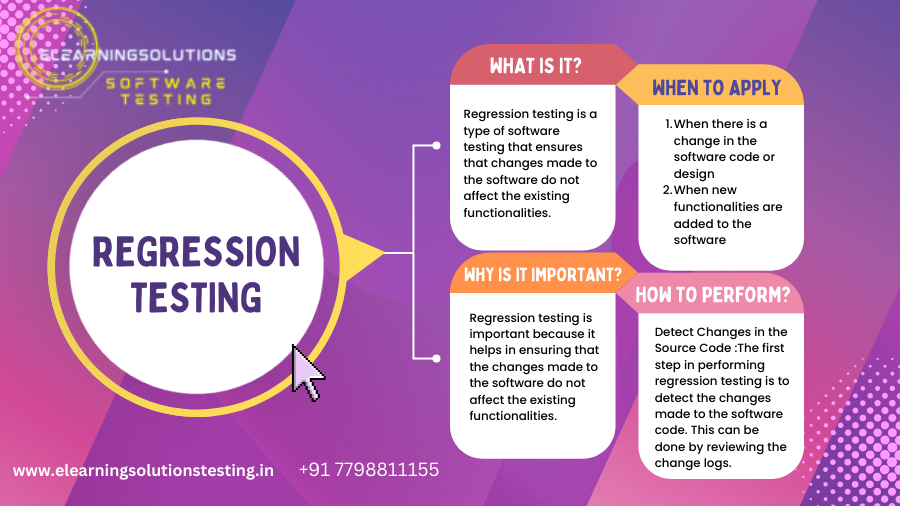
9. Regression Testing
After fixing bugs and making updates, regression testing ensures that existing functionalities remain intact.
Best Approach: Use automated testing tools like Selenium or Cypress for repeated test execution.
10. Final Validation and Deployment
Before launching the platform:
- Conduct a final round of testing across all functionalities
- Validate test results and fix any remaining issues
- Deploy in a controlled environment before full-scale release
Conclusion
Effective QA testing is essential for delivering a reliable, high-quality eLearning experience. By following structured test planning, functional validation, and compliance checks, organizations can ensure that their eLearning platforms meet industry standards and provide a seamless user experience.
YOU MAY BE INTERESTED IN
The Art of Software Testing: Beyond the Basics
Automation testing course in Pune
Automation testing in selenium
Mastering Software Testing: A Comprehensive Syllabus
Frequently Asked Questions
What are the key elements to focus on when conducting QA testing for eLearning platforms?
When conducting QA testing for eLearning platforms, key elements to focus on include user interface, functionality, compatibility, and performance. This ensures that the platform is user-friendly, functions as expected, and works seamlessly across different devices and browsers. By focusing on these elements, you can identify and resolve issues before they impact the learning experience.
How can I ensure that my eLearning platform is accessible to learners with disabilities?
To ensure that your eLearning platform is accessible to learners with disabilities, you should test for compliance with accessibility standards such as the Web Content Accessibility Guidelines (WCAG 2.1). This involves verifying that the platform’s content, navigation, and interactive elements can be accessed using assistive technologies like screen readers. By prioritizing accessibility, you can create a more inclusive learning environment for all users.
What types of testing should I conduct to ensure the quality of my eLearning platform?
To ensure the quality of your eLearning platform, you should conduct a range of tests, including functional testing, usability testing, compatibility testing, and performance testing. Functional testing verifies that the platform’s features work as expected, while usability testing assesses the user experience and identifies areas for improvement. Compatibility and performance testing ensure that the platform works smoothly across different devices, browsers, and network conditions.
How can I identify and report defects or issues during QA testing of my eLearning platform?
When identifying and reporting defects or issues during QA testing, it’s essential to be detailed and thorough in your documentation. This includes describing the issue, steps to reproduce it, and the expected outcome. You should also prioritize defects based on their severity and impact on the learning experience, and provide recommendations for resolving them to ensure that the platform is stable and functional.
What tools and resources can I use to support QA testing of my eLearning platform?
There are various tools and resources available to support QA testing of eLearning platforms, including testing frameworks, automated testing tools, and project management software. These tools can help streamline the testing process, identify issues more efficiently, and improve collaboration among team members. By leveraging these resources, you can ensure that your QA testing is thorough, effective, and efficient, and that your eLearning platform meets the highest standards of quality.