Overview
A critical stage in the software development lifecycle (SDLC) that guarantees the delivery of dependable, error-free, and high-quality programs is software testing. Nonetheless, a lot of companies and testers commit typical errors that reduce testing’s efficacy. These errors may result in poor user experience, higher expenses, and project delays. This article examines some of the most typical errors made during software testing and offers practical ways to prevent them.”Common Software Testing Mistakes”
1.Poor Test Strategy and Planning in Software Testing
Error
The absence of a clear test plan and strategy is one of the most frequent errors made in software testing. Testing can become disorganized, ineffective, and unfinished without a good plan.
Ways to Prevent It:
Before beginning the testing process, clearly define the goals, parameters, and resources.
Create a thorough test strategy that addresses test cases, deadlines, resources, and team roles.
Early stakeholder involvement will help to align testing priorities and expectations.
2.Ignoring the Needs of the Business in Software Testing
Error
Without thoroughly comprehending the business requirements, testers sometimes concentrate only on functional testing. This may cause important test situations to be overlooked.
Ways to Prevent It:
To comprehend needs, work closely with developers and business analysts.
Test cases can be mapped to business objectives using requirement traceability matrices.
Hold review meetings to address any required ambiguities.
3. Not Enough Test Coverage in Software Testing
Error
Many teams neglect to test important functionality since they don’t cover every area of an application.
Ways to Prevent It:
Make certain that every feature, function, and integration has been tested.
To measure and enhance test coverage, use tools for test coverage analysis.
To find hidden flaws, use exploratory testing in addition to scheduled tests.
4. Disregarding Automated Examination in Software Testing
Error
Manual testing alone can be laborious and prone to mistakes, particularly when working on big projects.
Ways to Prevent It:
Use tools like Selenium, TestNG, or JUnit to find and automate repetitive test cases.
Test scripts should be routinely maintained and updated.
For maximum efficiency, strike a balance between automated and manual testing.
5. Inadequately Crafted Test Cases in Software Testing
Error
Inconsistent testing outcomes may arise from test cases that are too complicated, redundant, or ambiguous.
Ways to Prevent It:
Create test cases that are understandable, succinct, and reusable.
Preconditions, test processes, expected outcomes, and postconditions should all be included in an organized manner.
Test cases should be routinely reviewed and improved.
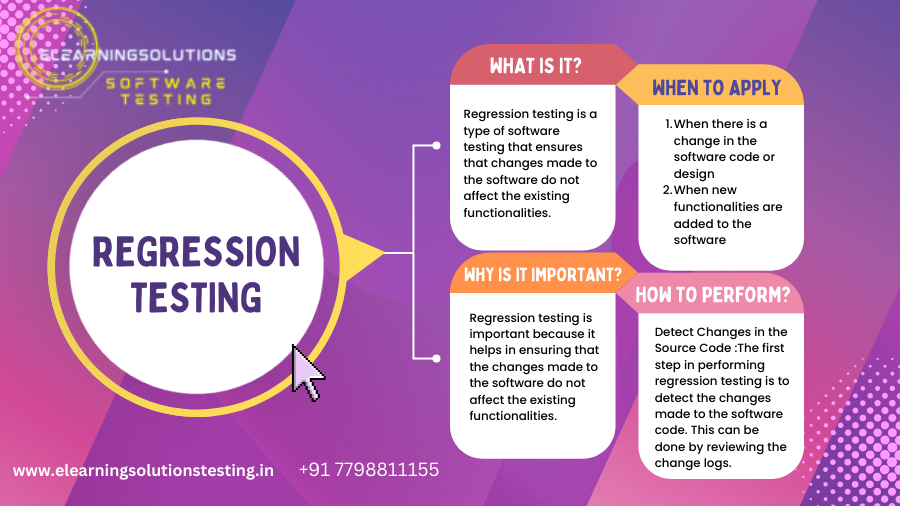
6.Ignoring Regression Analysis in Software Testing
Error
Regression testing is frequently neglected by teams after code changes, which can result in unexpected failures in aspects that were previously functional.
Ways to Prevent It:
Put automated regression testing suites into action.
Perform regression testing following each significant release or modification.
Test cases should be updated frequently in light of new features.
7. Failure to Test in Actual Environments and Devices in Software Testing
Error
Relying solely on local or simulated surroundings may cause problems when the software is used in real-world settings.
Ways to Prevent It:
Test on various devices, browsers, and operating systems.
Utilize cloud-based testing technologies to ensure thorough coverage of the environment.
Use actual end users to carry out user acceptance testing (UAT).
8. Insufficient Security and Performance Testing in Software Testing
Error
It can be hazardous to ignore performance and security considerations in favor of functional testing alone.
Ways to Prevent It:
Test for load, stress, and scalability with programs like LoadRunner or JMeter.
To find weaknesses and stop data breaches, perform security testing.
Adhere to security best practices, including code analysis and penetration testing.
9. Ignoring User Experience (UX) Testing in Software Testing
Error
Poor usability results from testers’ frequent attention to functionality at the expense of user experience.
Ways to Prevent It:
Use actual consumers to measure usability.
Get input on accessibility, navigation, and UI responsiveness.
Use analytics tools to understand user behavior and improve design.
10. Inconsistent Bug Reporting in Software Testing
Error
It is challenging for developers to find and address problems when bug reports are inconsistent or ambiguous.
Ways to Prevent It:
Make use of organized bug-tracking platforms such as Trello, Jira, or Bugzilla.
Provide screenshots or logs, expected vs. actual results, and explicit reproduction instructions.
Sort bugs according to their impact and seriousness.
11. Lack of Collaboration in Software Testing
Error
Project delays and miscommunication can result from a lack of communication among stakeholders, developers, and testers.
Ways to Prevent It:
Make use of Slack, Confluence, and Microsoft Teams as collaboration platforms.
Call frequent meetings to talk about the difficulties and progress of testing.
Encourage an environment of openness and cooperation.
12. Failure to Learn from Past Software Testing Errors
Error
Future projects will have reoccurring problems if previous testing errors are not examined.
Ways to Prevent It:
Keep track of past flaws and fixes in a knowledge base.
After every testing cycle, hold retrospectives to pinpoint areas that need work.
Put in place training and ongoing education initiatives for testers.
In conclusion
Your software products’ quality and dependability can be greatly increased by avoiding these typical software testing errors. Teams can improve their testing efficiency and guarantee a flawless user experience by putting in place a systematic test approach, utilizing automation, concentrating on real-world scenarios, and encouraging collaboration.
Organizations may maintain an advantage in the highly competitive software market and confidently produce high-quality applications by consistently learning from the past and adjusting to changing testing approaches.
In your projects, have you run into any of these testing errors? In the comments section below, share your insights and advice!
you may be interested in this blog here:
SAP Kya Hai? A Beginner’s Guide
5 Essential Skills Every Salesforce Administrator Skills Should Master
Frequently Asked Questions
What are the most common errors encountered during software testing?
The most common errors encountered during software testing include inadequate test planning, poor test case design, and insufficient test data. These errors can lead to incomplete or inaccurate test results, which can have serious consequences. To prevent these errors, it’s essential to develop a thorough test plan and carefully design test cases.
How can I prevent errors caused by human factors during software testing?
Errors caused by human factors, such as fatigue or lack of attention to detail, can be prevented by ensuring that testers are well-rested and not overworked. Additionally, implementing a peer review process can help catch errors that may have been missed by individual testers. Regular training and education can also help testers stay focused and alert during testing.
What role does automation play in preventing errors during software testing?
Automation can play a significant role in preventing errors during software testing by reducing the likelihood of human error and increasing the speed and efficiency of testing. Automated tests can be run repeatedly and consistently, reducing the chance of errors caused by human factors. However, it’s essential to ensure that automated tests are properly designed and maintained to maximize their effectiveness.
How can I identify and prevent errors caused by environmental factors during software testing?
Errors caused by environmental factors, such as network or hardware issues, can be identified and prevented by thoroughly testing software in different environments and configurations. This includes testing on different operating systems, browsers, and devices to ensure that the software functions as expected. Regular monitoring of system logs and performance metrics can also help identify potential environmental issues before they cause errors.
What are some best practices for documenting and tracking errors during software testing?
Best practices for documenting and tracking errors during software testing include using a defect tracking system to record and manage errors, and maintaining a thorough record of all test cases and results. This helps to ensure that errors are properly documented and can be easily tracked and resolved. Regular review and analysis of error reports can also help identify trends and patterns, allowing for proactive measures to prevent future errors.