
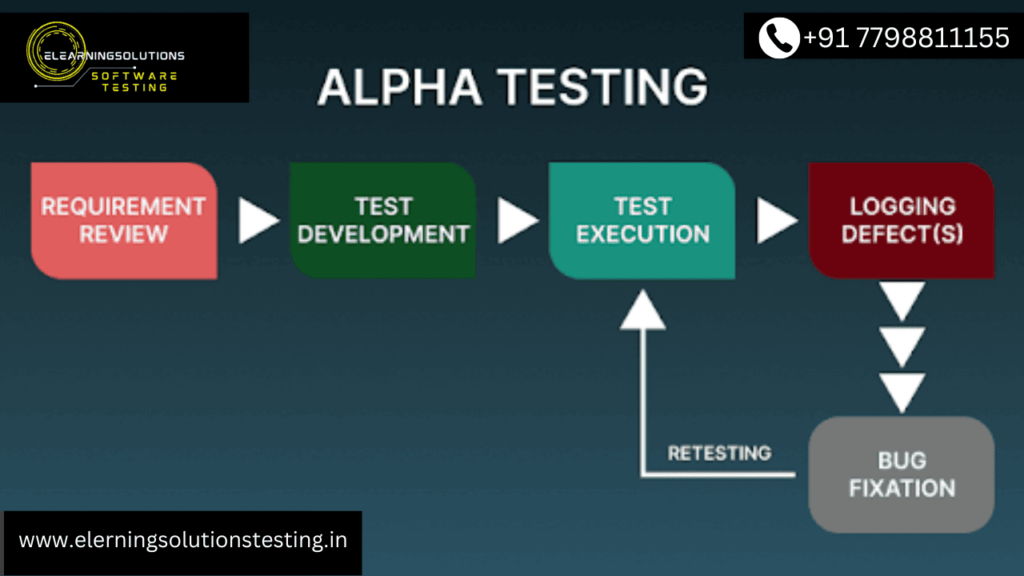
Alpha Testing is a methodology to assess the quality and stability of a product under test in the testing environment.
This phase mainly focuses on:
- Uncover show stopper bugs/major bugs (Specifically in corner areas)
- Usability Issues
- Feature gaps
- Compatibility/Inter-operability Issues
Feedback from the team involved in Alpha Test is gathered to evaluate the Product’s quality and stability, and any suggestions to improve the product are considered.
And the main question that arises in Alpha Testing is “Does the Product Work?”.
Also Read:
- What is Beta Testing
- Alpha vs Beta Testing – What is the Actual Difference?
Purpose
This testing is always necessary for the products that are planned to undergo Beta Testing (most of the time, the Alpha test is omitted and the phase skips directly to Beta Testing, which is not mostly recommended).
The reasons behind conducting this test are:
- Bugs directly coming from the later phases (Beta Testing phase/after Production launch) leave a bad remark on the product and the reputation is lost on the organization that developed the product. Also, these bugs cause delays in Production launch, more effort (both time and resource) is required in fixing them.
- Encourage different sectors within the organization (sales, management, etc.) to use the product and experience it. They are also encouraged to provide feedback and suggestions to improve the product which helps to increase the quality of the product.
- As this phase will capture the upcoming concerns that end-users have, we can build a strong Support system for the product right after the Production Launch.
- Feature Gaps can be covered or planned for subsequent releases.
When is Alpha Testing Done?
This testing usually occurs right after the System Testing Phase/or during System Testing when a product is 70% – 90% complete which is nothing but before the Beta Testing Phase.

Again, this testing occurs in Phases:
- Pre-Alpha Testing: The product’s UI is ready but features are not yet implemented completely. This stage is usually where the decision on what features to go into the product is still being conducted. Proto-type of a product is continuously reviewed and analyzed for more enhancements.
- Alpha Testing: Working Product is ready for testing where the initial round of QA is already almost done.
Alpha Test usually takes place in cycles which are commonly known as Test Cycles, each of which will be of about 1 – 2 weeks. The number of cycles depends on the features included for testing and the number of issues uncovered during this test phase.
Usually, Acceptance Tests and a few System test cases to support the Acceptance Tests are considered for execution.
Stakeholders and Participants
Stakeholders of the Alpha Testing phase will usually be the Engineers (in-house developers), Quality Assurance Team, and the Product Management, Team.
Participants in this testing will be testers (usually):
- Subject Matter Expertise in the area of domain.
- One who knows the Product well.
- Those who were involved in the System Testing Phase as well.
- From different related technical environments (Technical experts)
Sometimes, customers or identified end-users may participate in testing the Alpha version of the product.
Either white-box or black-box testing techniques or a combination of both can be adopted. Acceptance tests can also be preferred to be automated as this involves multiple cycles and the tests can be repetitive in each cycle. Acceptance Tests running this cycle are referred to as Alpha Tests.
Alpha Testing Strategy
Like any other testing phase, even this type of testing has a Strategy where goals and plans are well-defined.
- The approach to performing this testing activity is decided and the procedures are documented in a Test Plan.
- Features and precise tests to be performed are identified and marked for cycles.
- Testing techniques – Black-box, White-box, etc are decided to be performed in a suitable manner.
- Tests to be Automated are identified and worked upon.
- Ways to report bugs, usability issues, and status are all kept as ready templates and are reviewed for correctness.
Procedure
The sequence followed from Tester’s point of view:
- Gather and review the Functional Requirements from all possible documents available.
- Clear ambiguities and queries at the earliest on functional requirements.
- Design Alpha Test Plan and review it for completeness, correctness, etc.
- Design Alpha Tests for identified features – Let it be a comprehensive and precise one.
- Review Alpha Tests for coverage, necessity, and traceability.
- Identify Alpha Tests for each test cycle (it’s OK even if it has to be repeated for many cycles).
- Cycle-wise:
- Execute Alpha Tests once the Alpha version of the product is available for testing.
- Log the defects – Both Functional and UI.
- Retest the defects once fixed.
Entry Criteria for Alpha Test:
- Requirement specification documents should be frozen.
- System Testing should be:
- Completed and Signed-Off if Alpha testing starts upon completion of System Testing.
- 70% – 90% complete and assurance to go ahead with Alpha Testing.
- Participants should be identified and trained for the product (if they are new to the product).
- Alpha Tests should be designed and reviewed.
- Traceability should be achieved for all the functional requirements.
- The testing environment should be set up to confirm stability.
- Build for the Alpha version of the product should be ready and launched with complete Release Notes.
Exit Criteria:
- All the Showstopper bugs and major functional bugs should be fixed.
- All test cycles should be complete.
- All Alpha Tests identified for testing should be executed and Passed.
- Features are frozen at the end of the Alpha Test (i.e., no additional features, no modifications to existing features, no dropping of the existing features).
- Alpha Test Summary Report.
- Alpha Test Formal Sign-Off.
Benefits of this testing
There are several benefits of this testing. A few of which are given below.
Internally,
- An organization is exposed to the product much earlier to experience and leverage it.
- It helps to gain confidence in the product and leads to the launch of the Beta version of it for testing.
- Costly mistakes and disasters can be avoided before reaching a wider audience ie. when released for Beta Testing.
- Helps to understand the factors that impact the successful release of a product.
Conclusion
A deeper understanding of the product is obtained by doing Alpha Testing early in the Software Development Life Cycle. Understanding the perspectives and experiences of the target users when they use the product is always beneficial.
Formally and rigorously carrying out alpha testing contributes to the achievement of its goals and increases customer satisfaction. I’m hoping this post will help you learn more about Alpha Testing.
YOU MAY BE INTERESTED IN
The Art of Software Testing: Beyond the Basics
Automation testing course in Pune
Automation testing in selenium
Mastering Software Testing: A Comprehensive Syllabus
Frequently Asked Questions
What is Alpha Testing in software development?
Alpha testing is the first phase of testing in the software development process, where the software is tested by a small group of internal users to identify major issues and bugs. This phase helps to ensure that the software meets the requirements and works as expected. It is usually conducted in a controlled environment.
Who performs Alpha Testing?
Alpha testing is typically performed by a small group of internal users, such as developers, quality assurance engineers, or other stakeholders who are familiar with the software. These users test the software in a simulated environment to identify and report defects. The goal is to get feedback from a small group before releasing the software to a larger audience.
What are the goals of Alpha Testing?
The primary goal of alpha testing is to identify major defects, bugs, and issues in the software, and to ensure that it meets the requirements and specifications. Alpha testing also helps to identify any usability issues, performance problems, and compatibility issues. By identifying these issues early, developers can fix them before the software is released to the public.
What is the difference between Alpha and Beta Testing?
Alpha testing and beta testing are both types of testing, but they differ in their scope and audience. Alpha testing is conducted internally by a small group of users, while beta testing is conducted externally by a larger group of users. Beta testing is typically done after alpha testing, and it is used to test the software in a real-world environment.
Why is Alpha Testing important in software development?
Alpha testing is important because it helps to identify and fix major issues and bugs early in the software development process. This saves time and resources, as it is easier and less expensive to fix issues early on. Additionally, alpha testing helps to ensure that the software meets the requirements and specifications, which helps to build trust and credibility with users.


